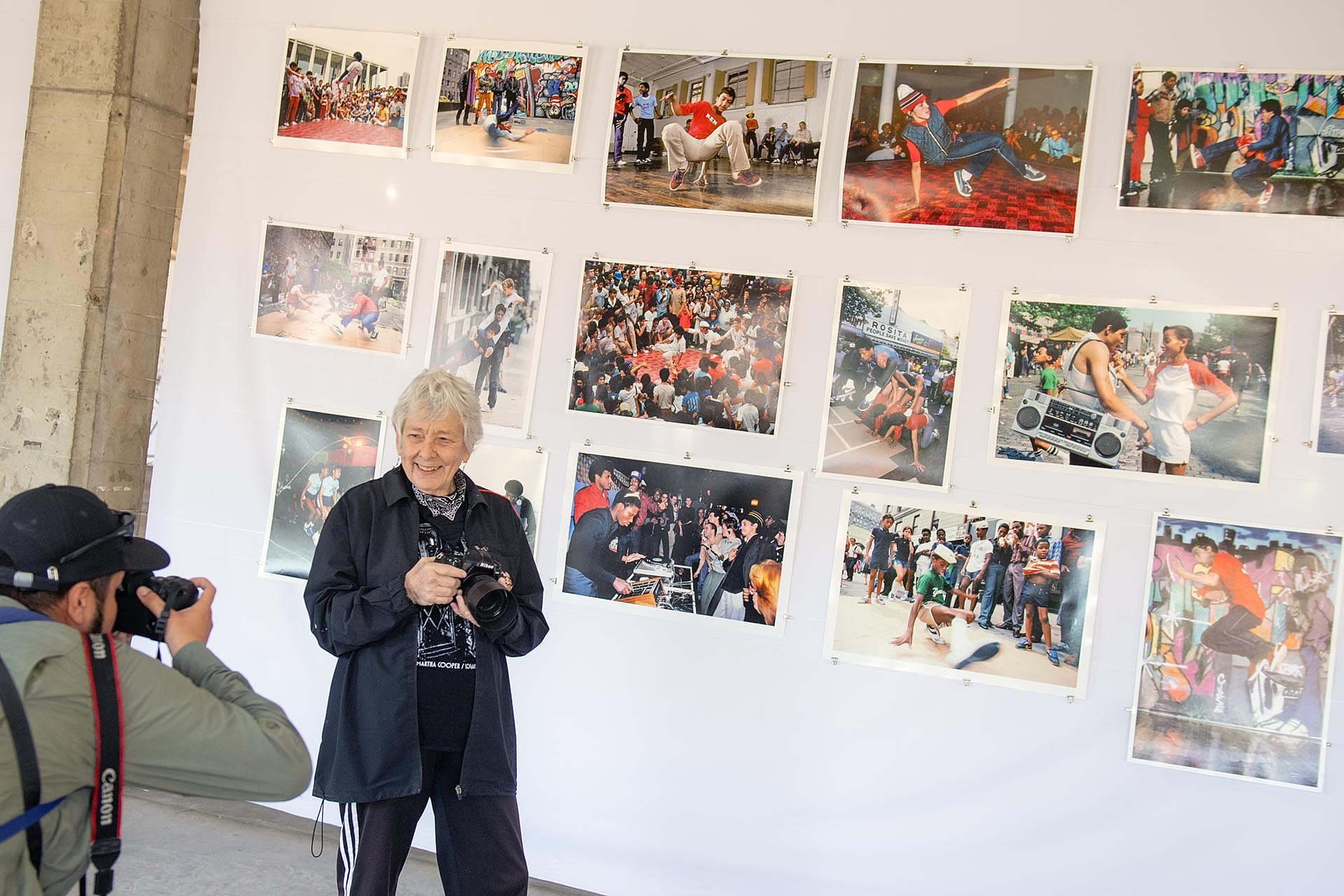
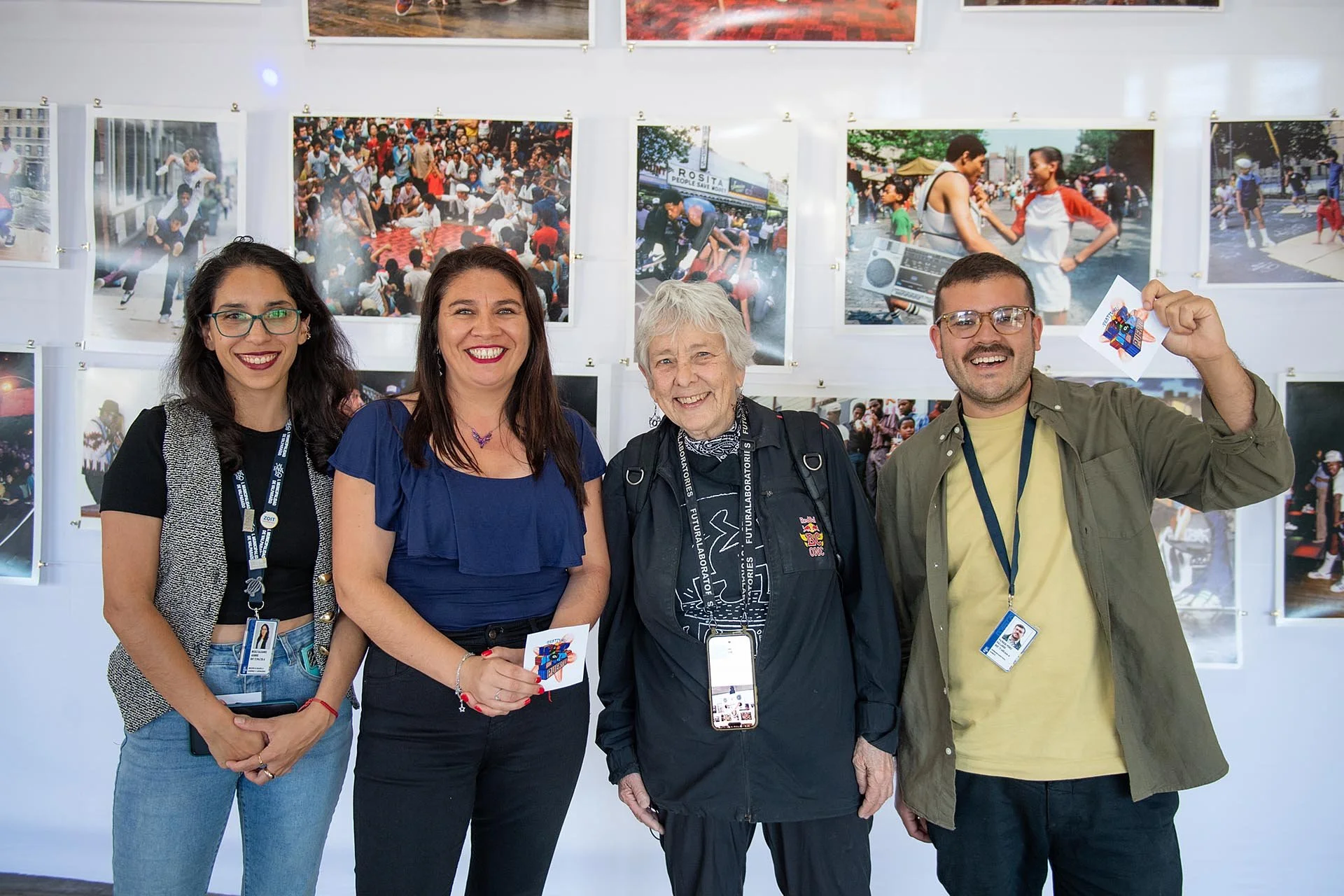
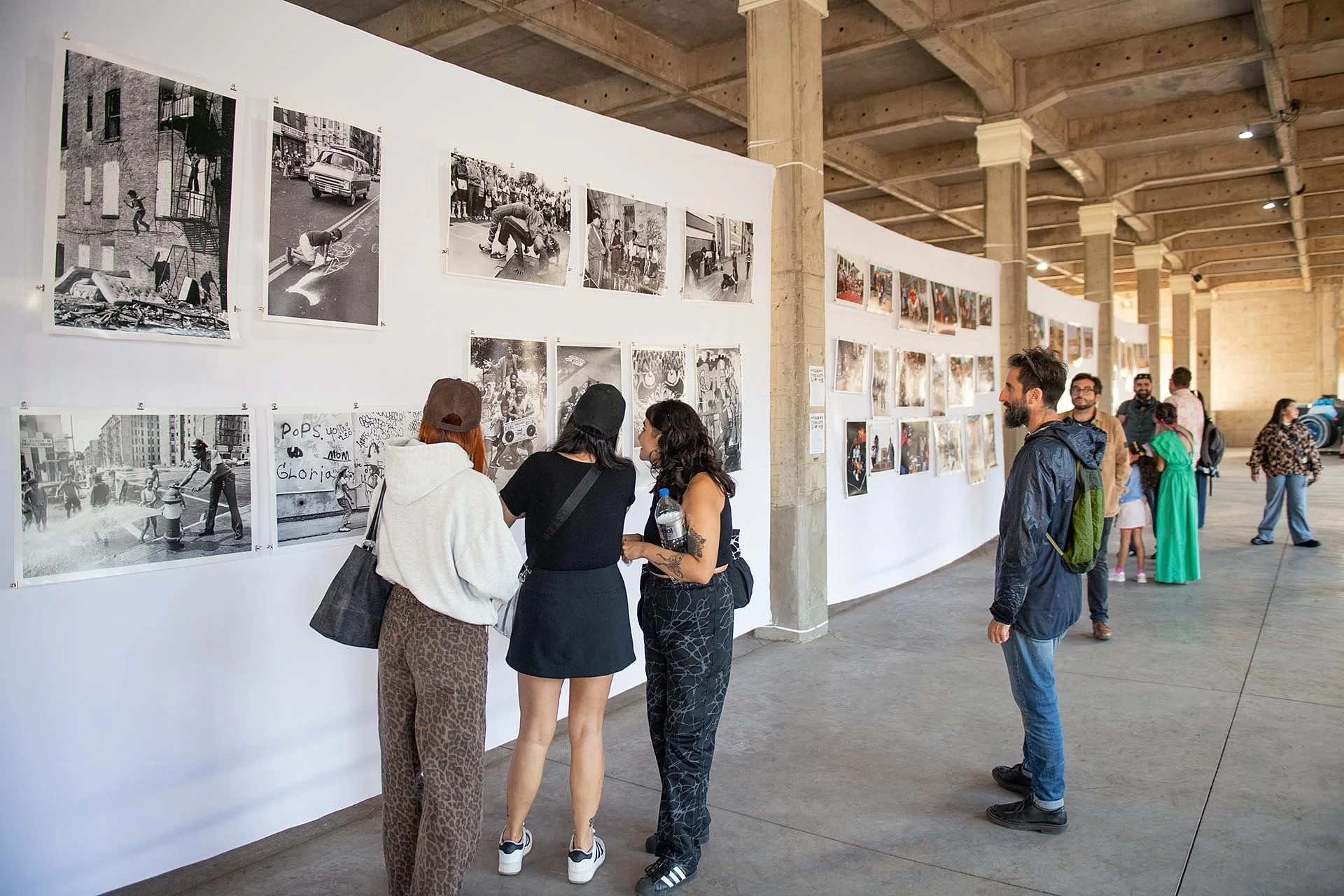
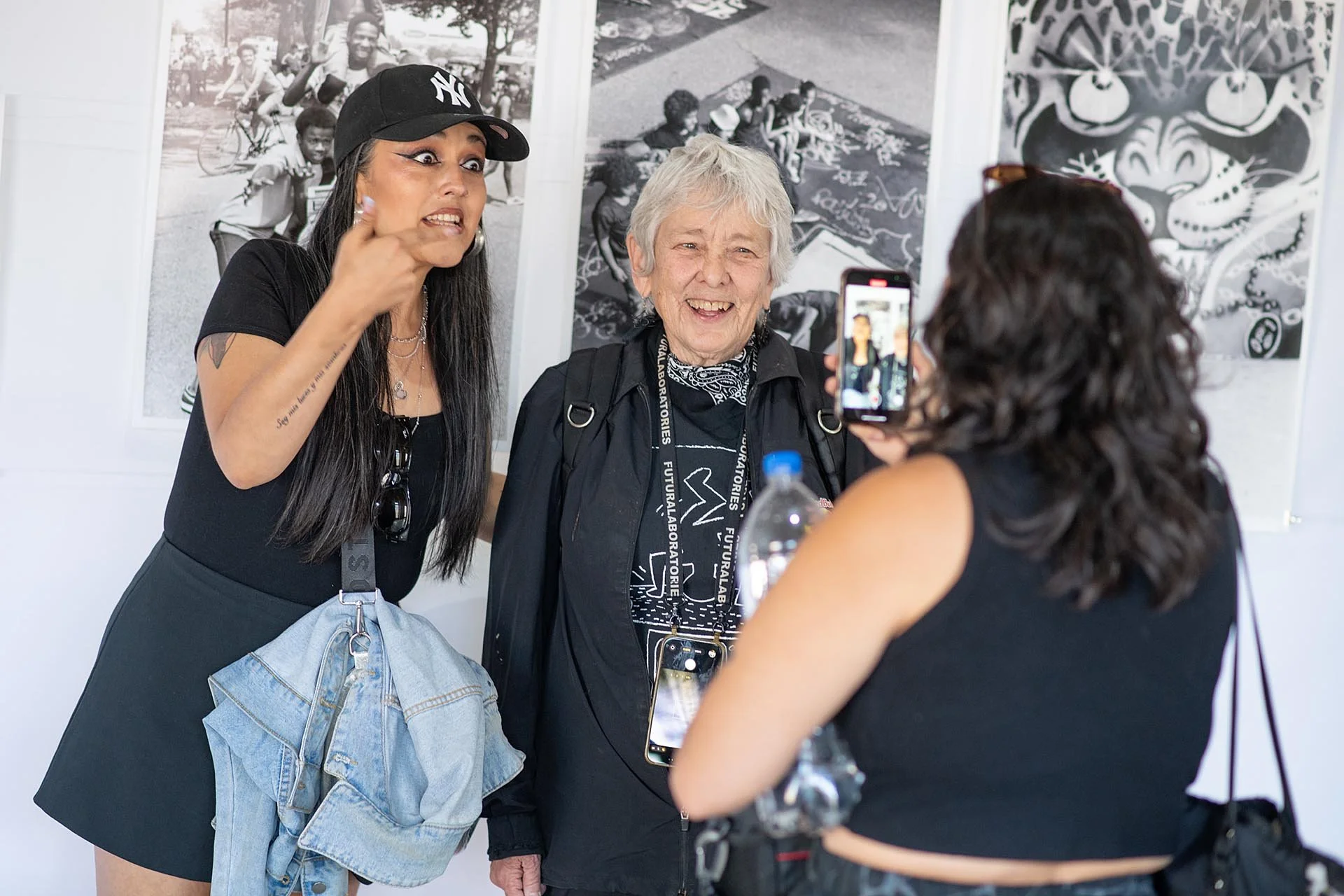
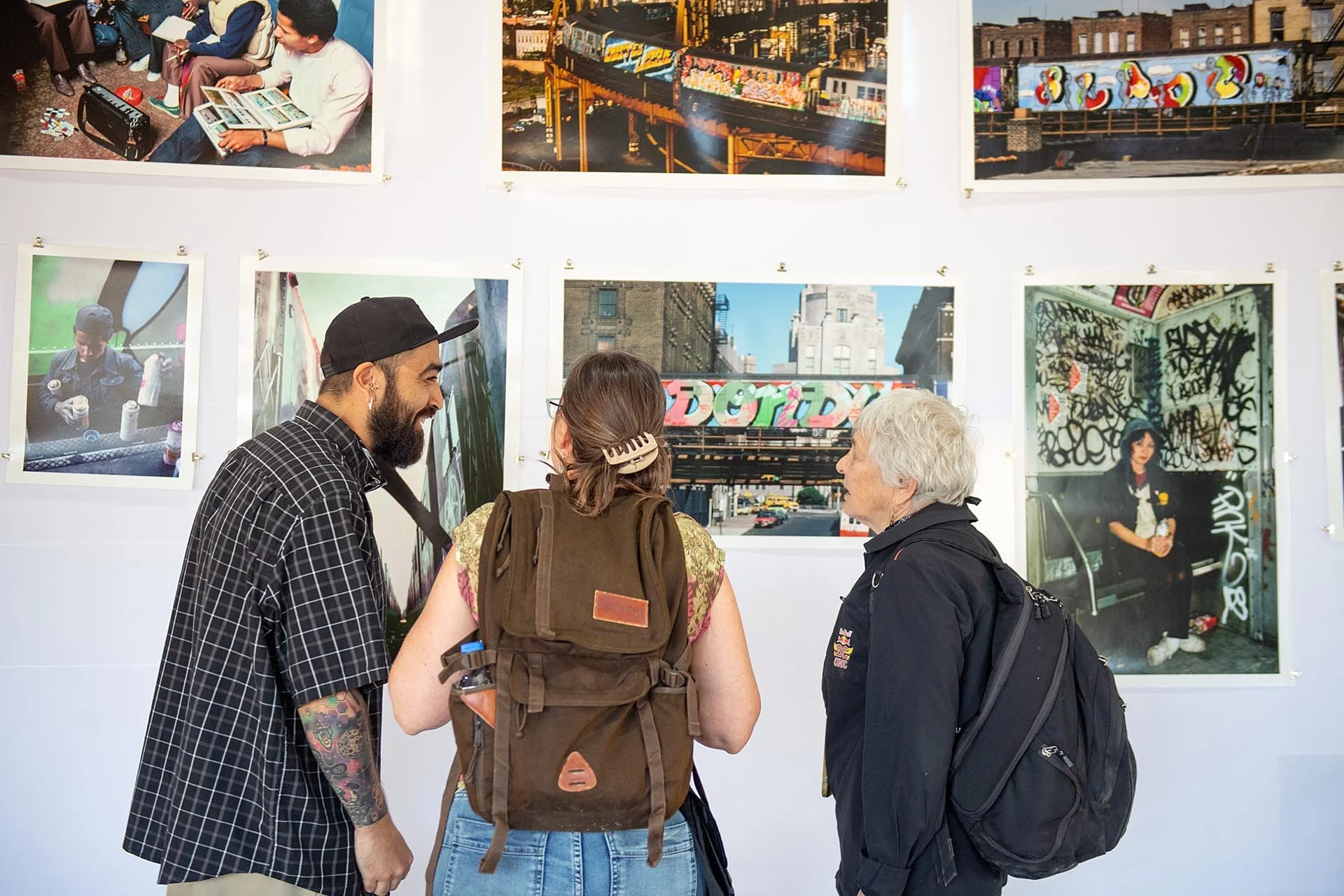
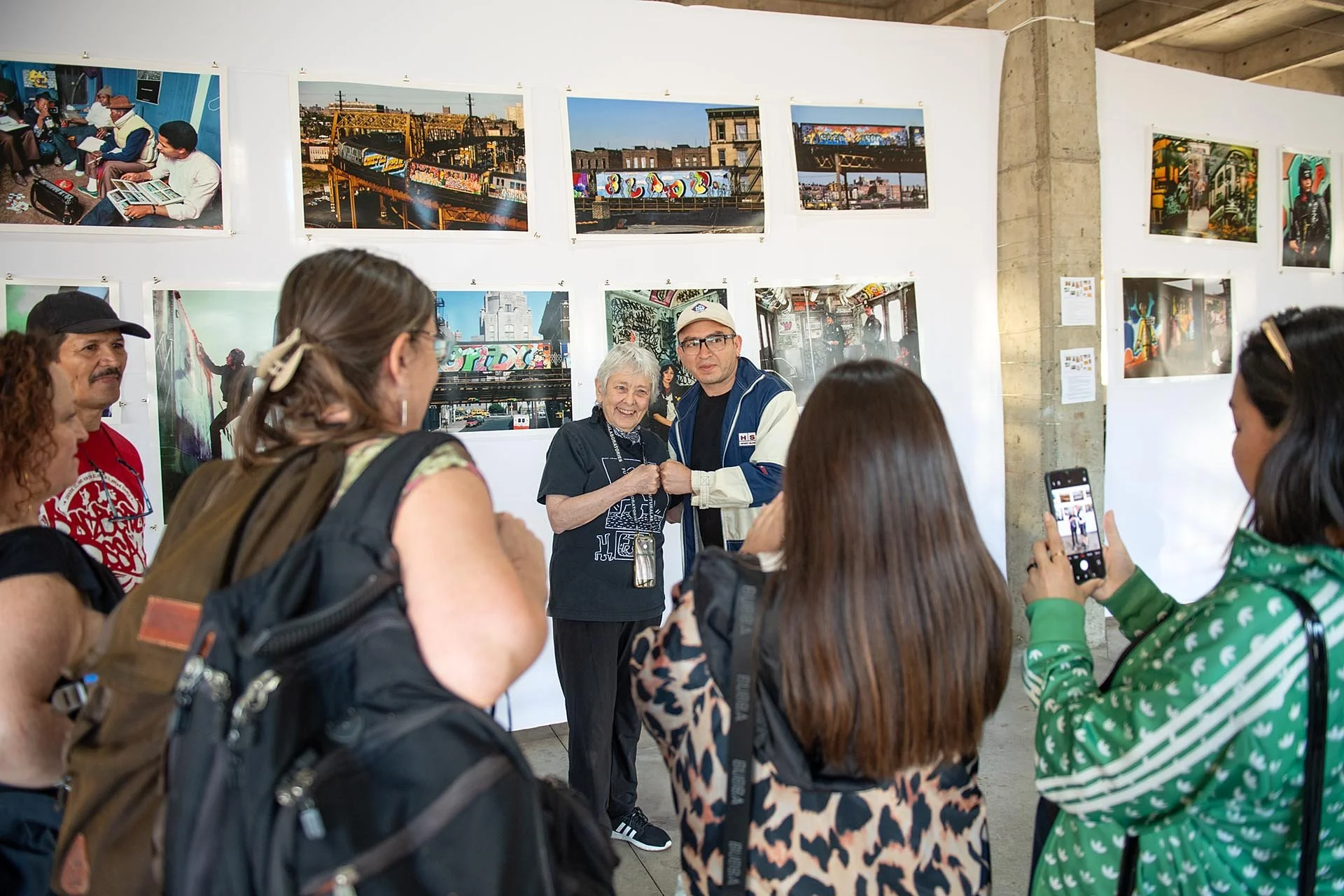
I came to Chile with Martha Cooper.
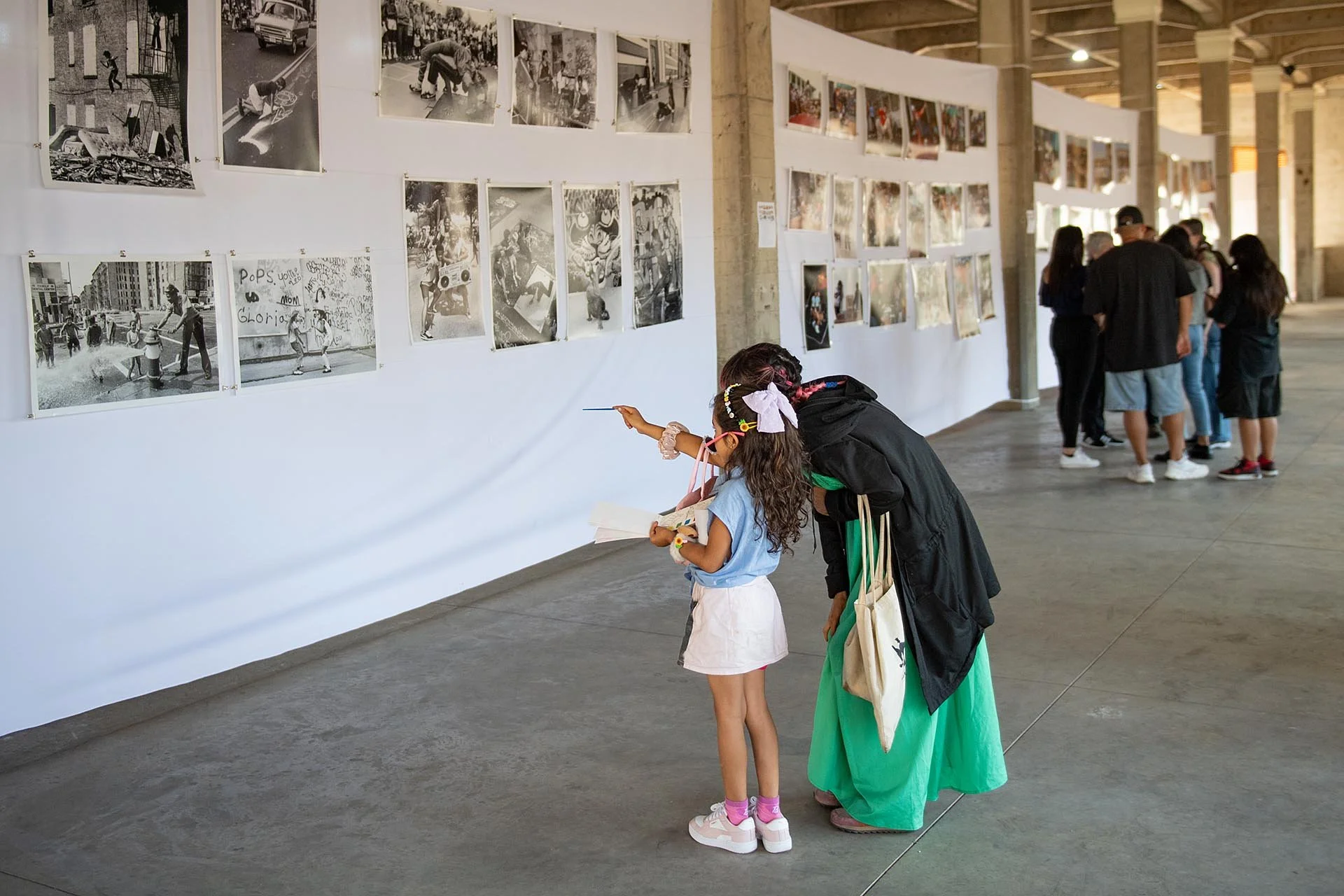
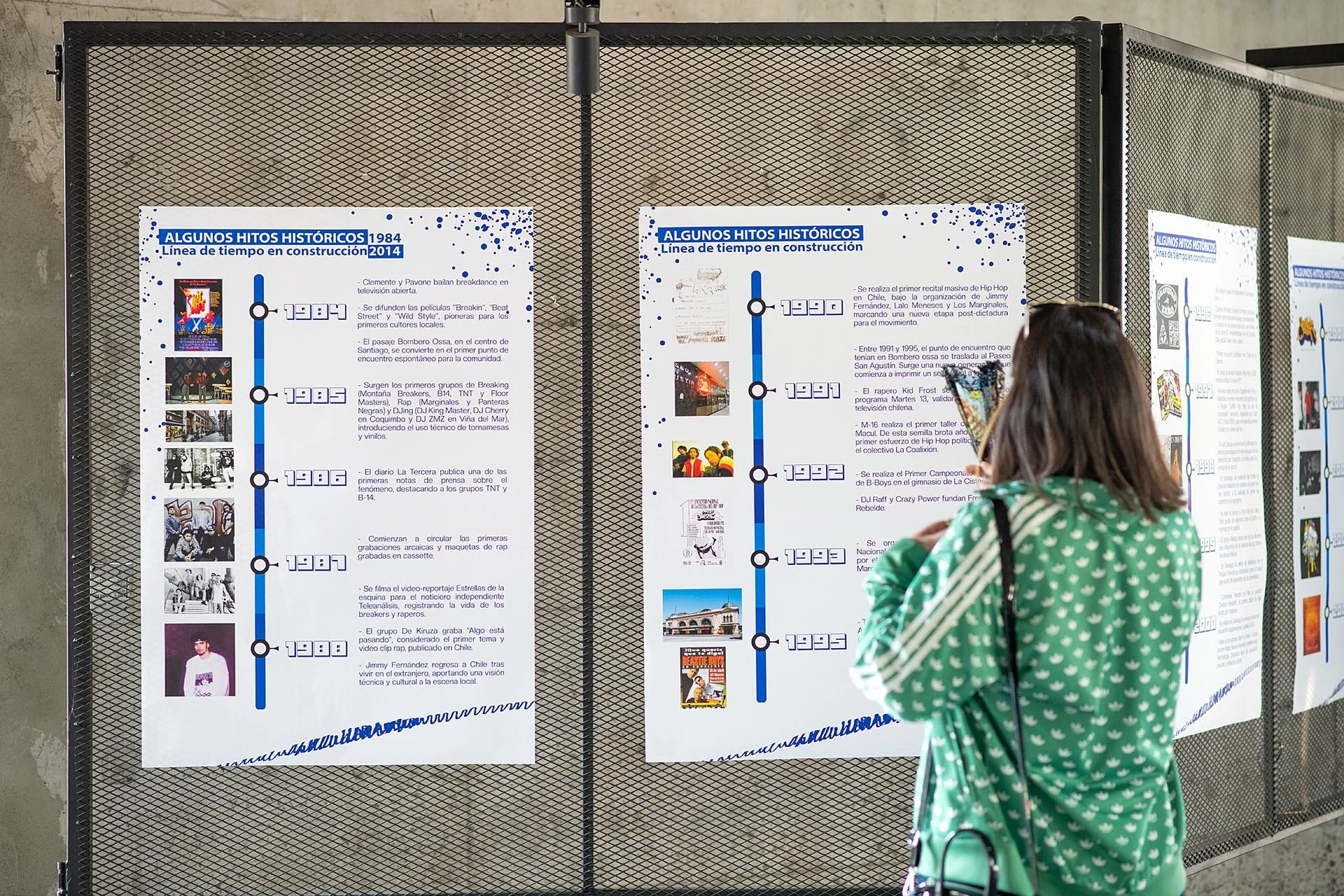
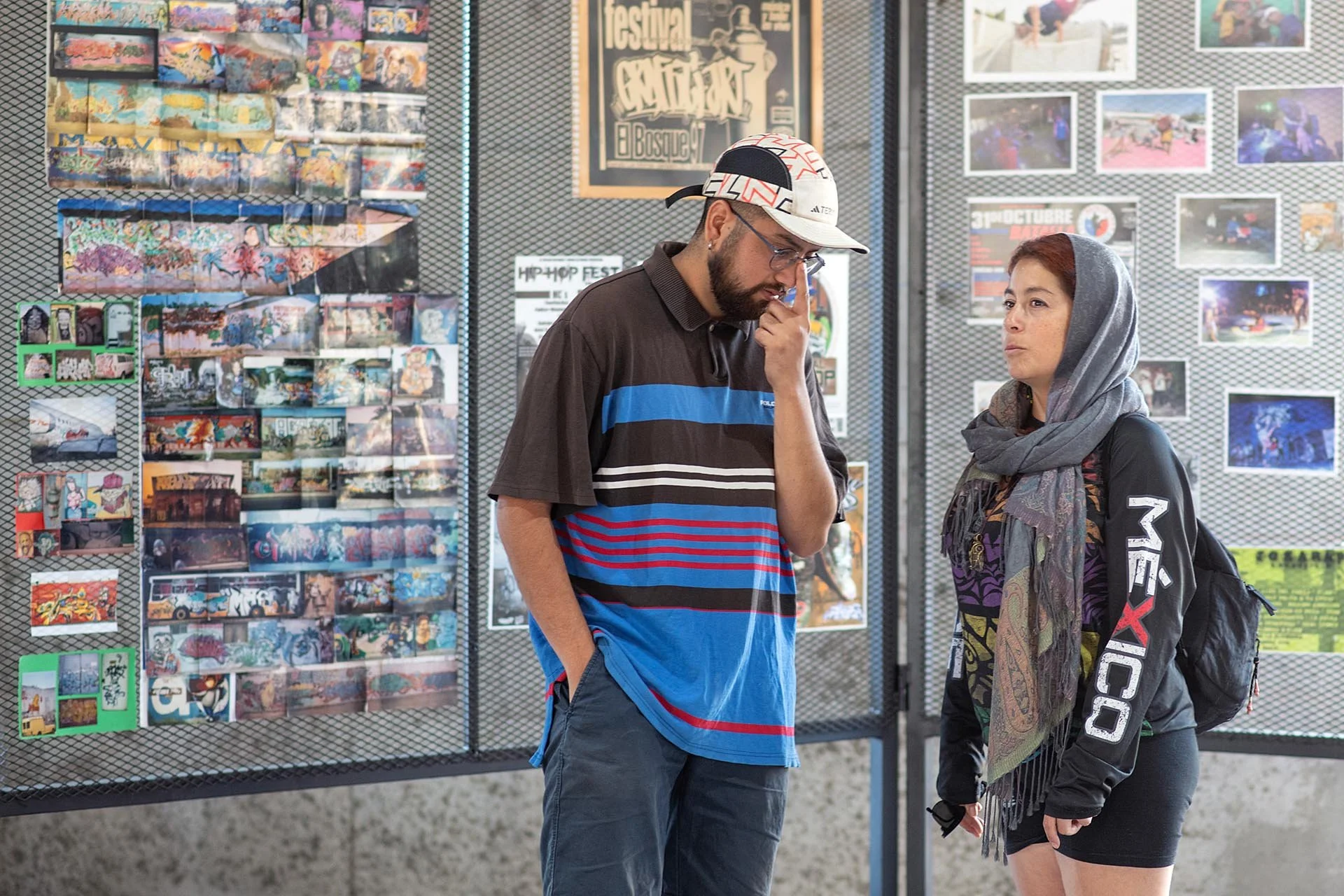
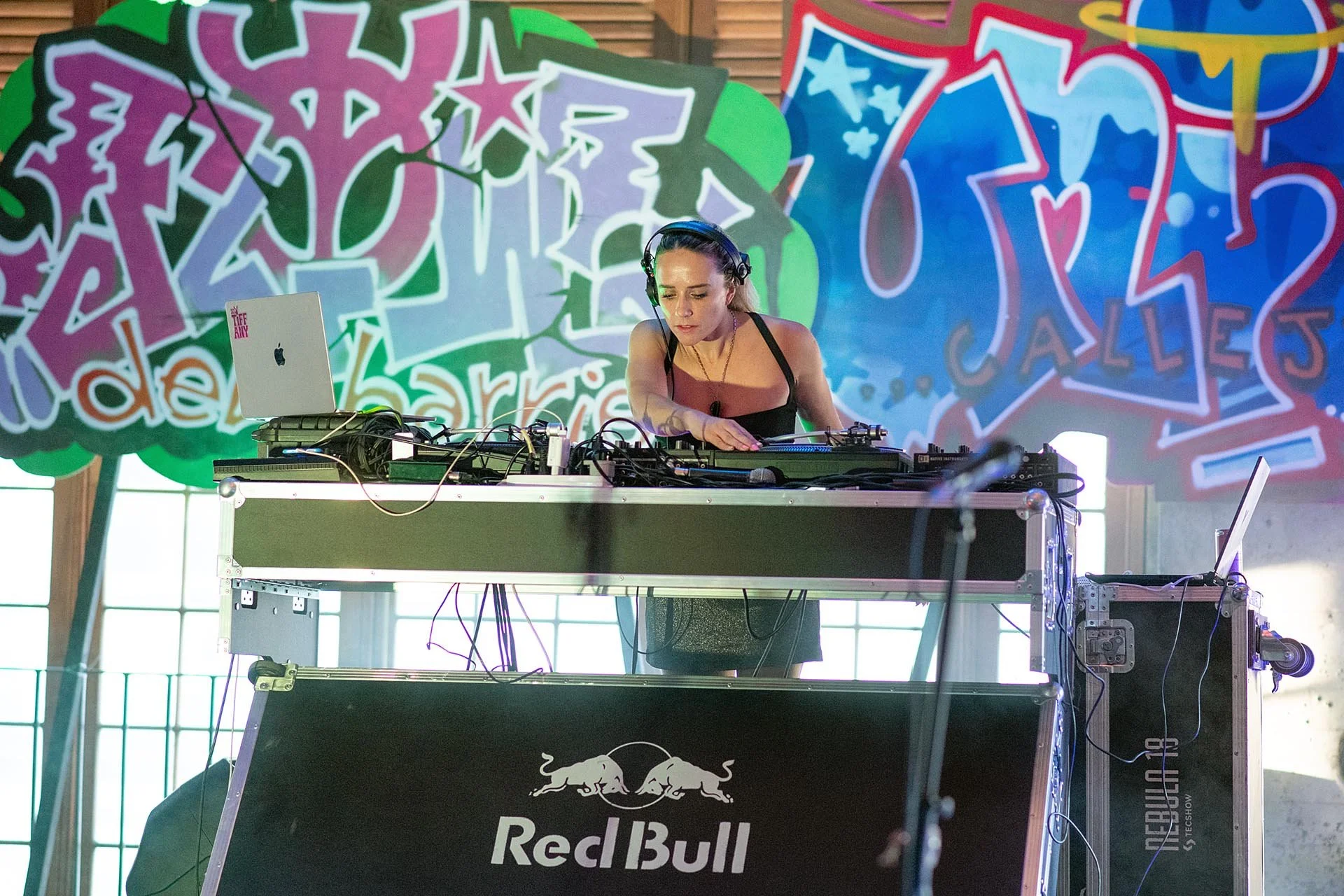
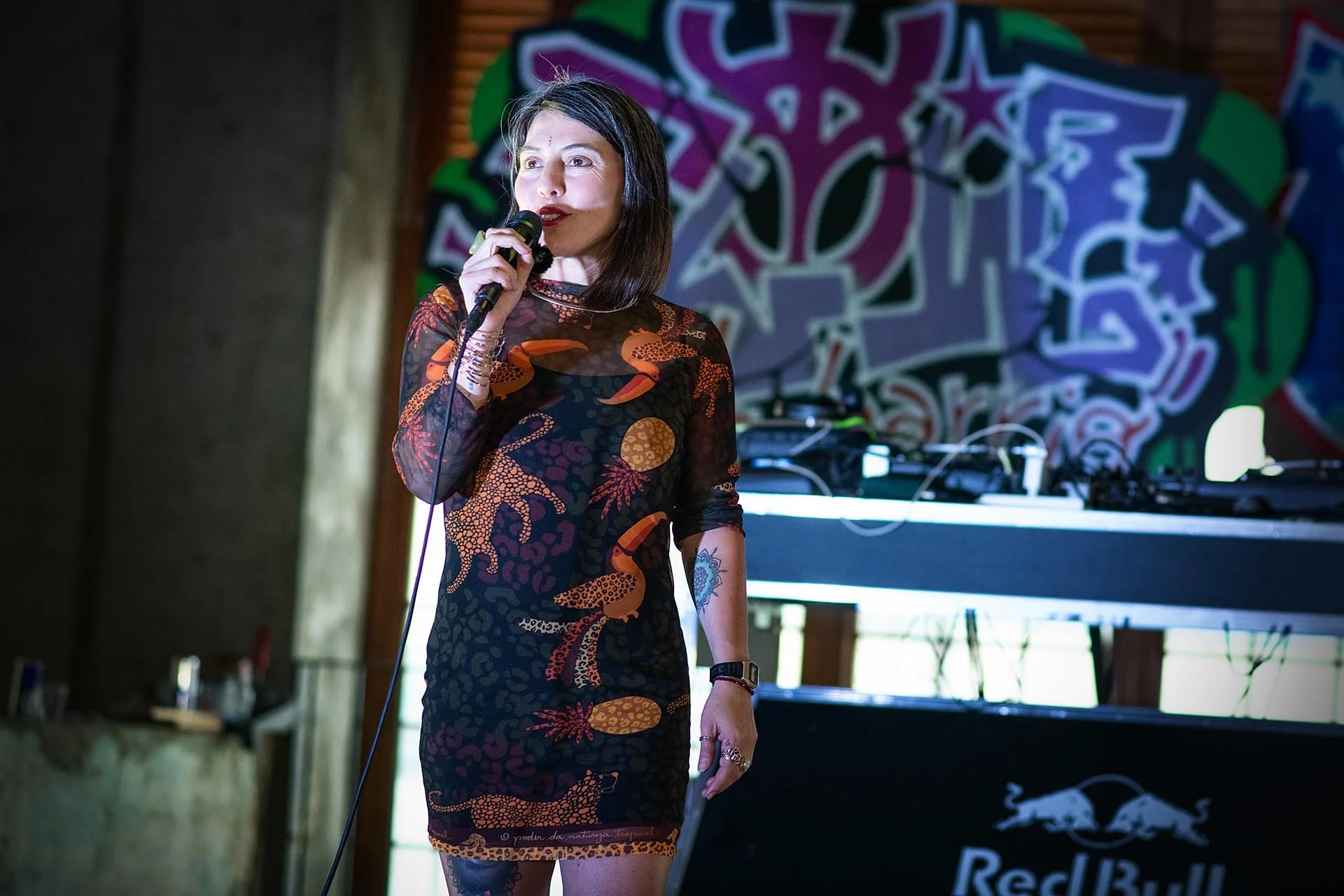
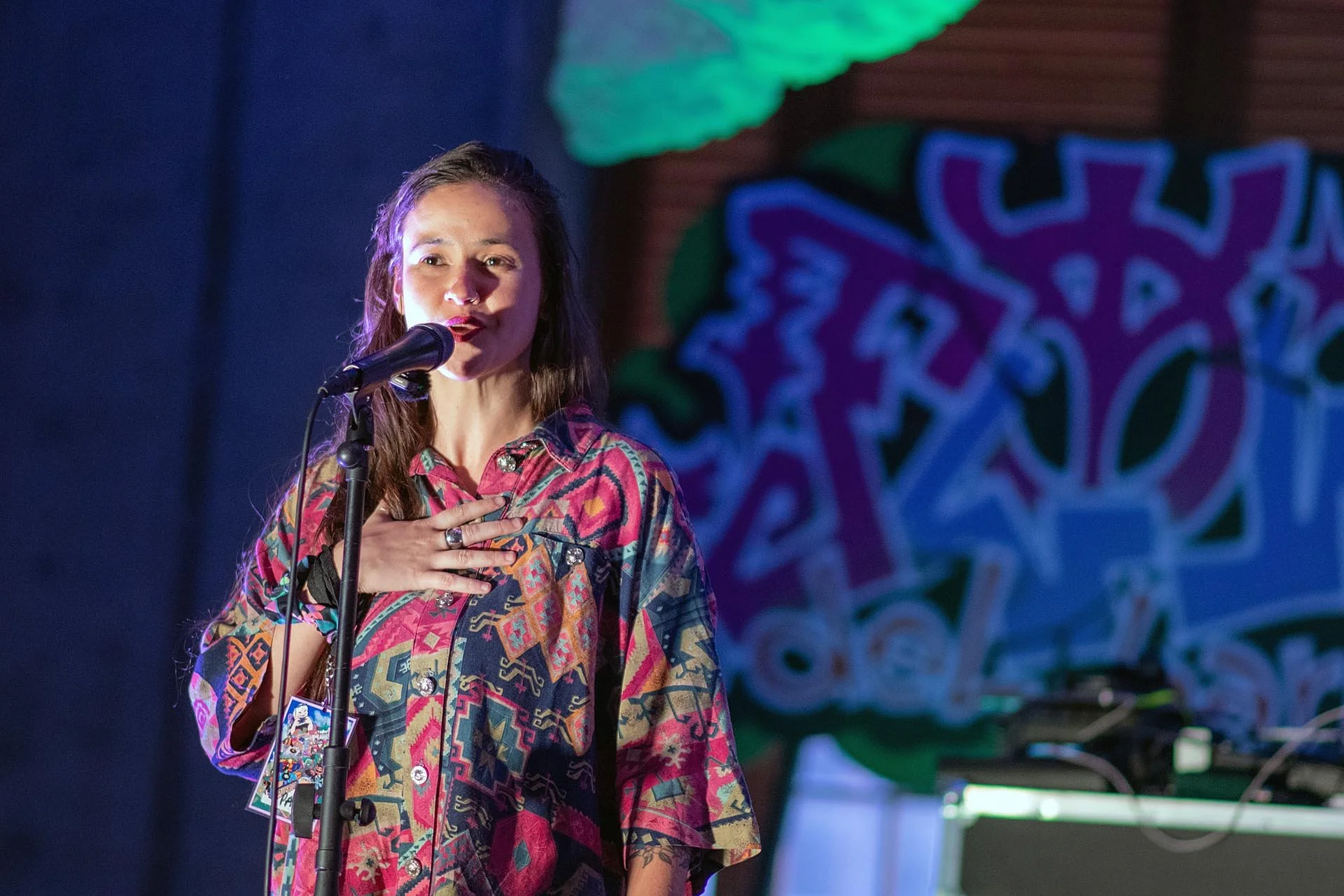
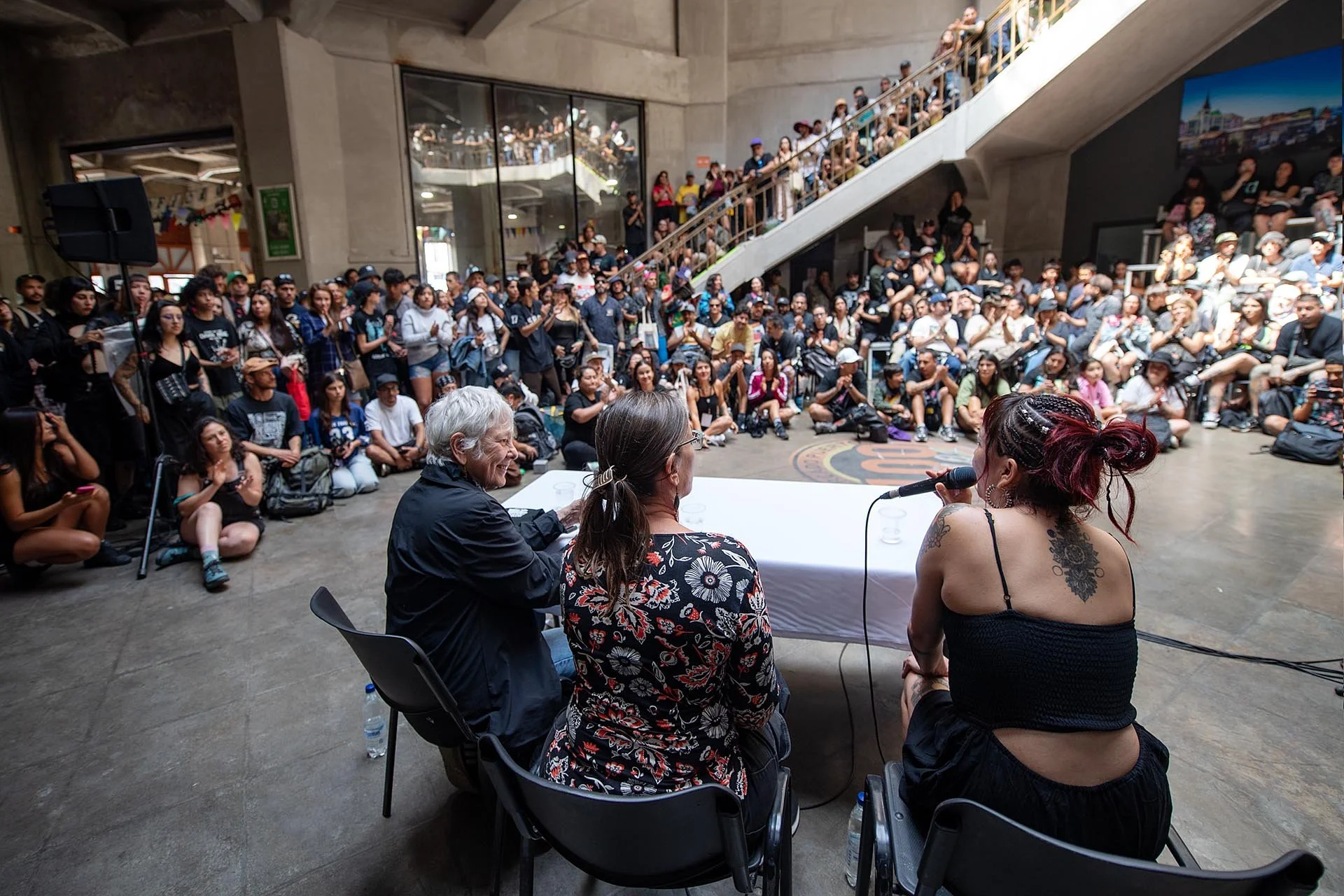
We were invited to Valparaíso for “Hip Hop Al Puerto,” a festival celebrating women in Hip Hop and marking forty years of Hip Hop culture in Chile. It felt like coming full circle. More than twenty years ago, when Martha and I started working together on We B*Girlz, we traveled to events all over the world. Back then, we moved freely. A few people would recognize her, sometimes ask for a photo, maybe a signature. Mostly, we were just there — watching, listening, interviewing, photographing, being part of it.
Before I go on, let me say one thing while we’re talking about Marty and me. If you met either of us somewhere — at a festival, on a street corner, at an exhibition, or standing in front of a wall — and then you meet us again later and we don’t seem to remember, please don’t take it personally. Both of us are spectacularly forgetful. We drop camera equipment, leave bags behind, and have probably scattered personal belongings across half the planet. Our brains sometimes work the same way. We are happy wanderers, but organization and memory are not exactly our strengths. It’s a little sad, really — you wish you could hold onto every encounter and every conversation as life goes on. But if we meet again and don’t immediately recognize you, it doesn’t mean the moment we shared wasn’t real, or that we didn’t connect when we met. It simply means the memory slipped away somewhere along the road. So please just come say hello. Let’s just connect again.
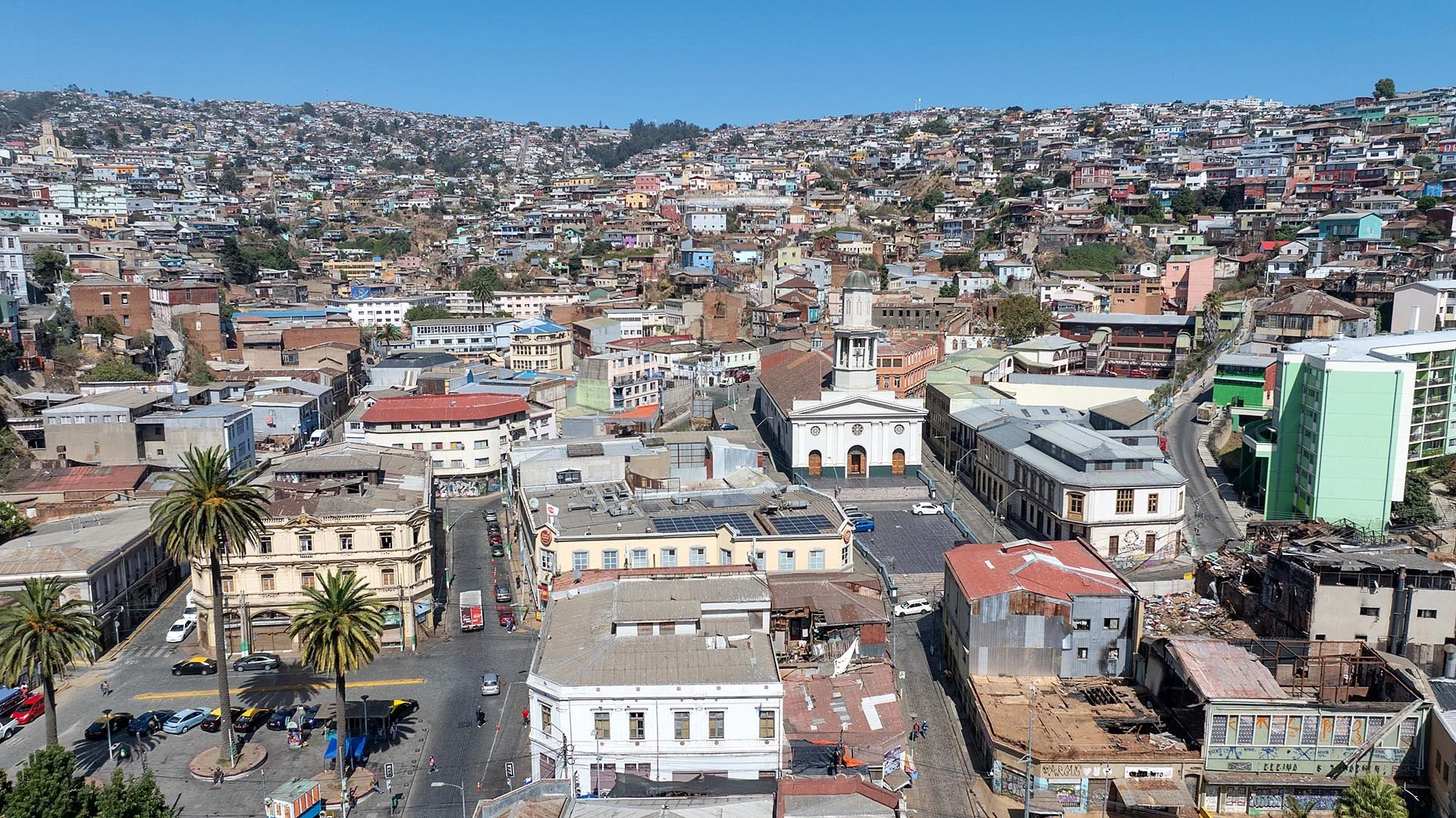
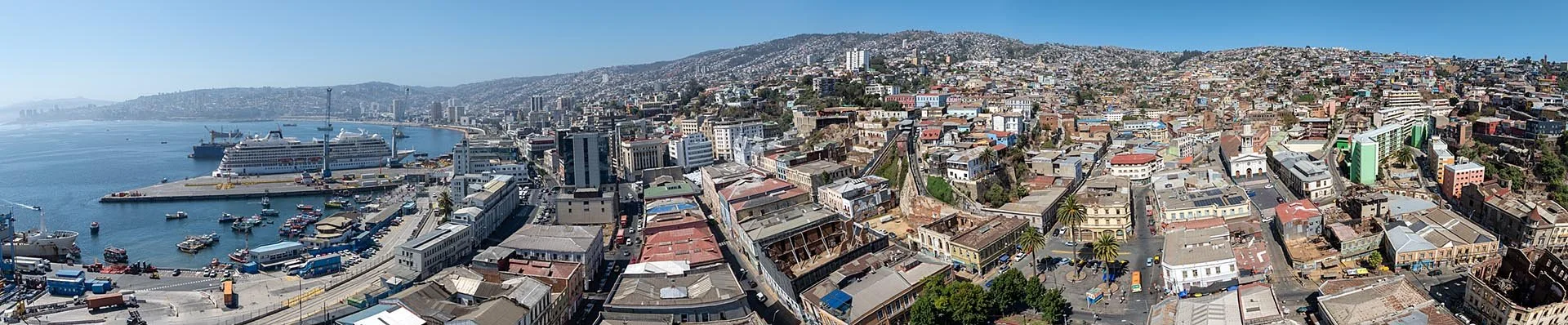
Valparaíso welcomed us with open arms.
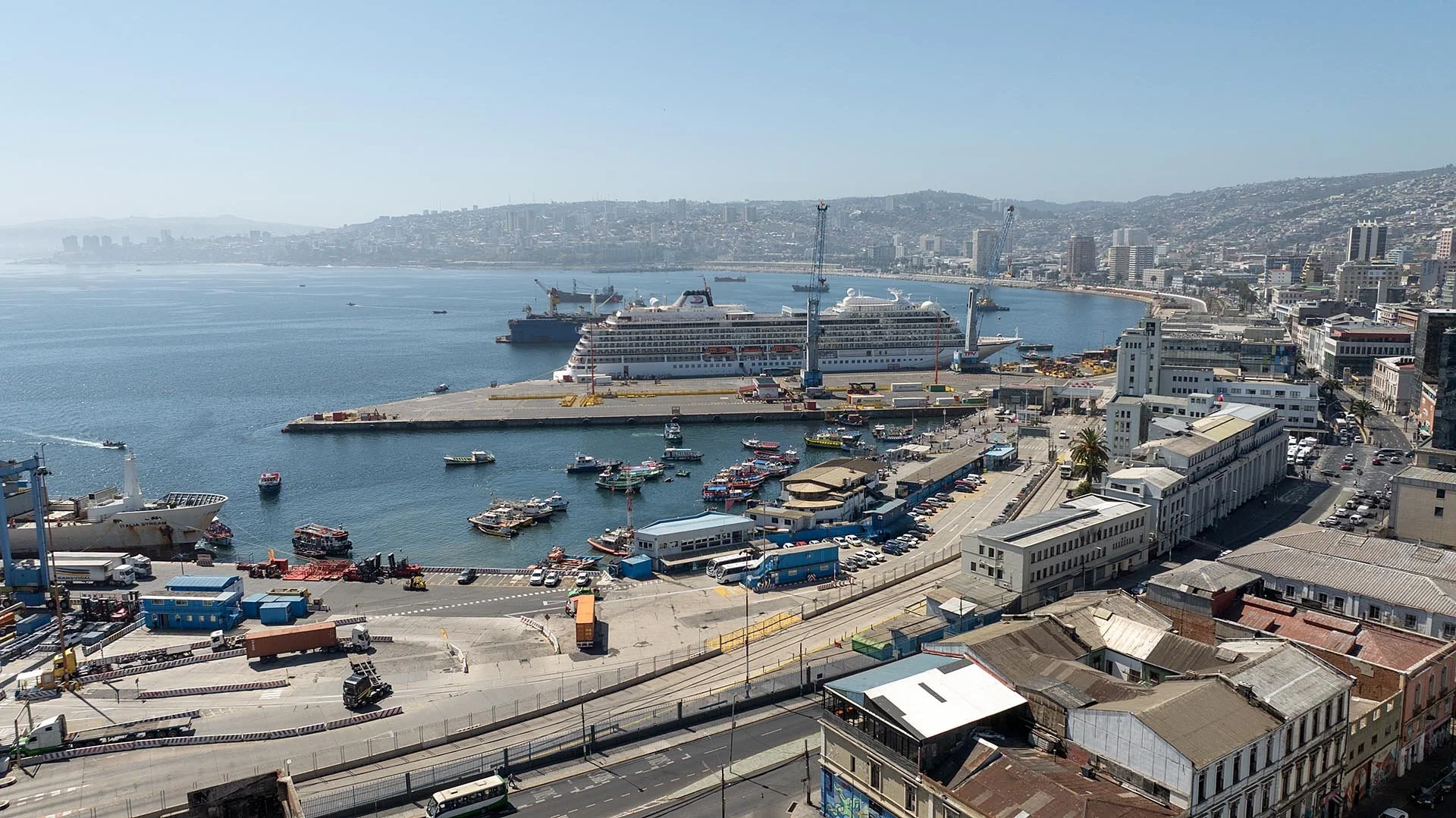
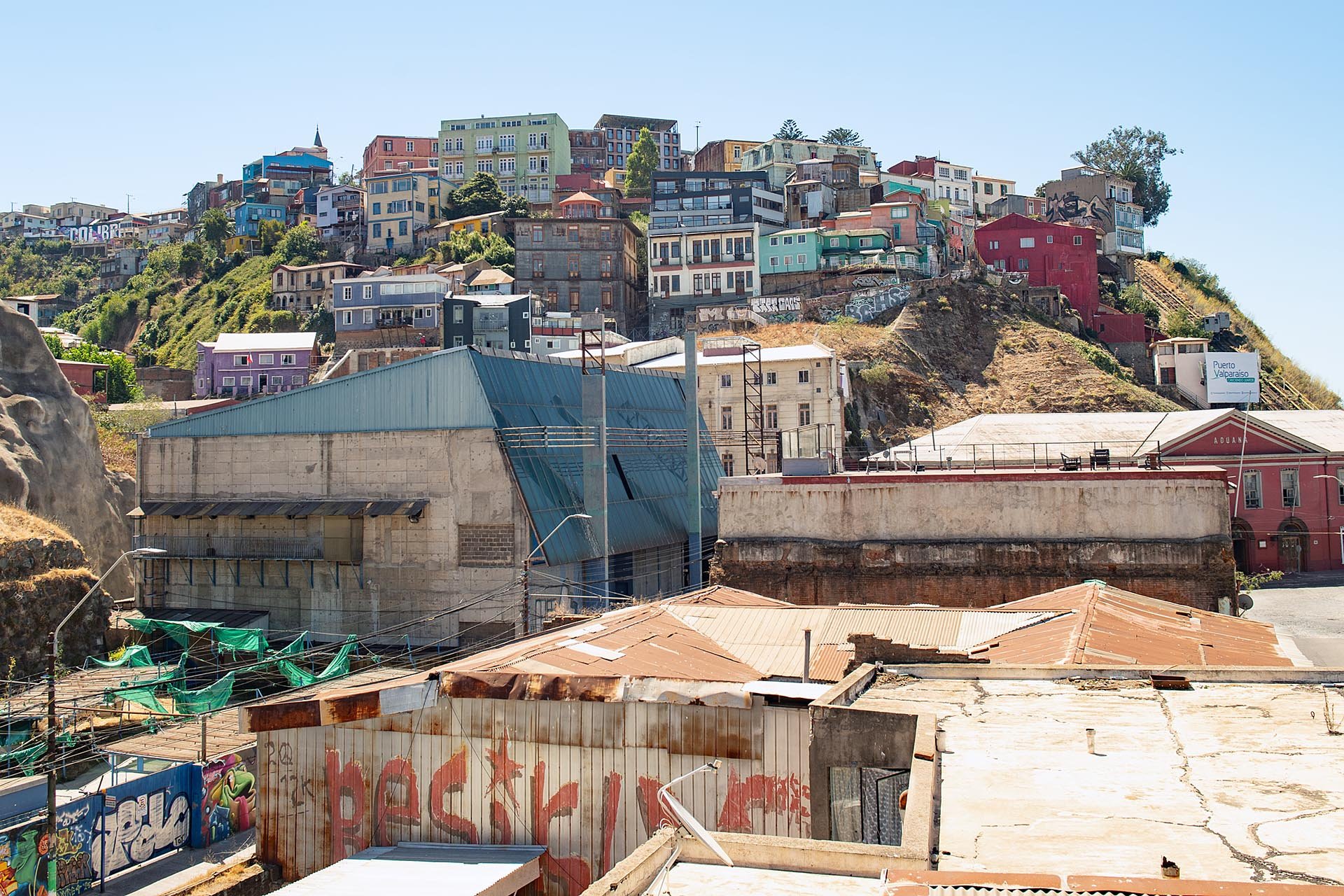
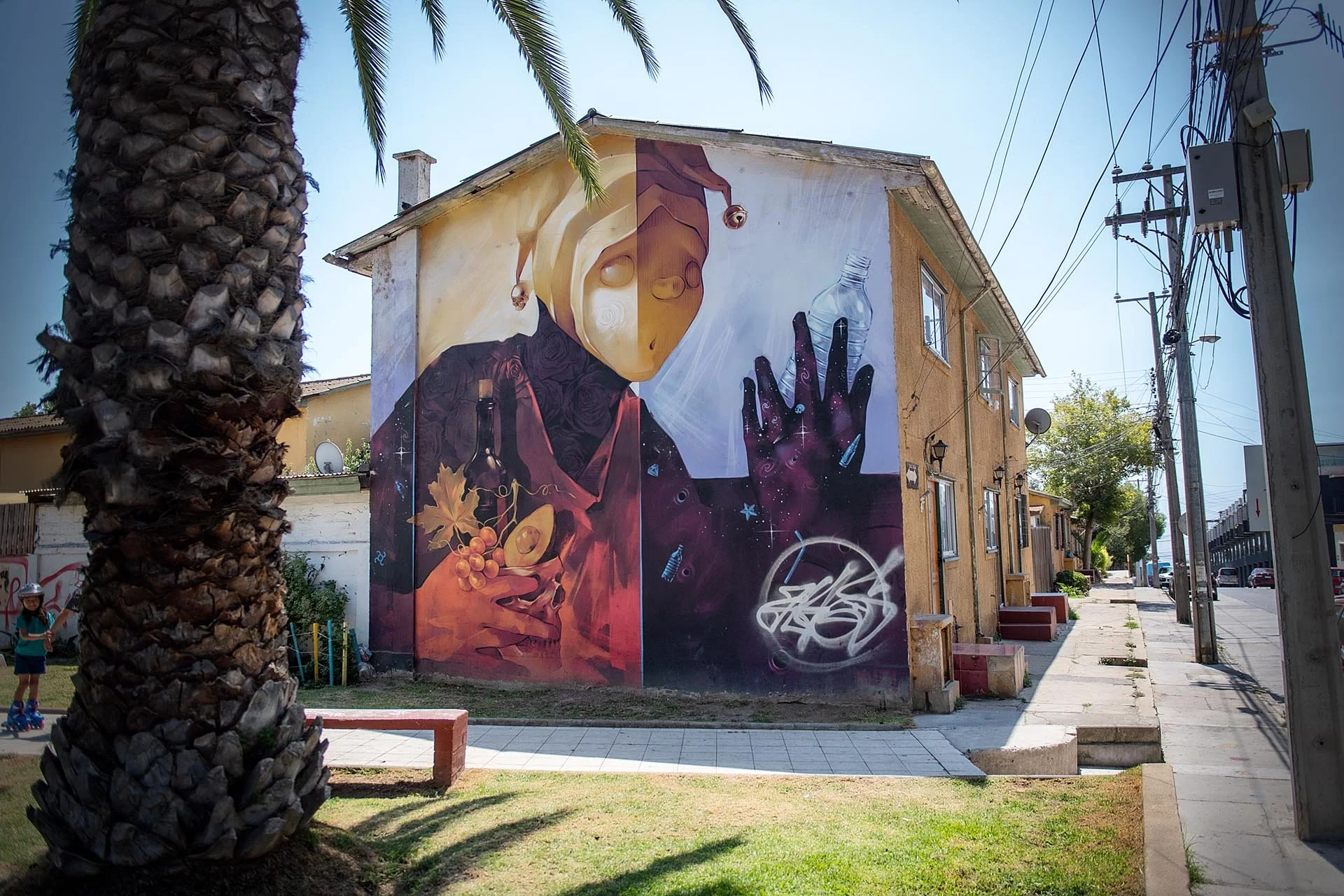
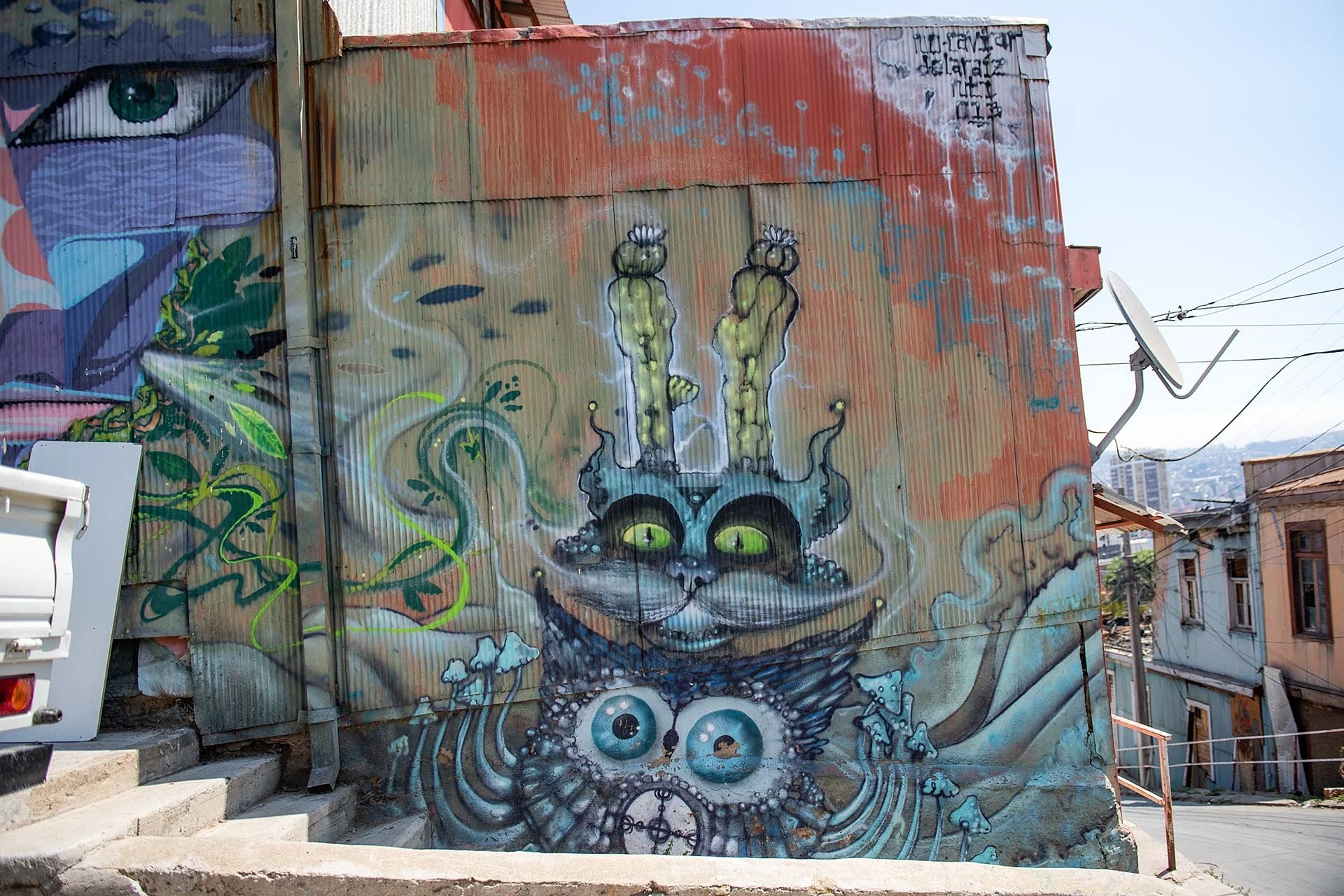
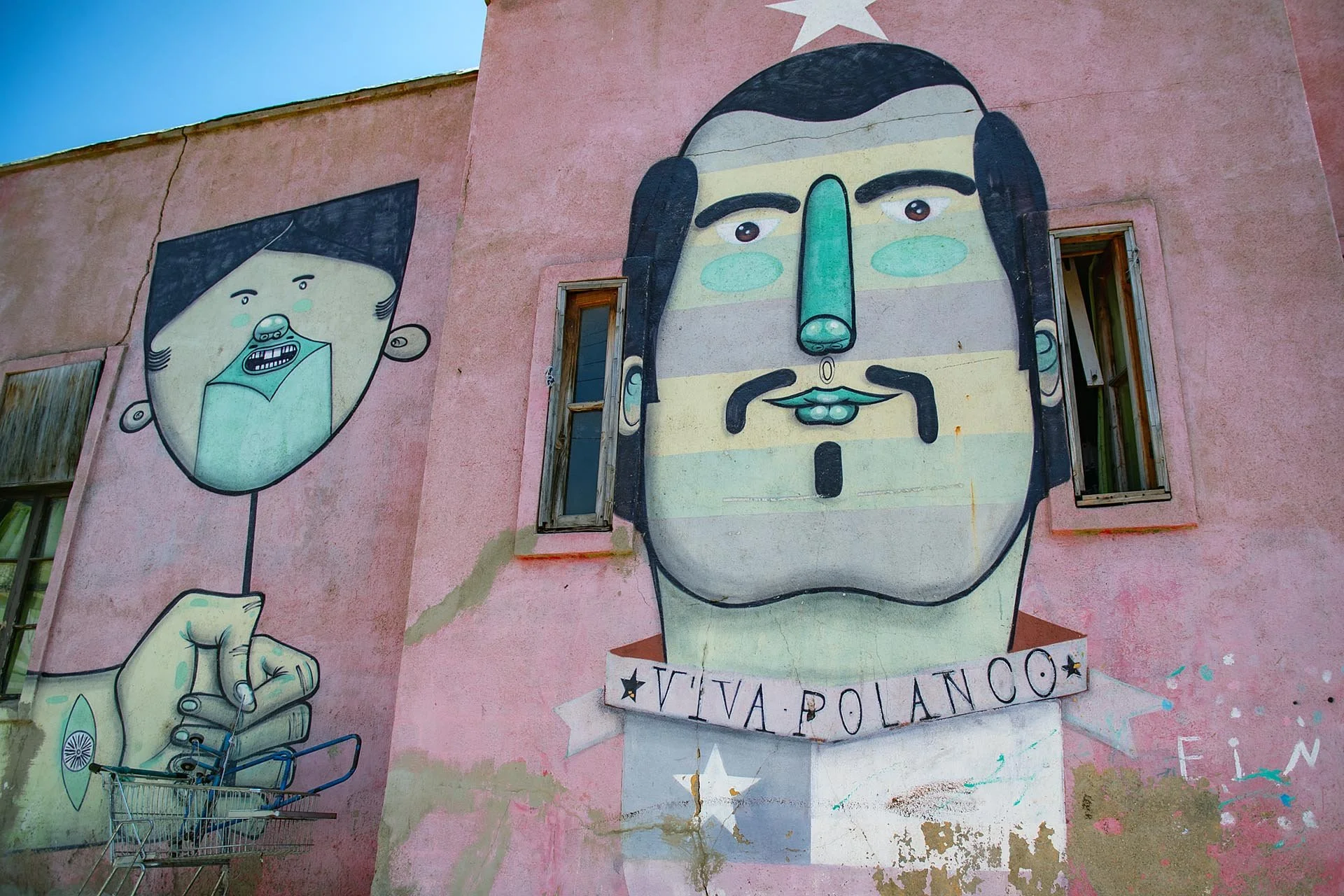
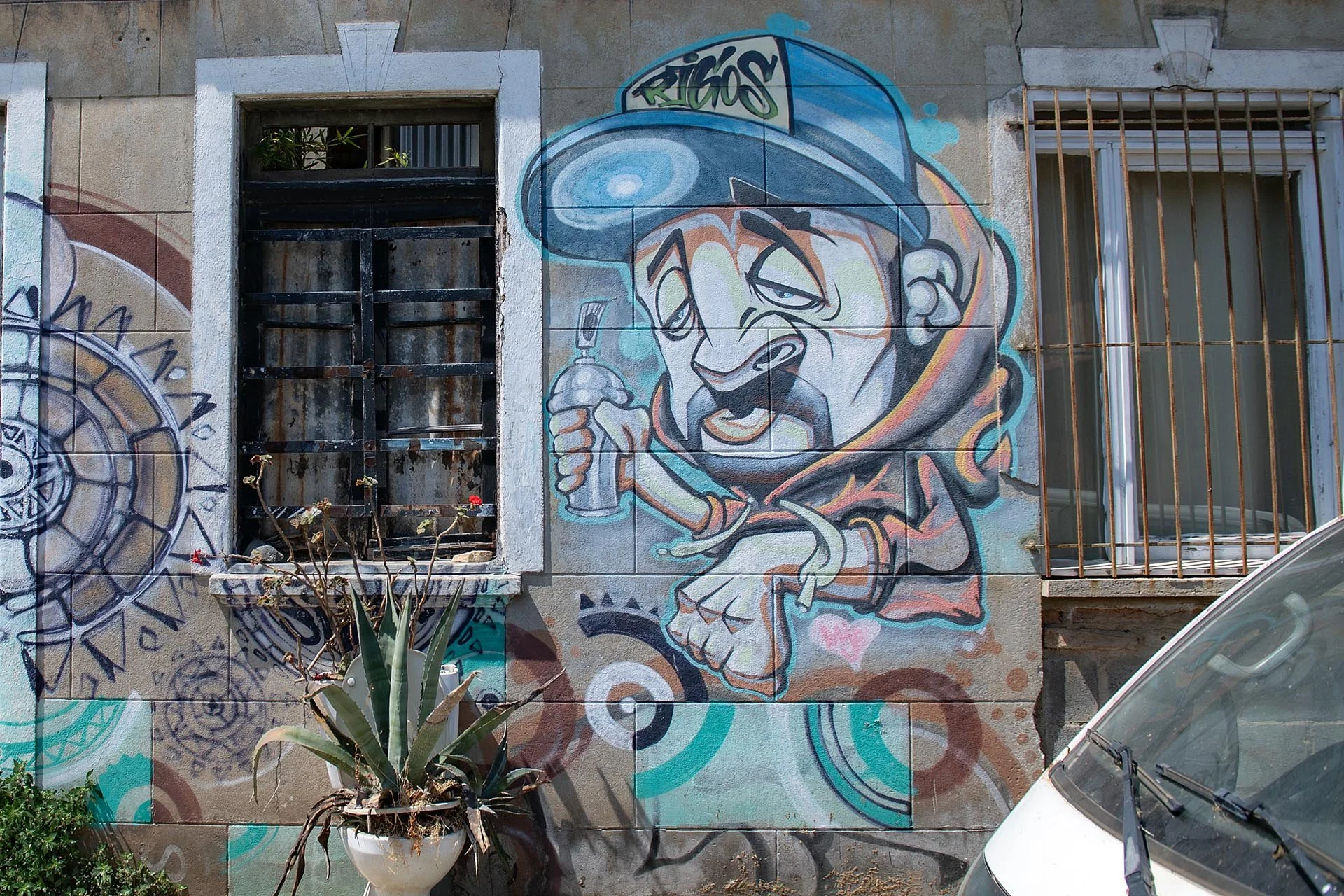
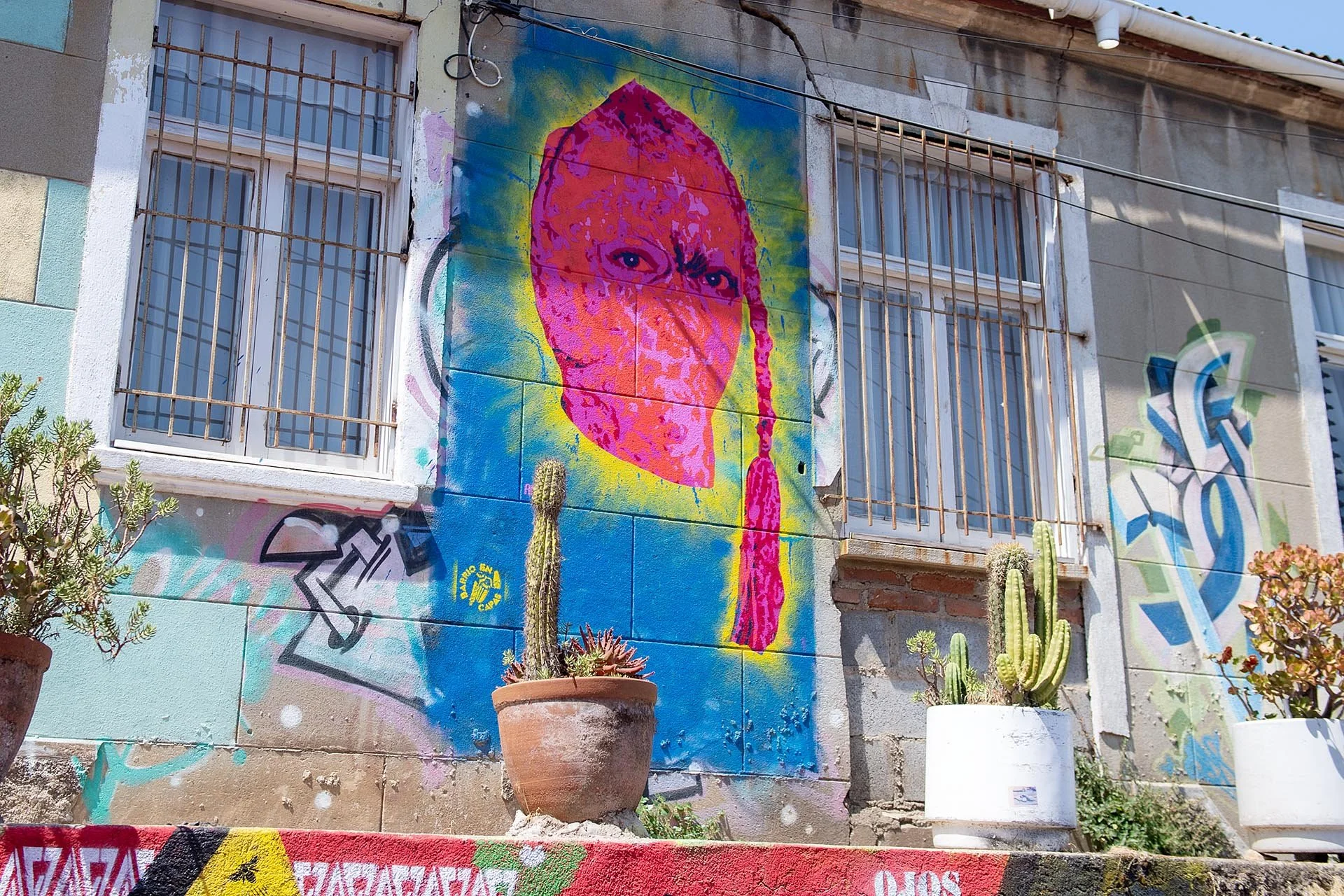
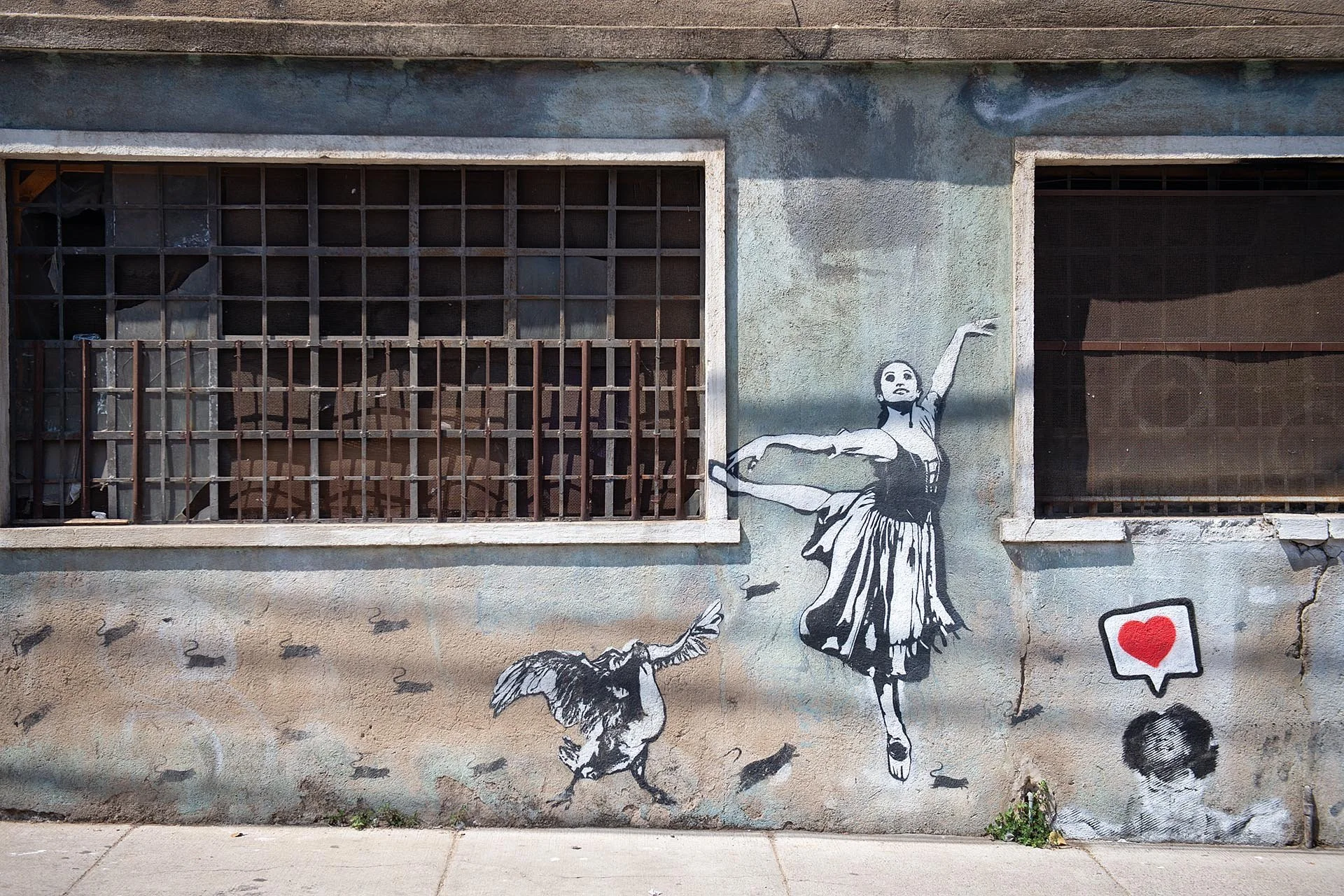
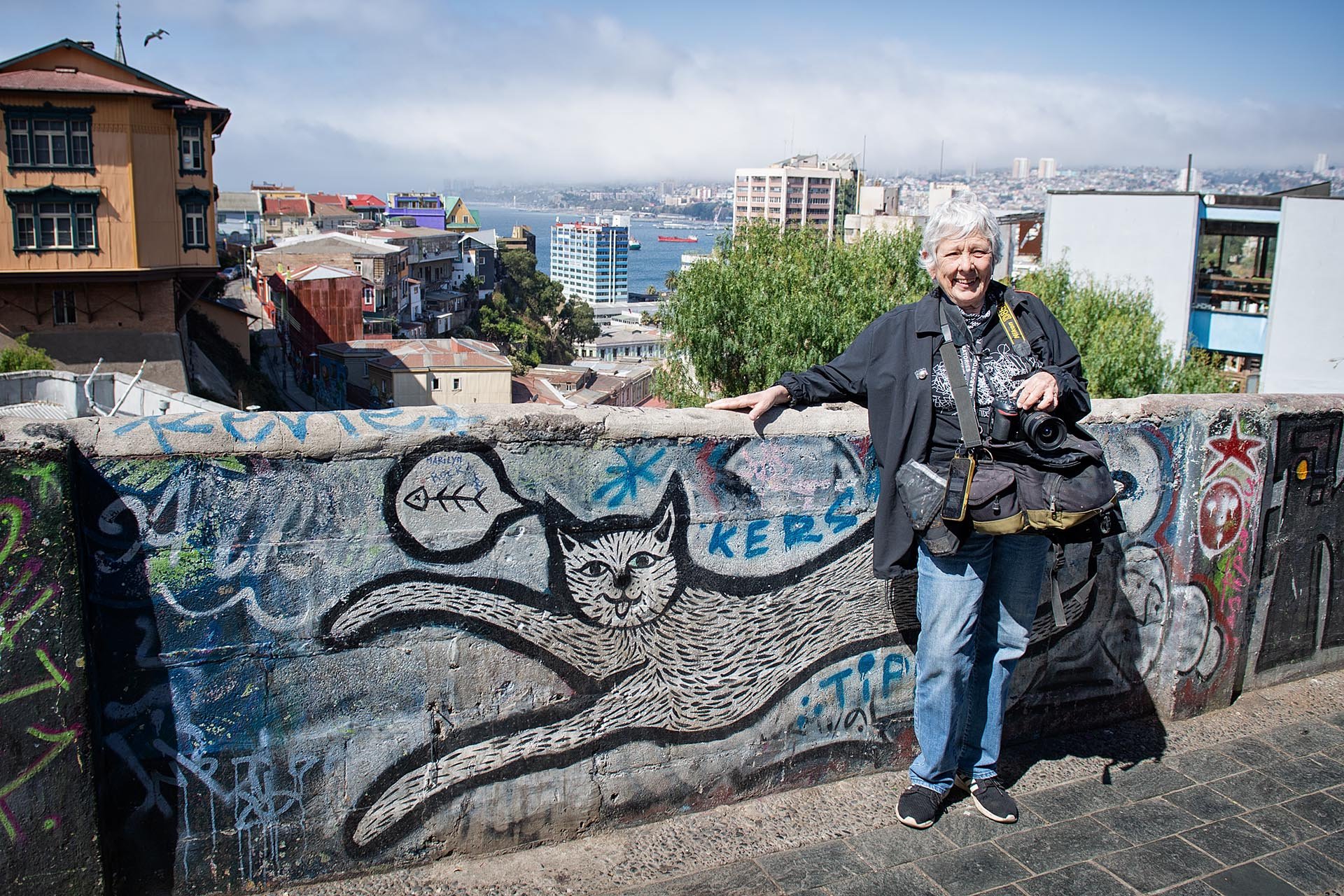
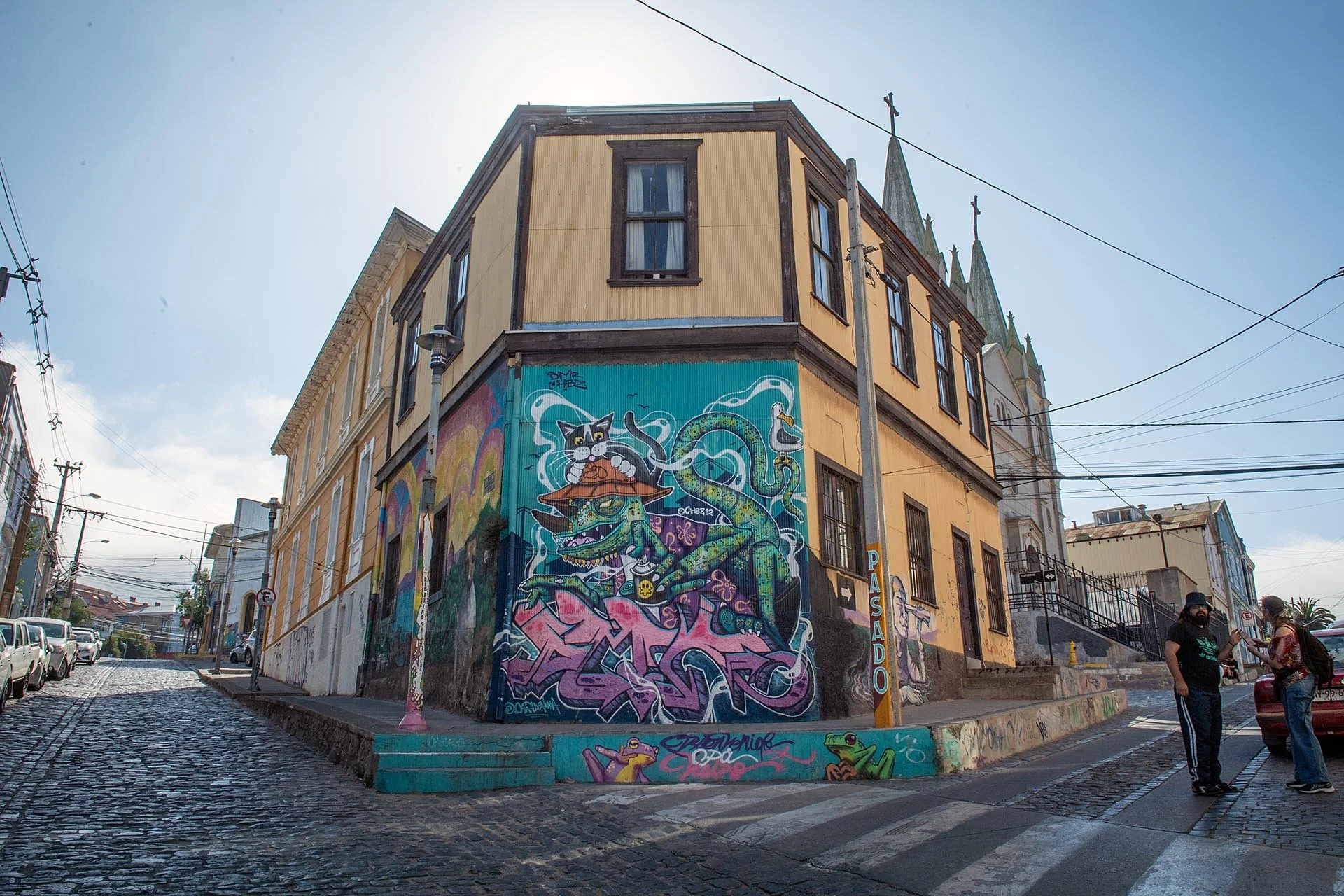
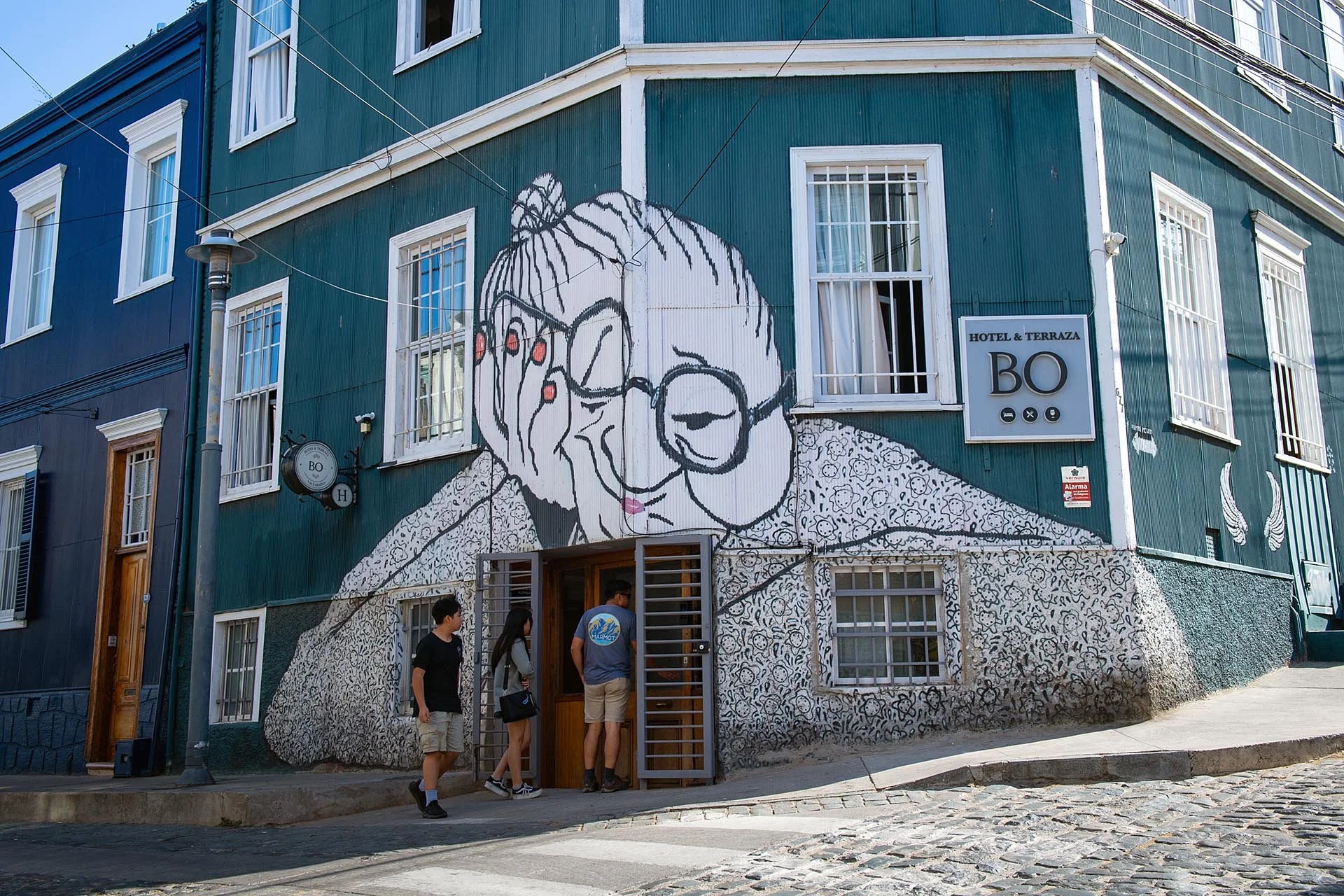
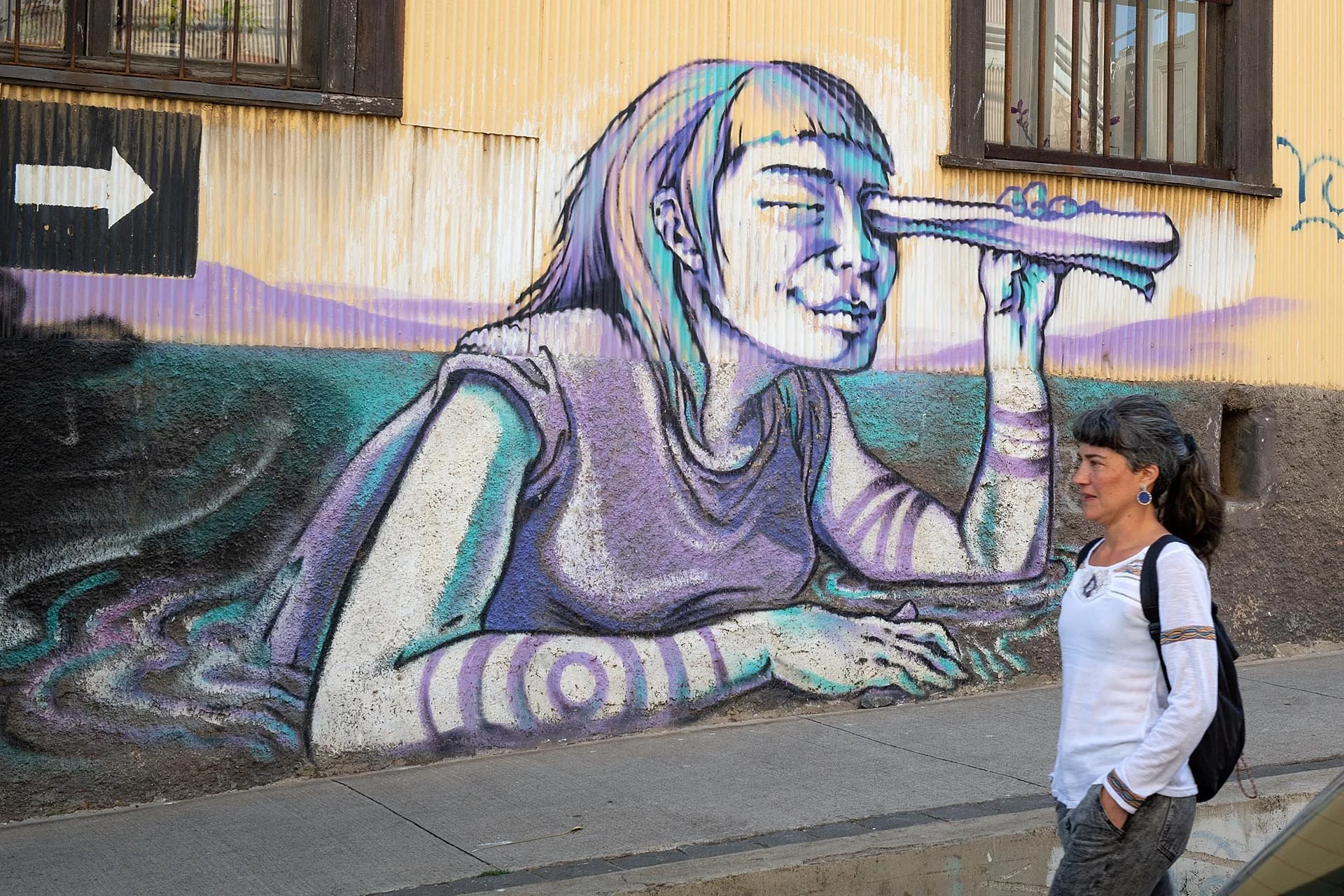
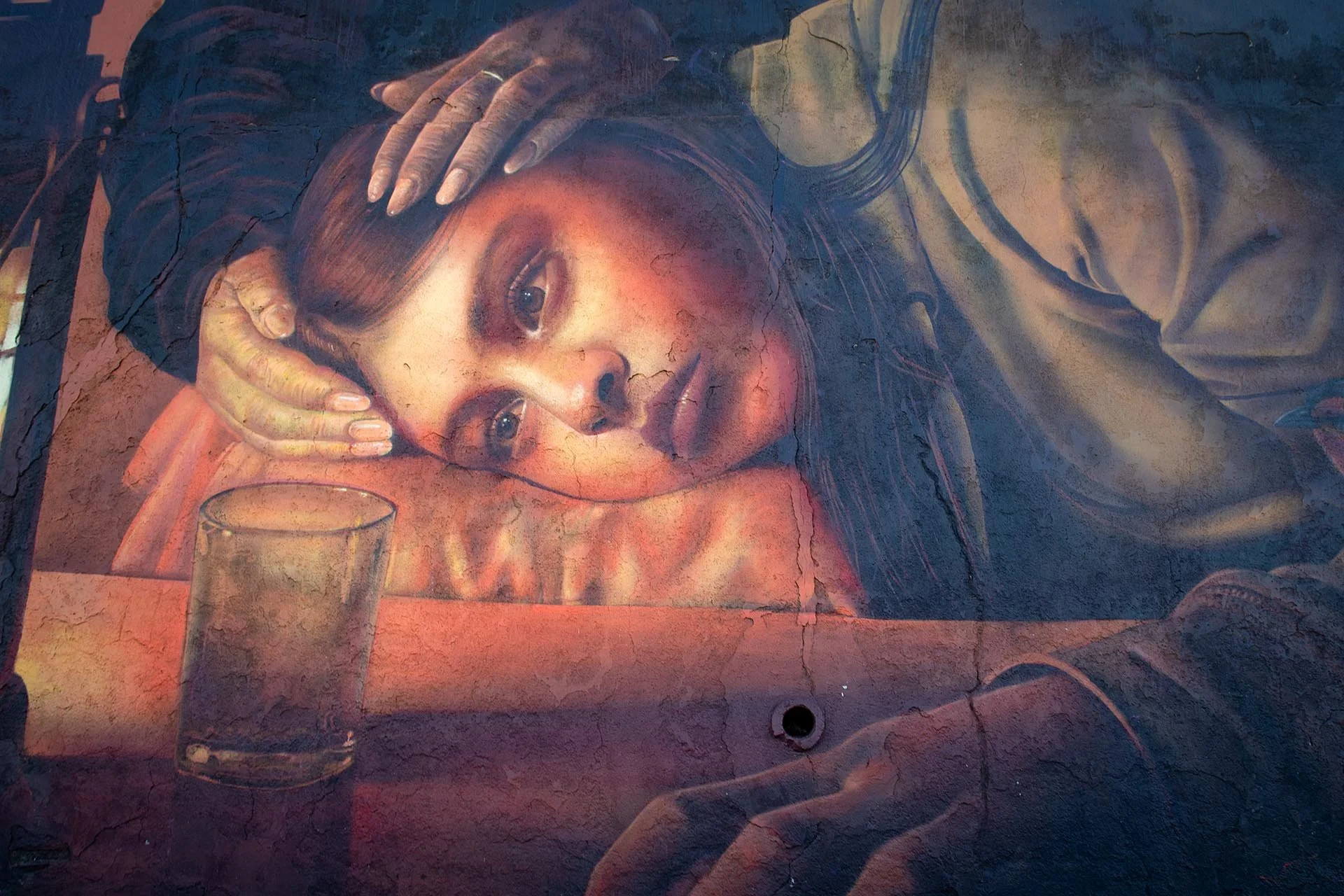
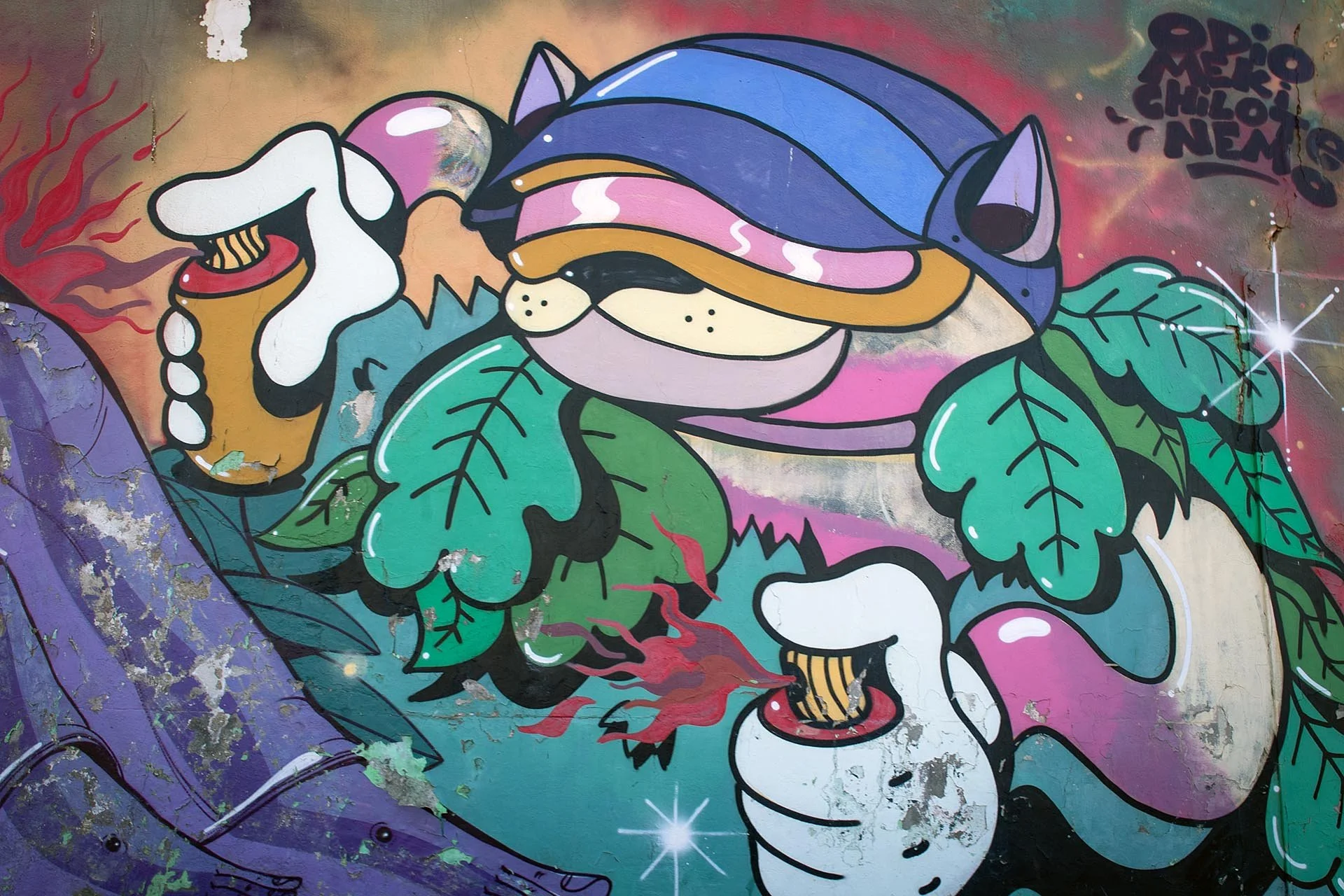
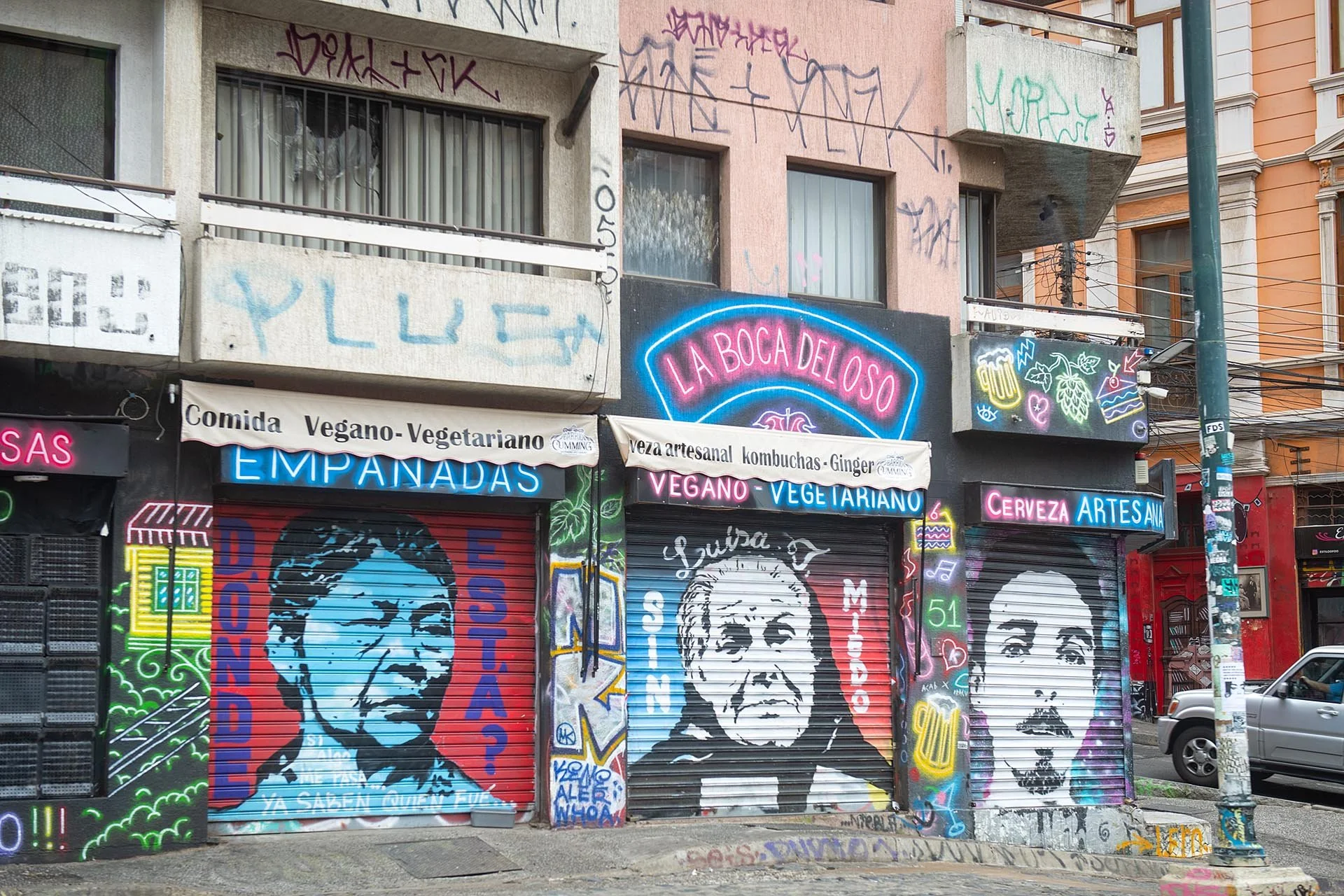
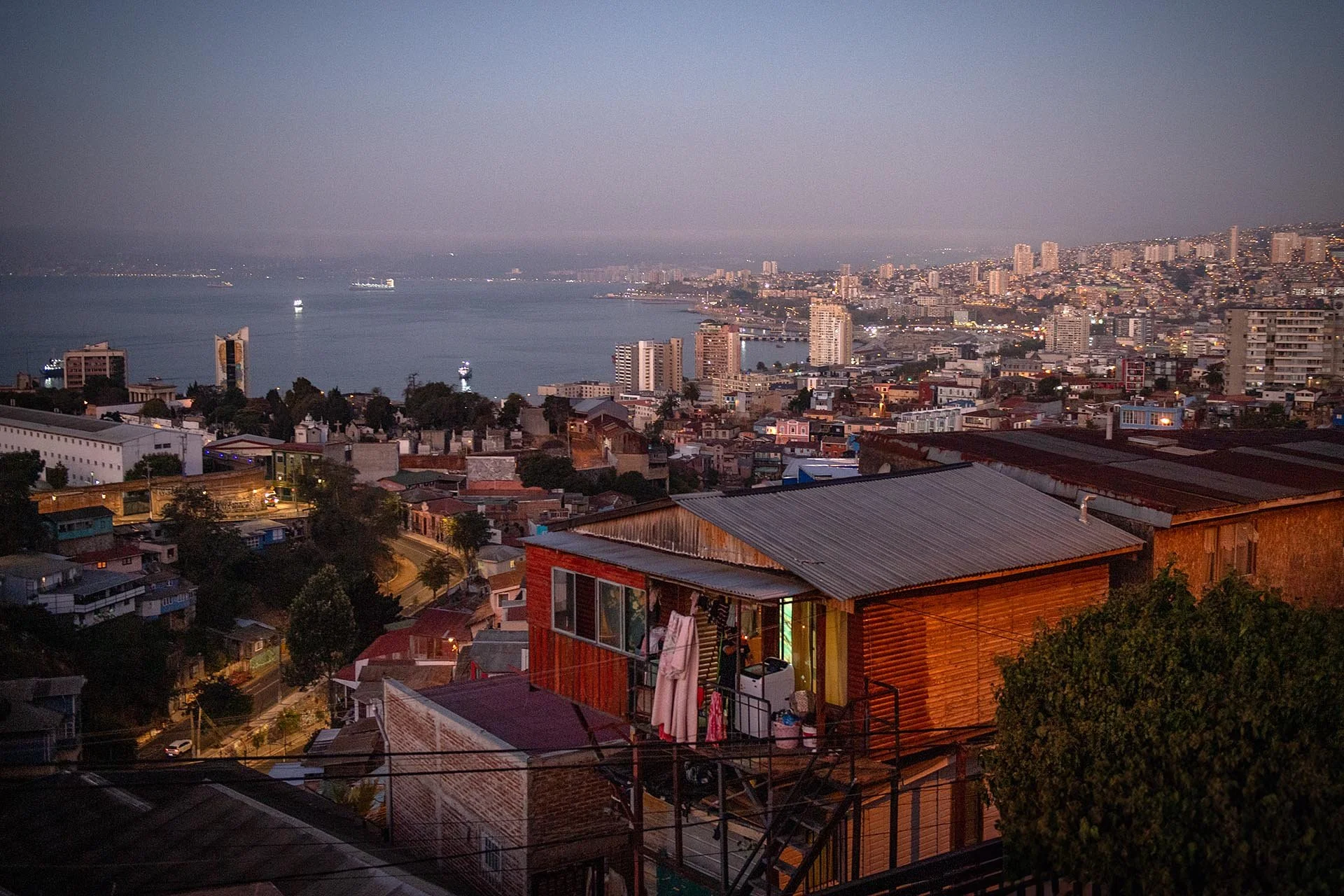
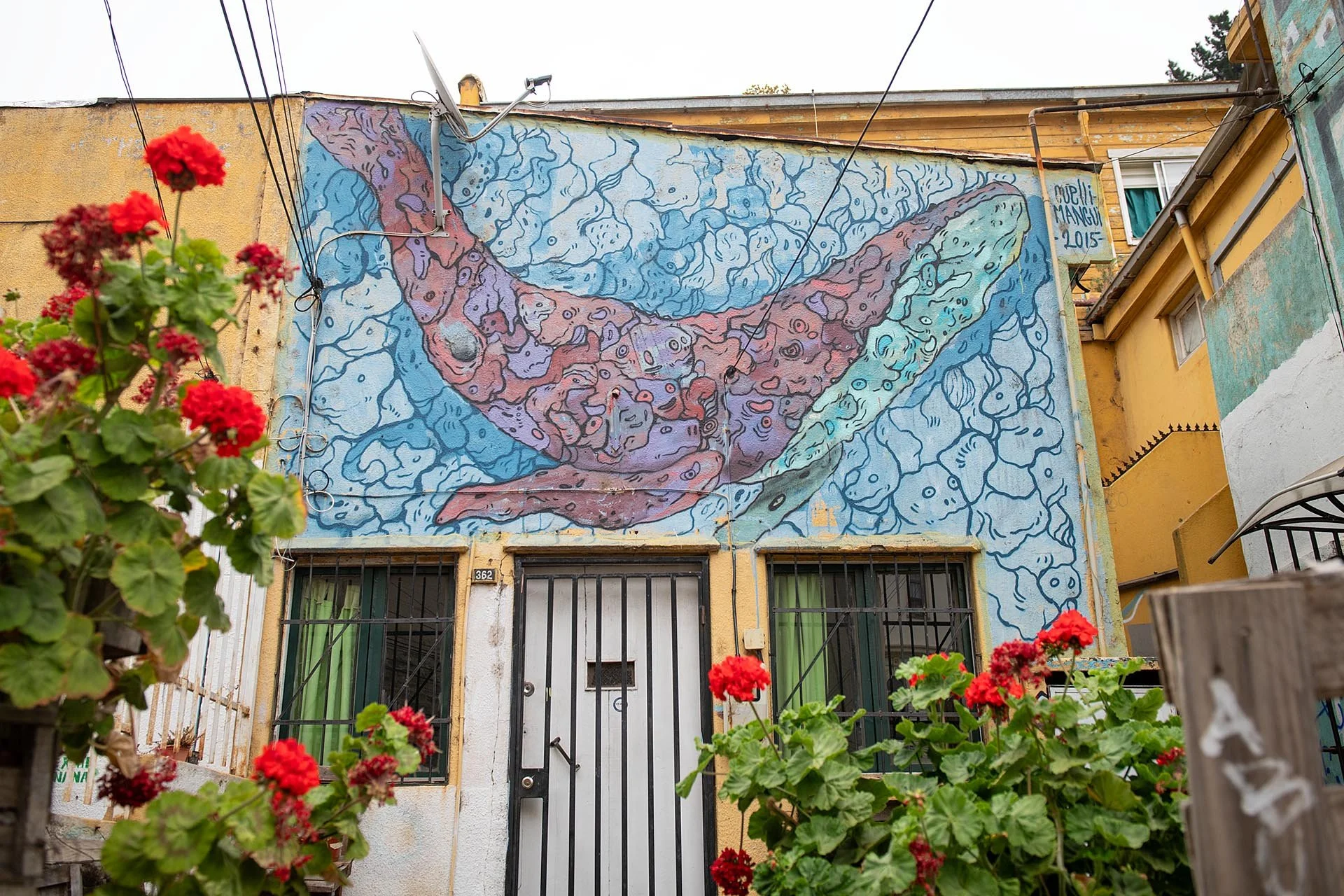
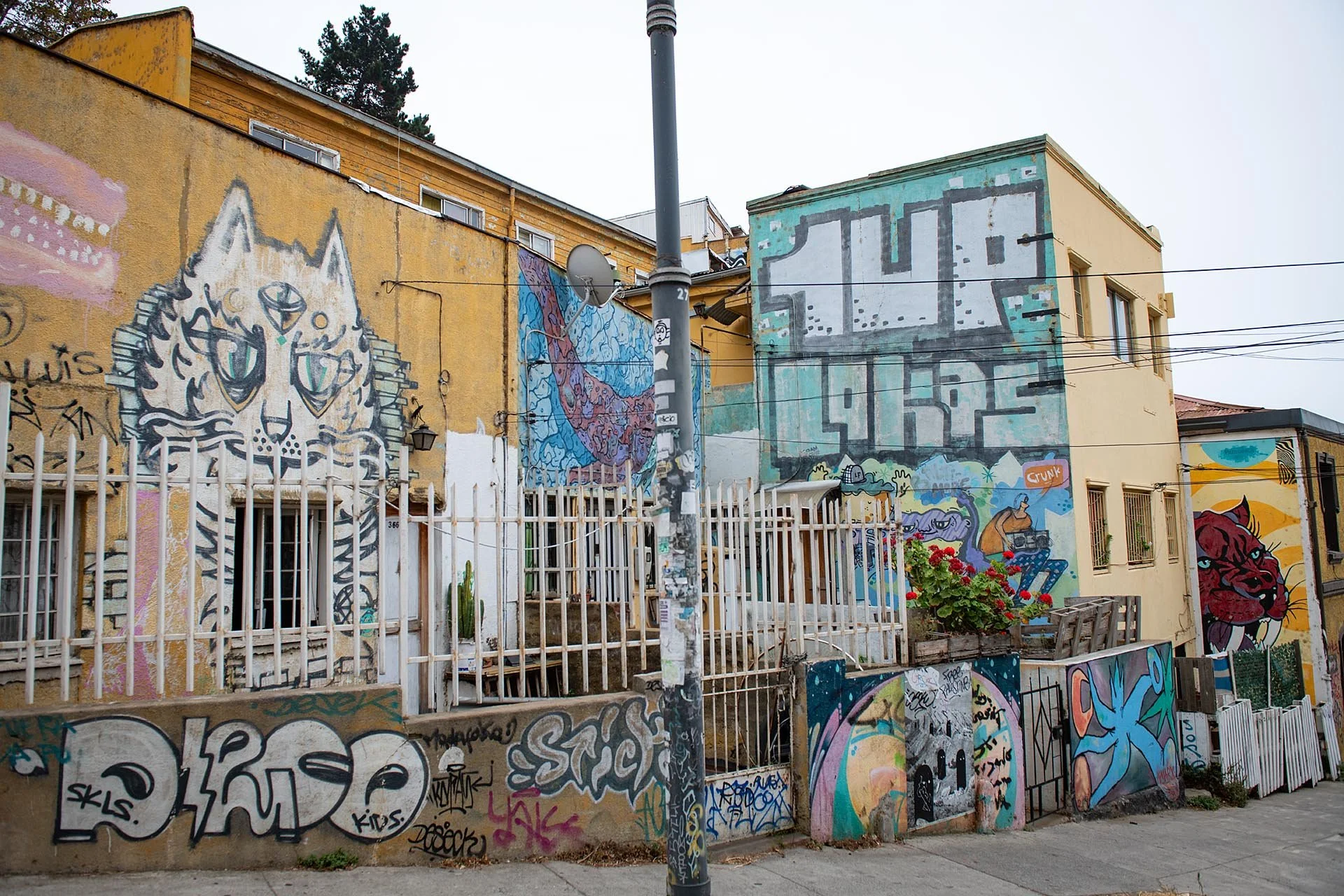
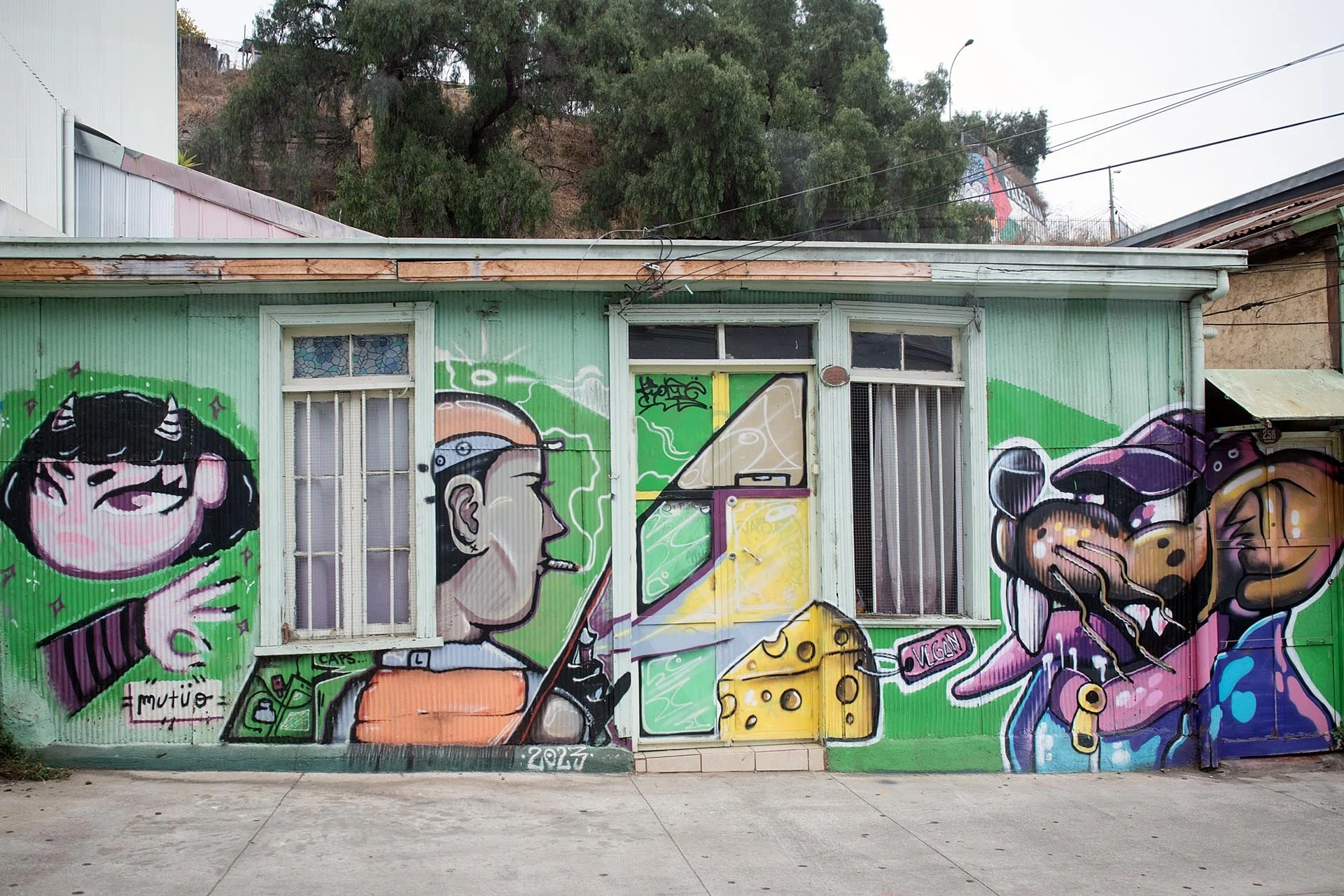
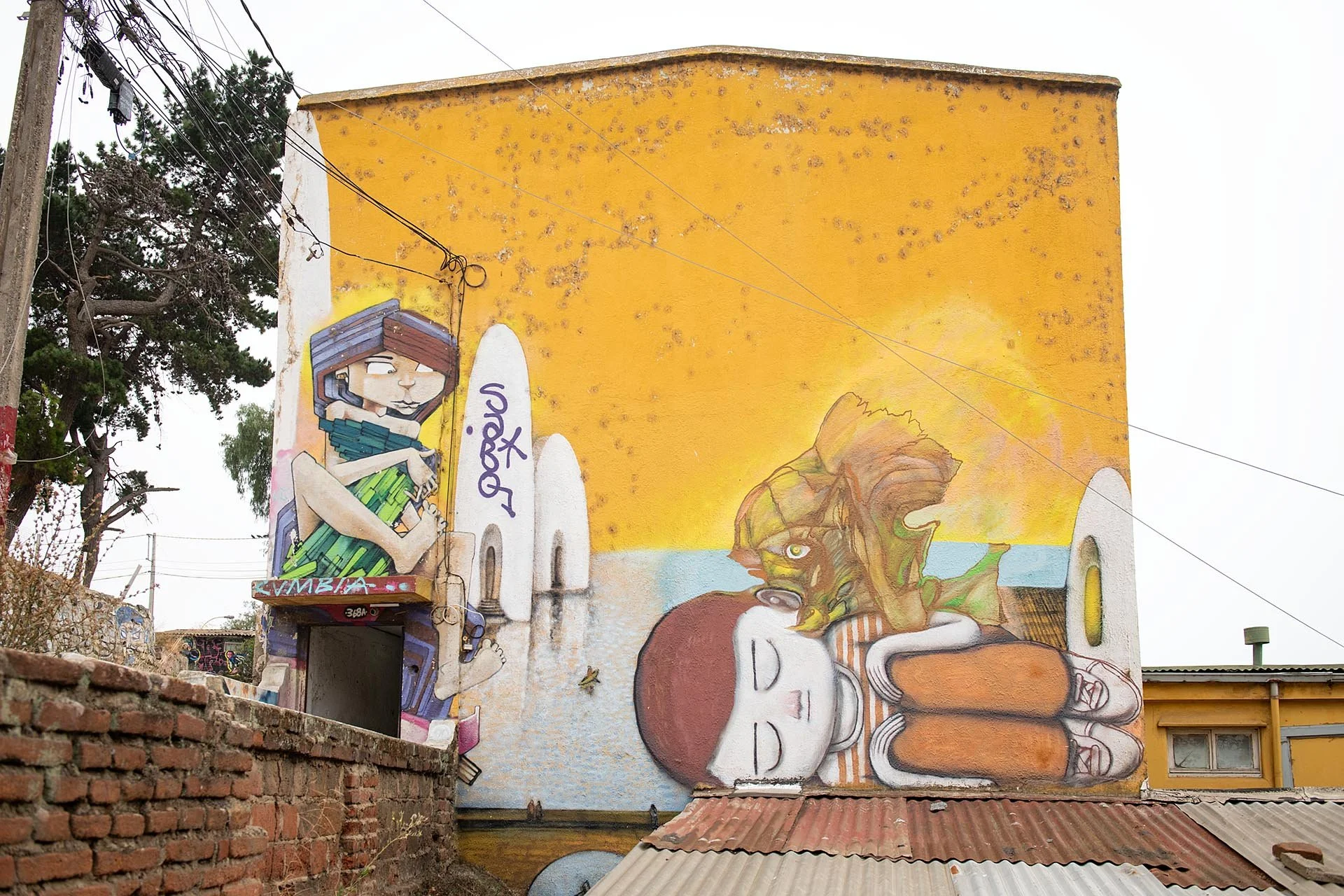
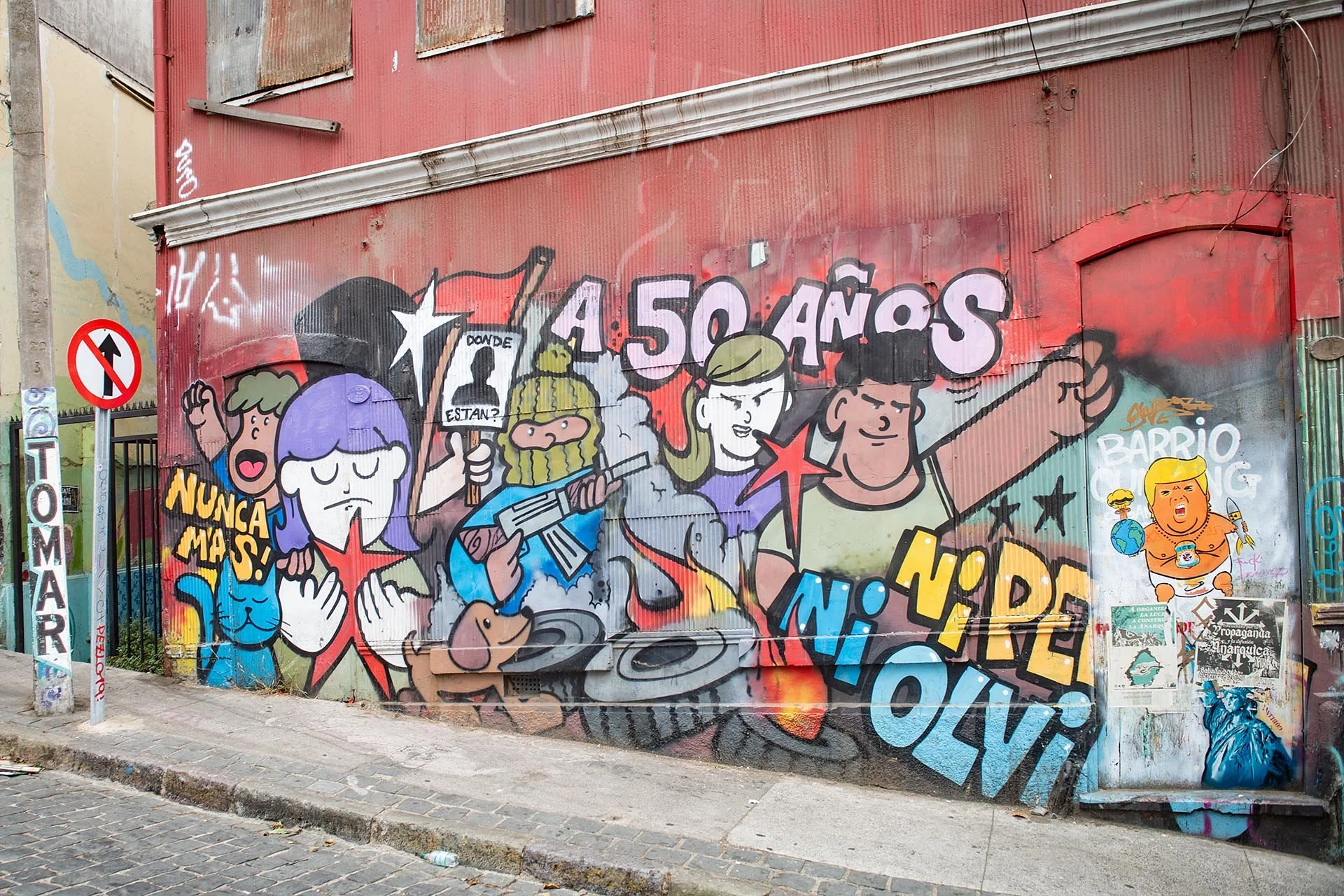
The city is a vertical poem of color. Murals spill down staircases. Graffiti wraps around entire hillsides. Every wall feels like it has something to say. The Pacific stretches out in front of you, wild and blue, and the light changes by the minute. We stayed at Camila 109 B&B, a small hostel perched above the city with a wide view over rooftops and water. Our host Ulises was warm and generous, the kind of person who makes you feel at home within five minutes.
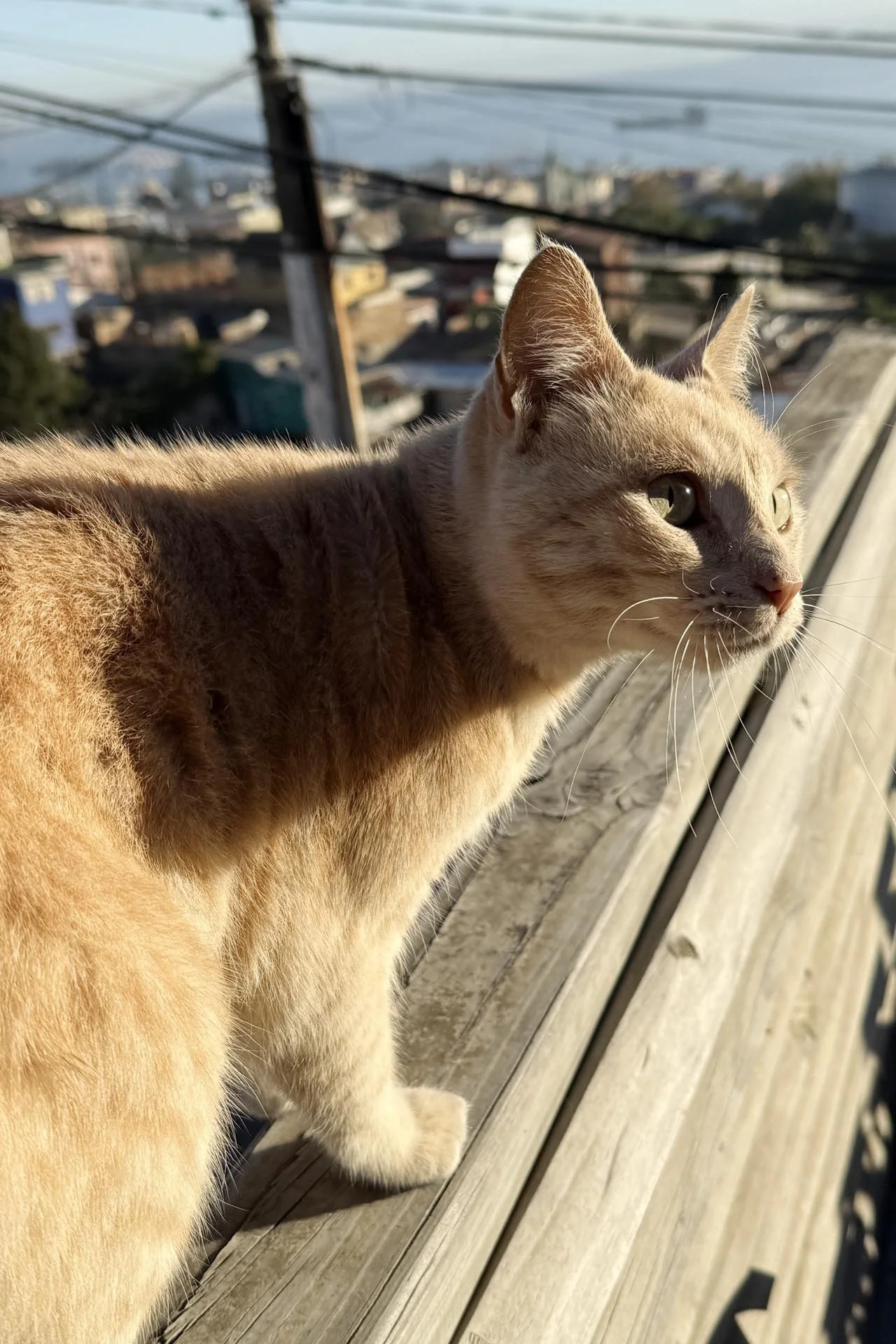
And on the first night, a cat climbed in through my window.
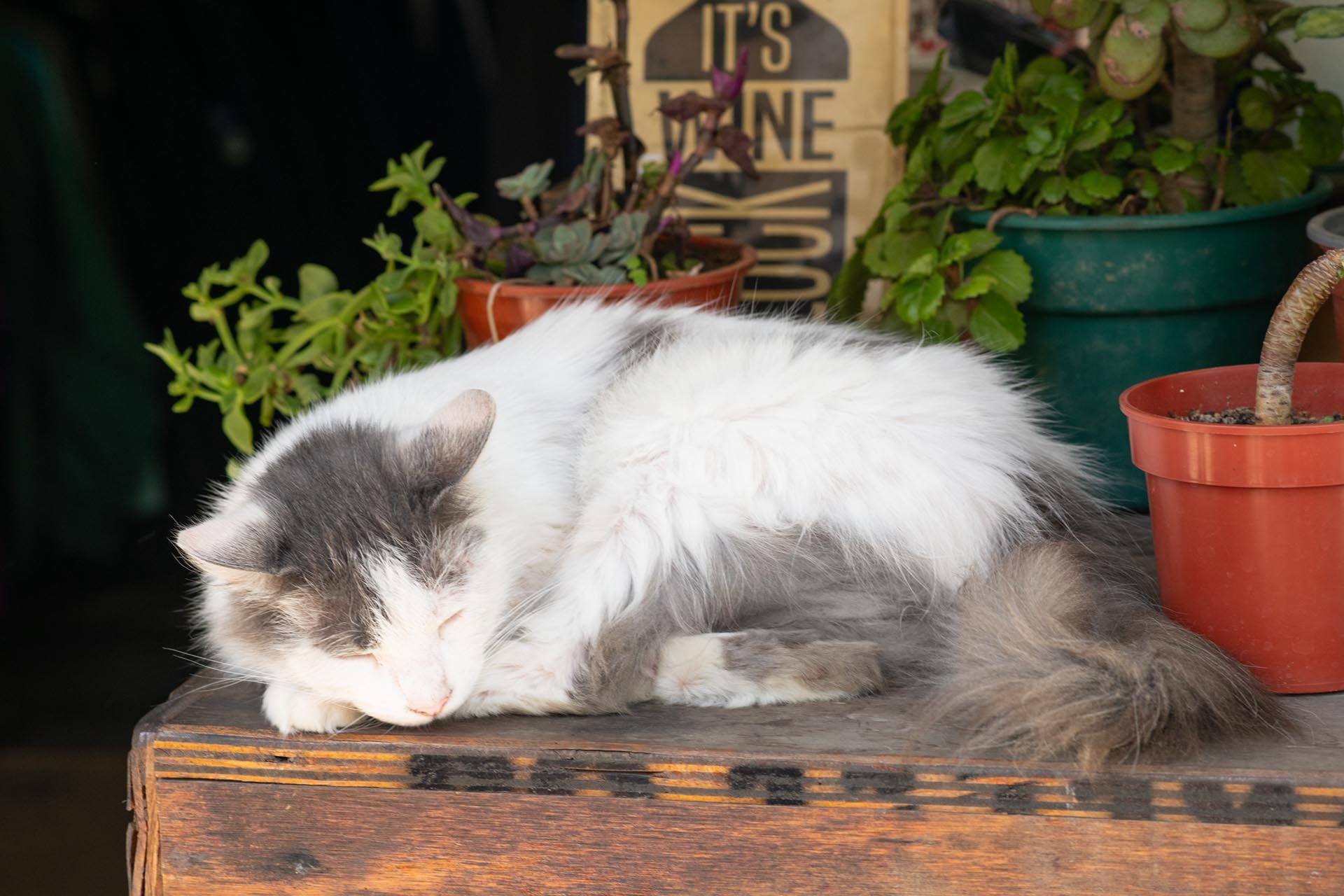
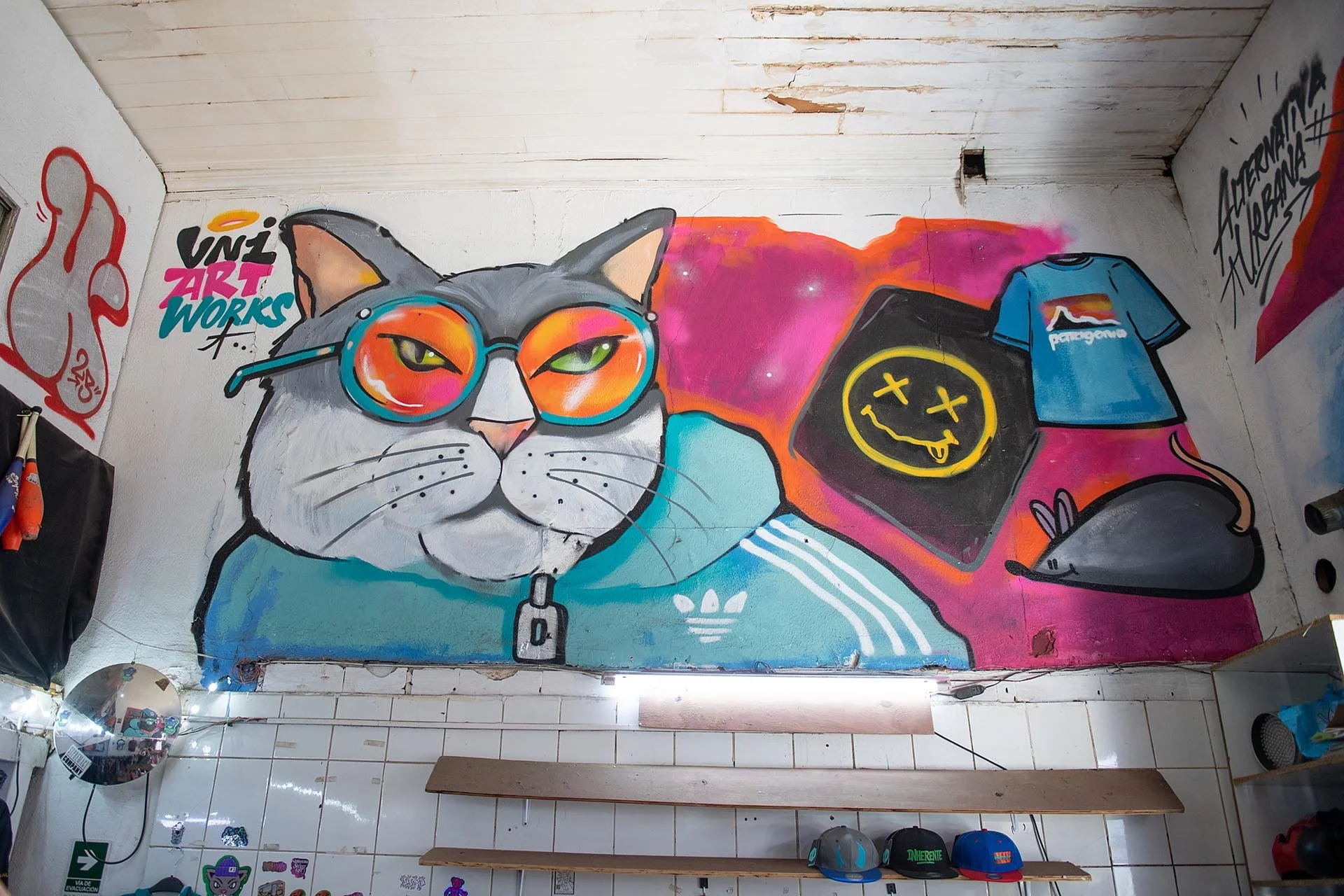
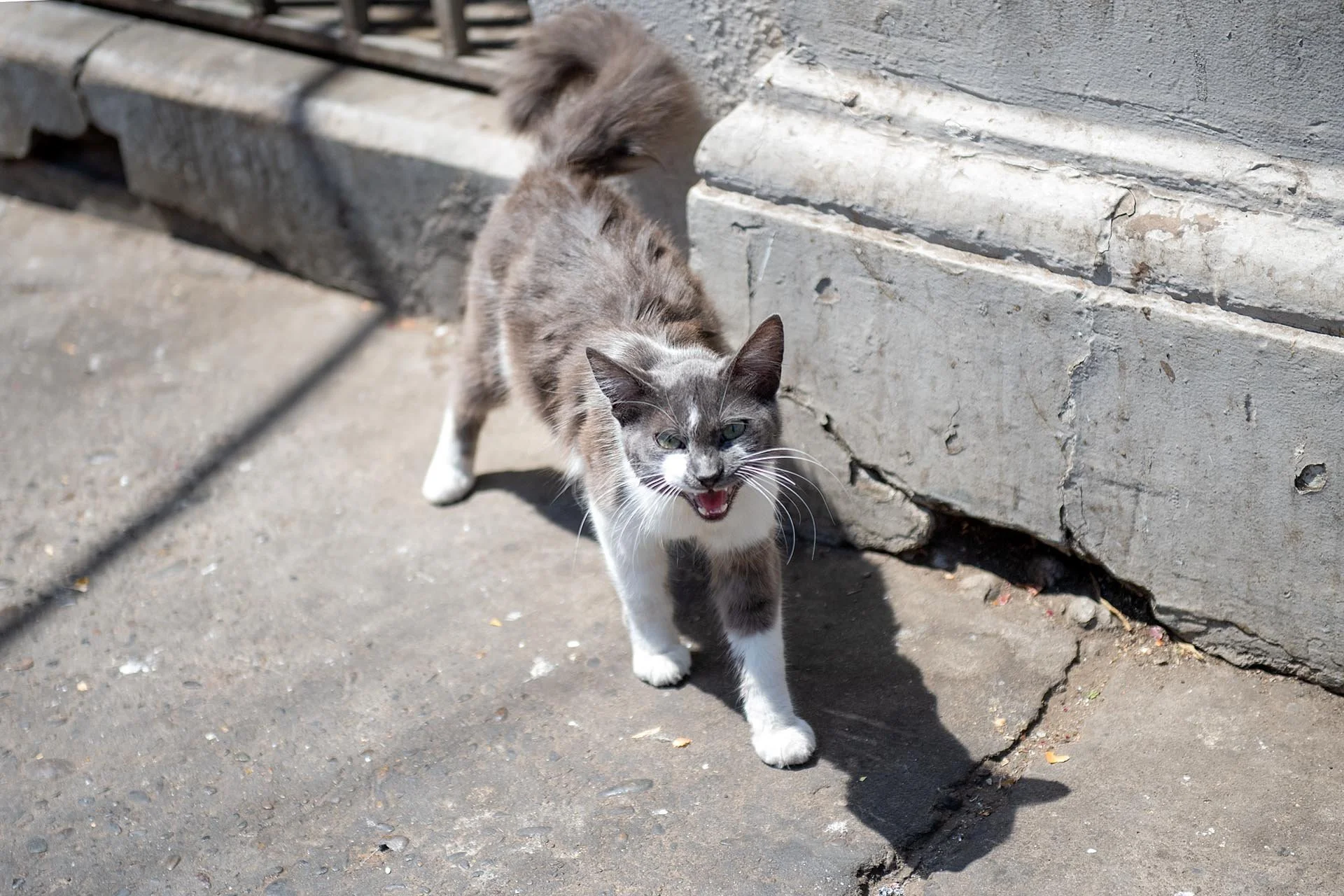
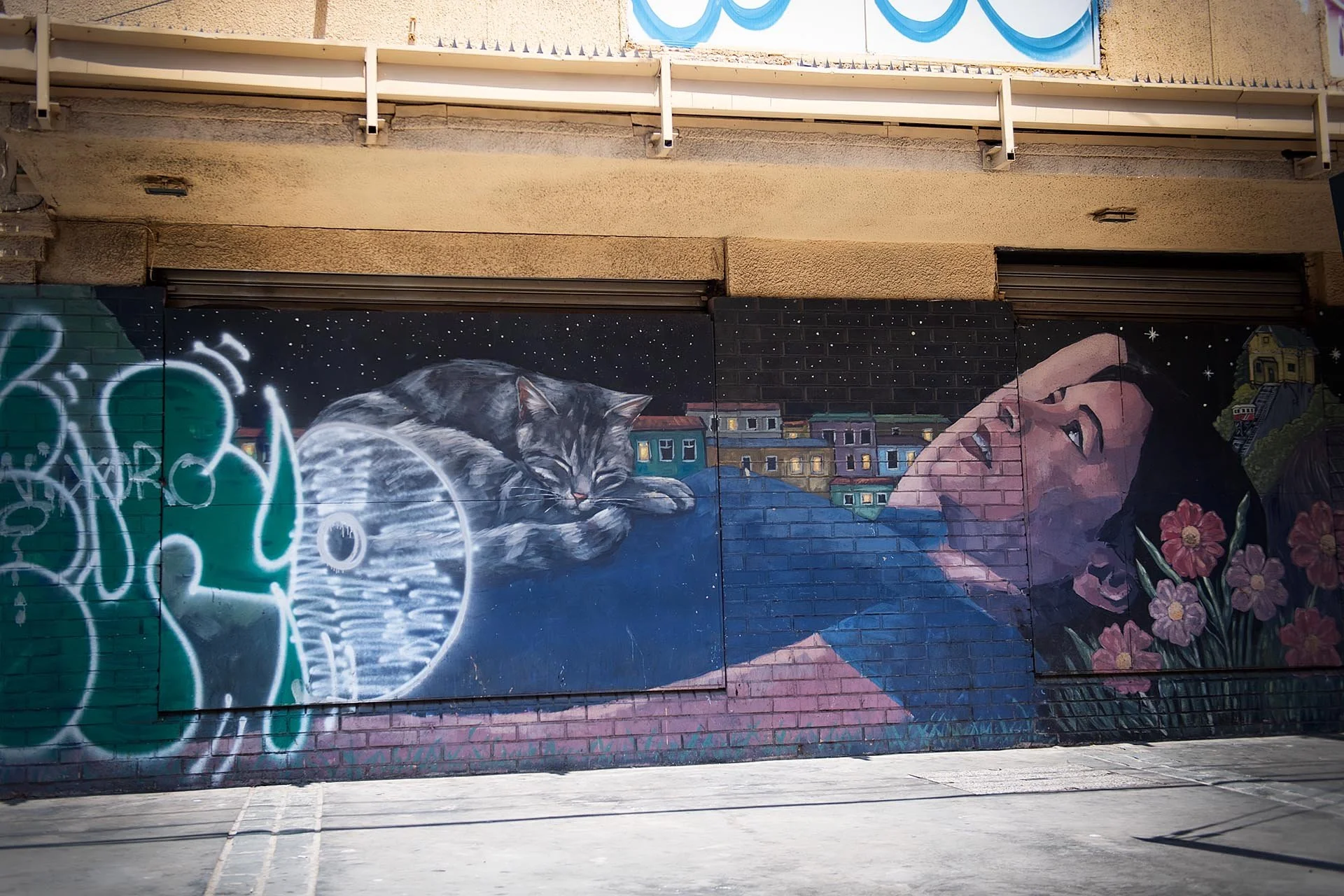
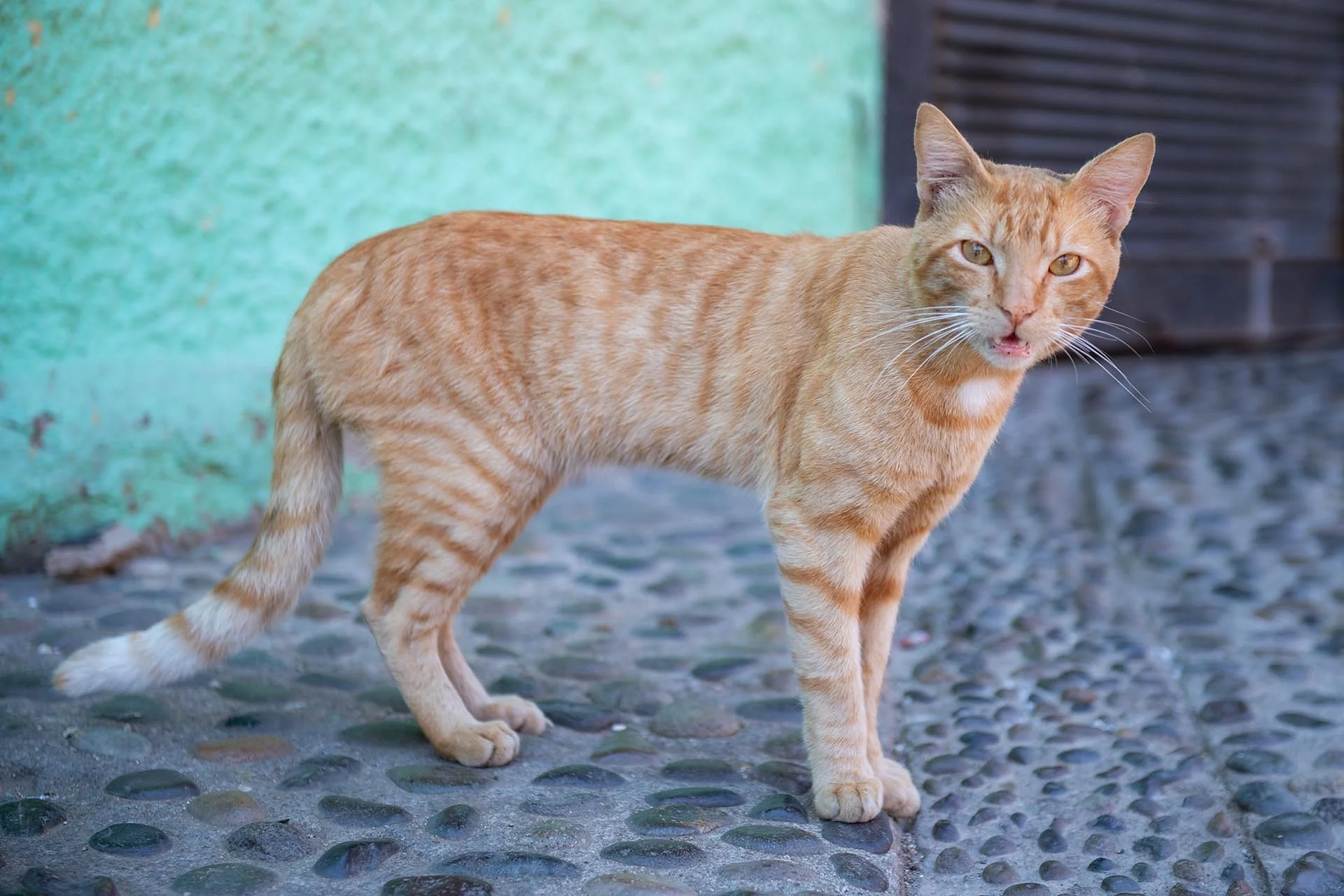
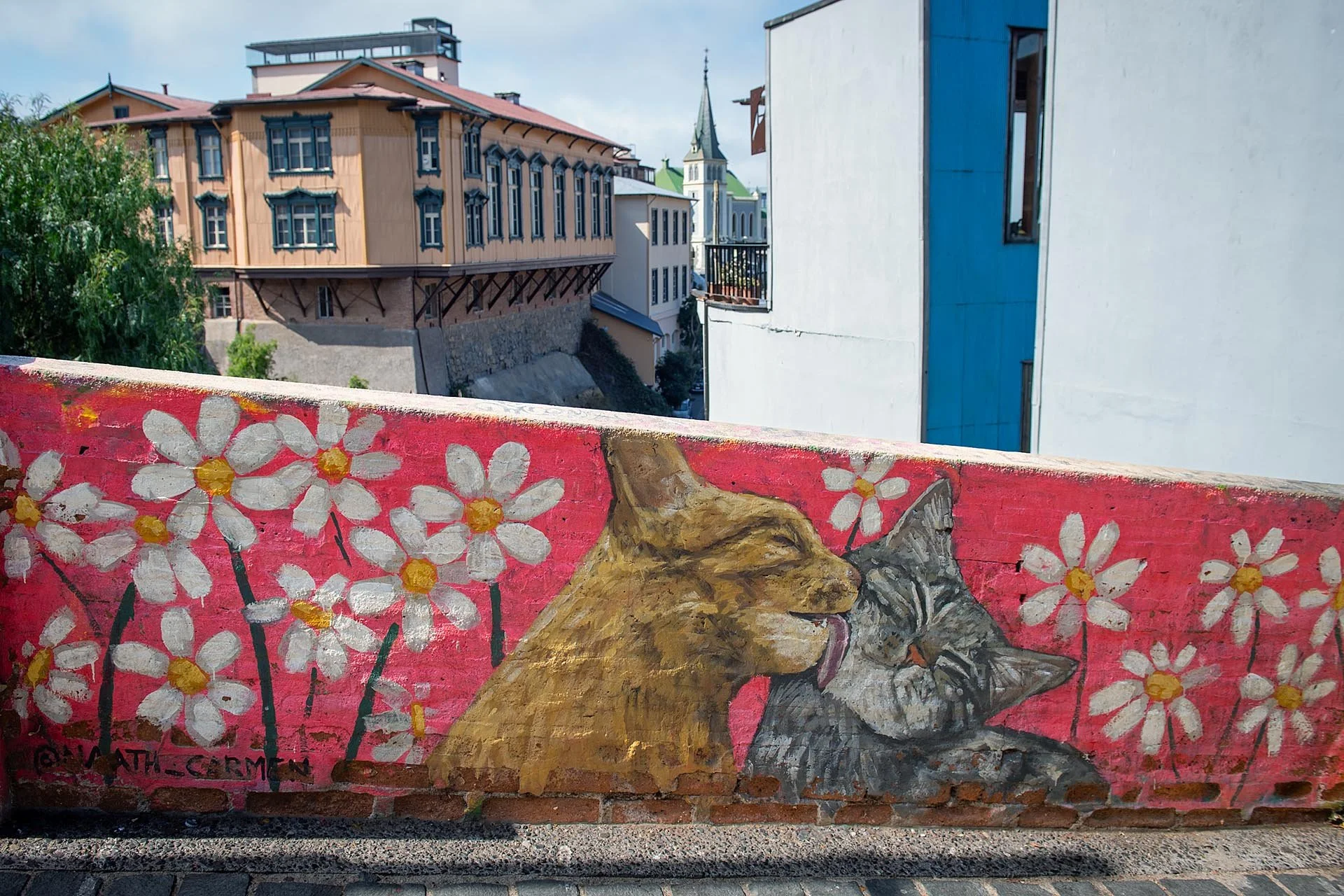
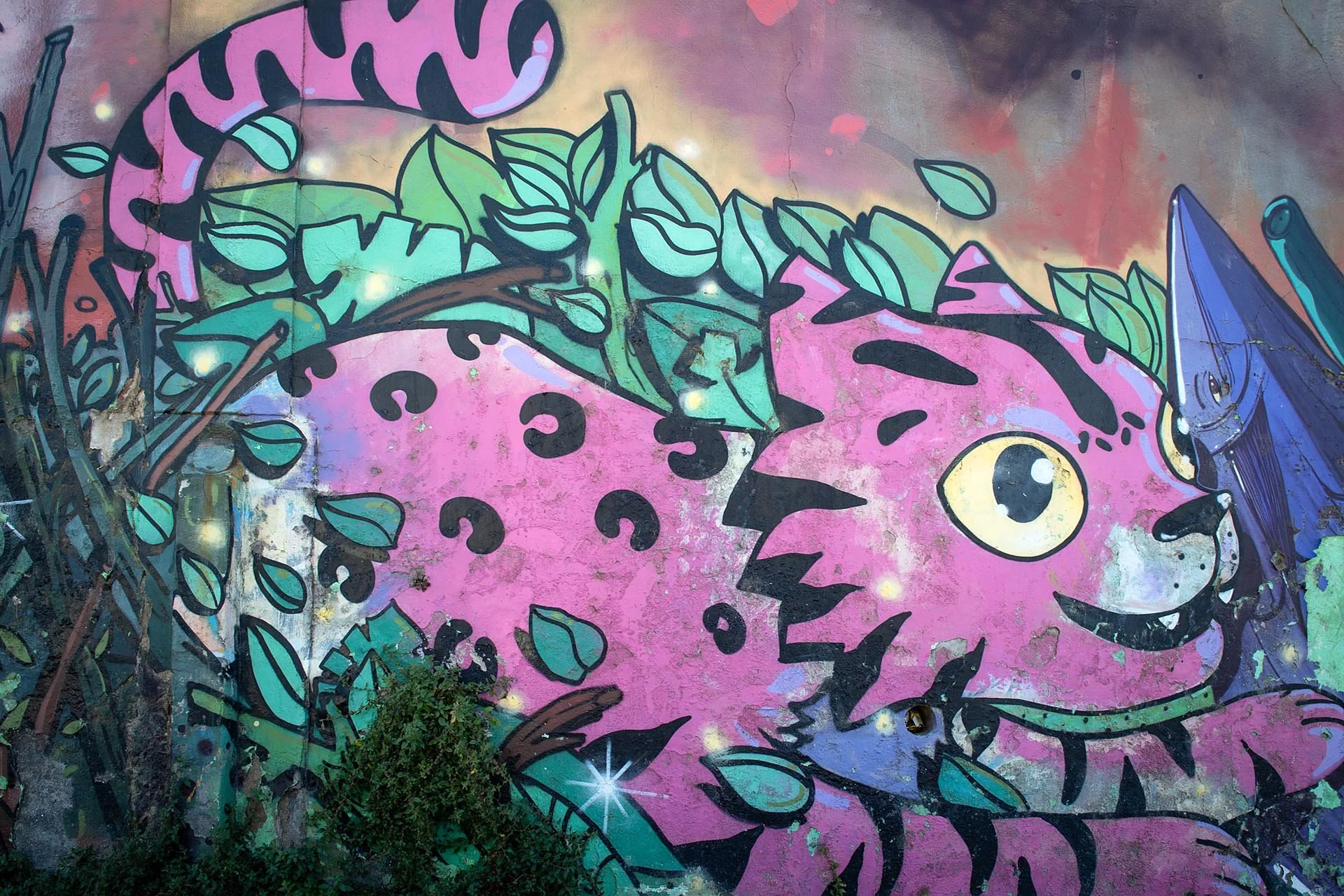
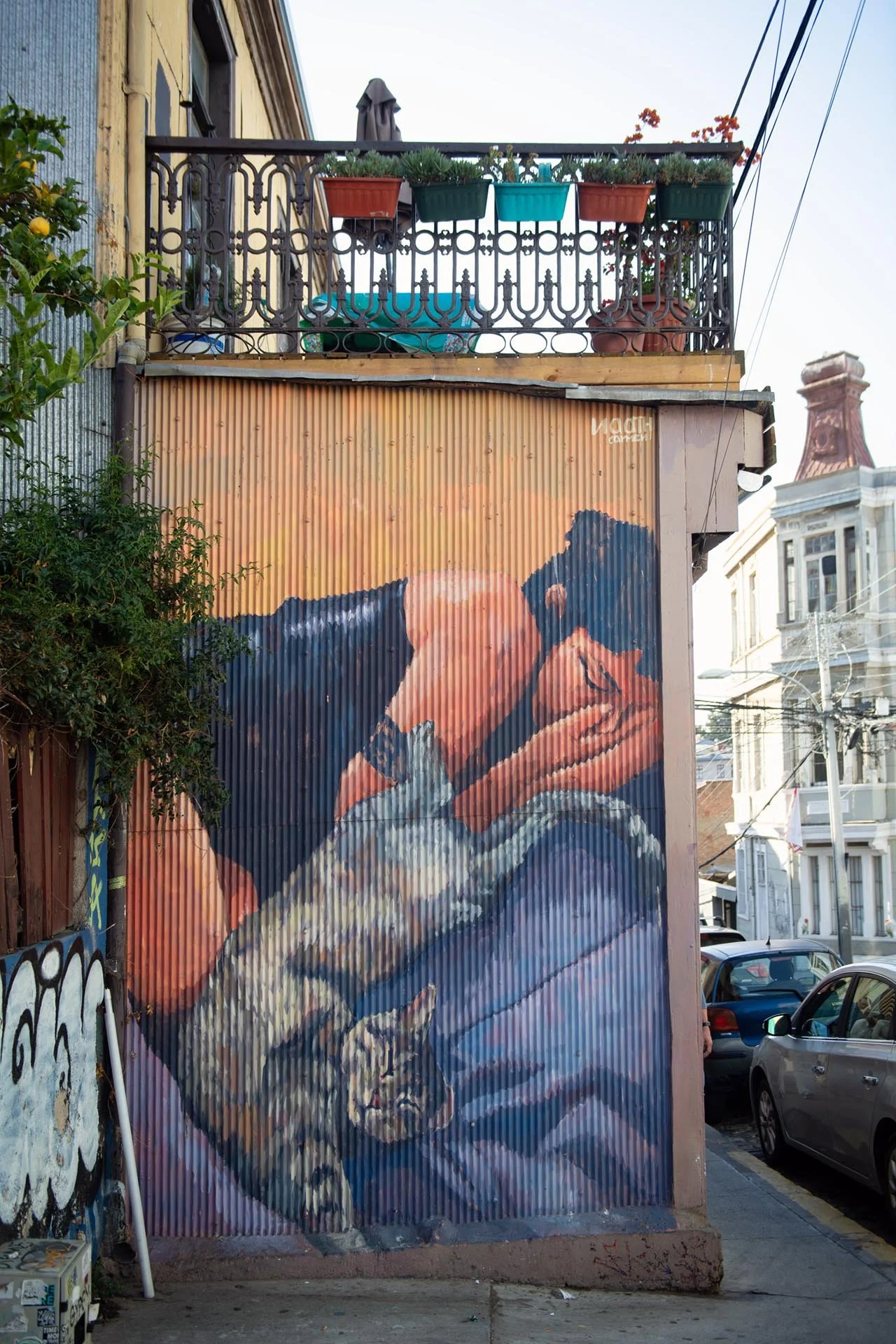
Valparaíso, like Istanbul, is a city of cats. They are everywhere. On rooftops. On staircases. Sleeping on car hoods. Painted on walls. Loved by everyone. The streets feel shared between humans and felines.
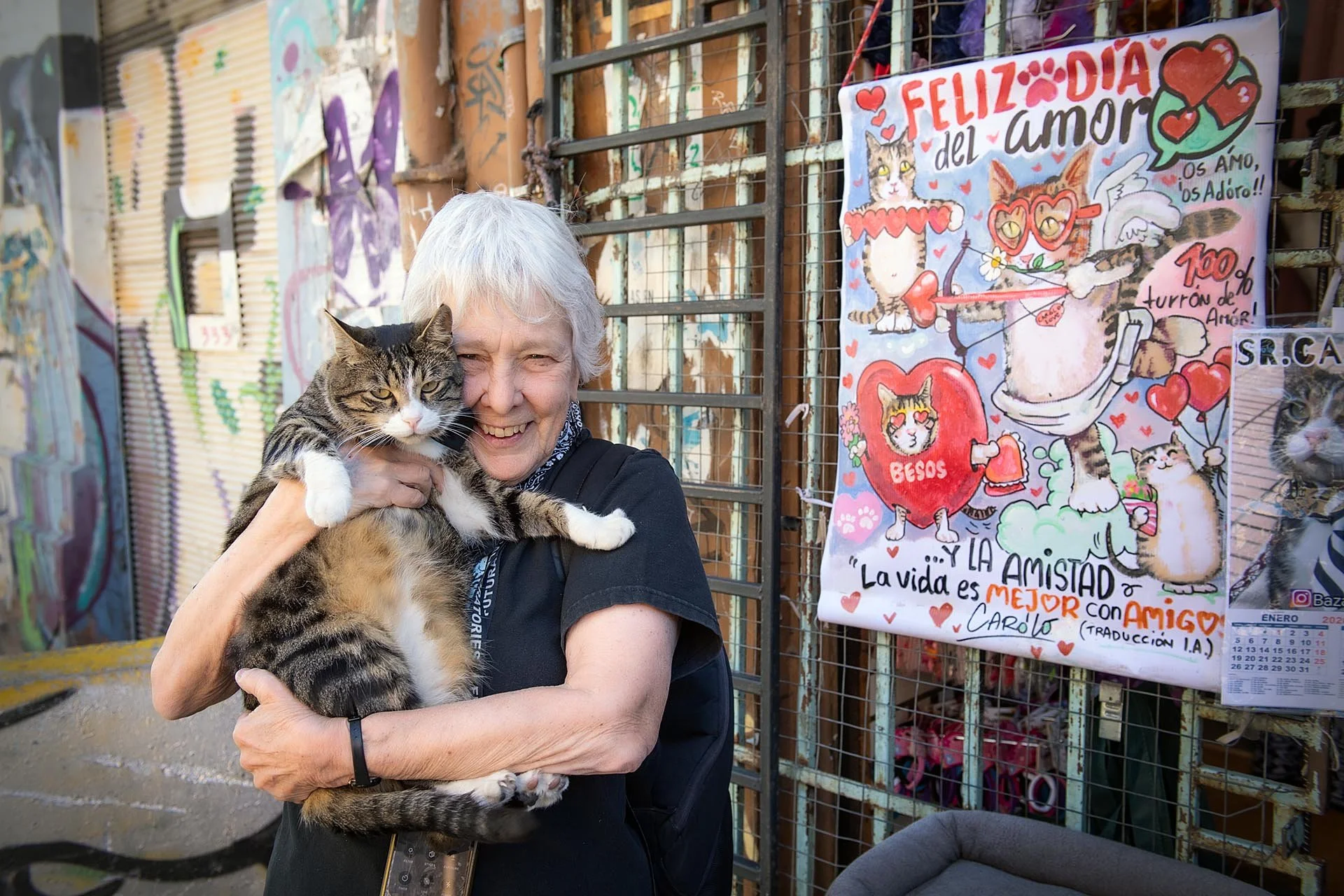
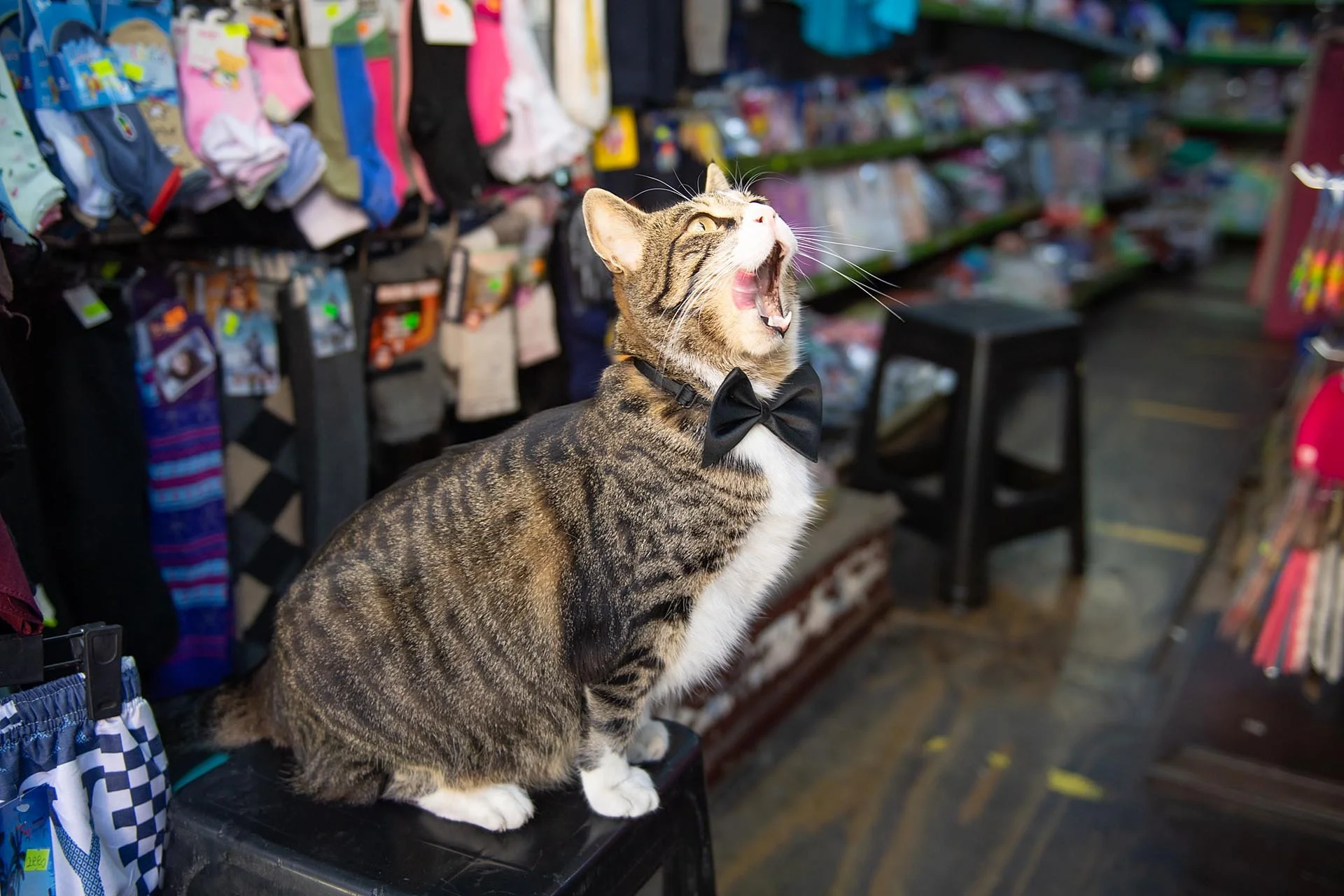
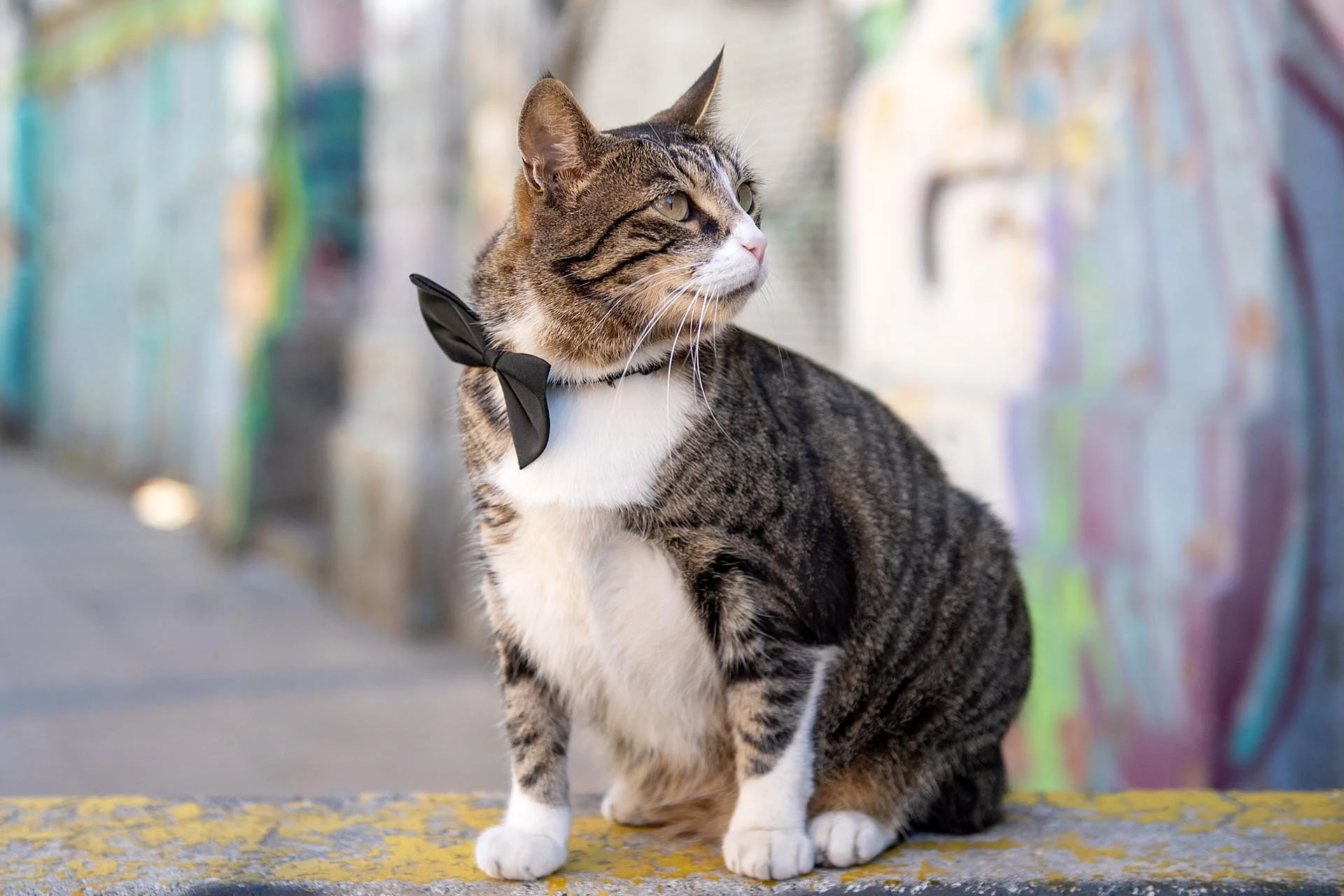
One of the most famous of them all is Señor Carolo. He showed up in Barrio Puerto around the time of a strong earthquake, simply appearing one day near a local shop and deciding to stay. The neighborhood — a historic port area that has seen hardship, decline, and repeated natural disasters — adopted him collectively. Over time, Carolo became something more than a street cat. He became a symbol of resilience and tenderness in a rough part of town. He now has nearly 26,000 followers on Instagram — more than twice as many as I do — and people travel specifically to meet him. Of course we did too. Marty squeezed him and covered him in affection, and we were both ridiculously ecstatic about it. In a city full of cats, he is their unofficial ambassador.
The cat who climbed through my window didn’t ask for permission. She simply appeared, soft and determined, and settled onto my bed like it had always been hers. She was a very pretty, pale orange, very playful little thing. Every night she returned. Every morning she left through the same window, as if she had other business to attend to. She was small, affectionate, and completely self-assured. For a few days, she was mine. I named her Camelita.
I thought about taking her home to Germany. I really did.
But love is sometimes not enough. Taking her would have meant months of waiting, paperwork, vaccinations, quarantine. Four months at least. The romance of rescue collided with reality. So I left her there — free, independent, part of the city that already belonged to her. We bought some flee and parasite medication for her, so she can stay safely in the next persons’ bed.
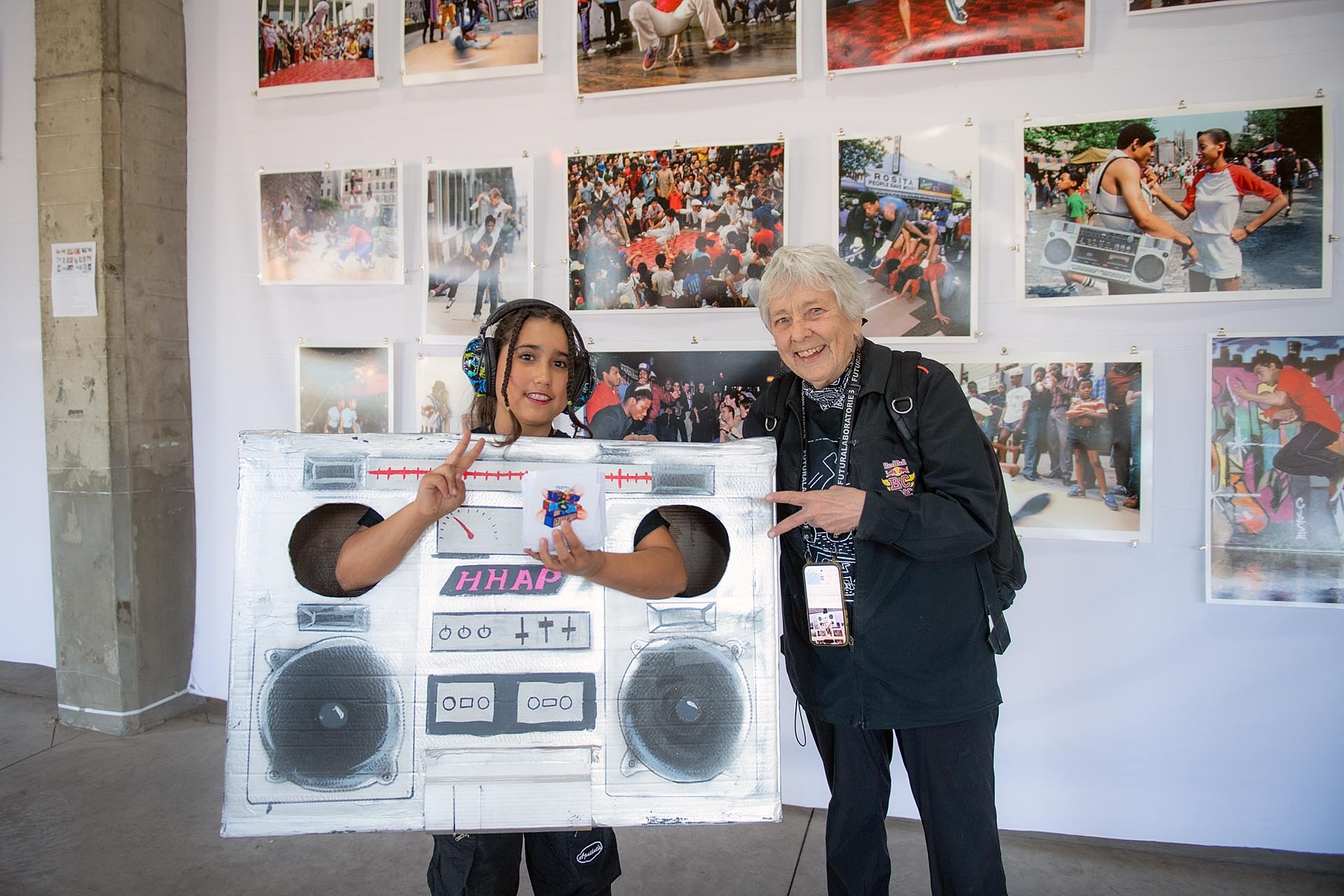
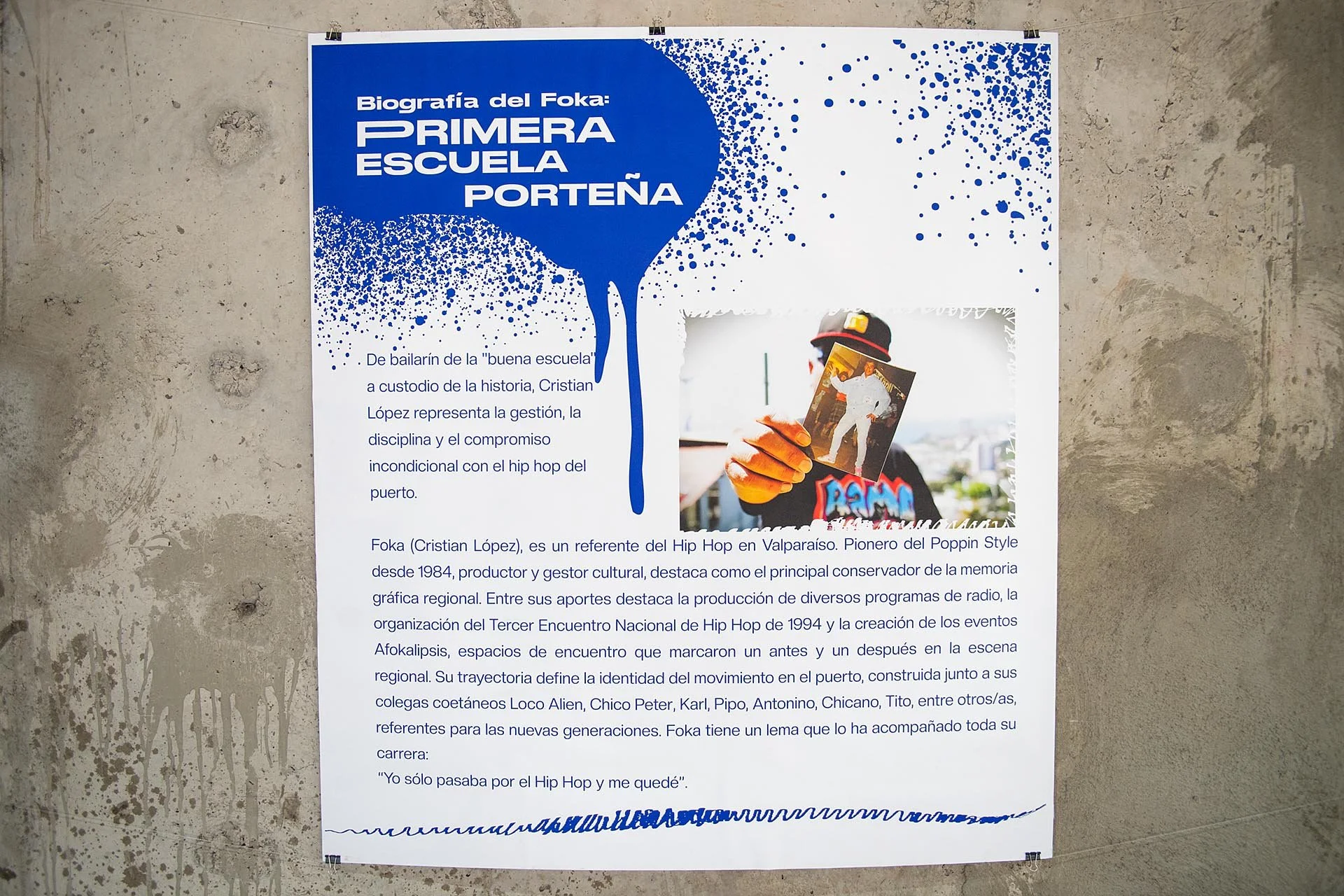
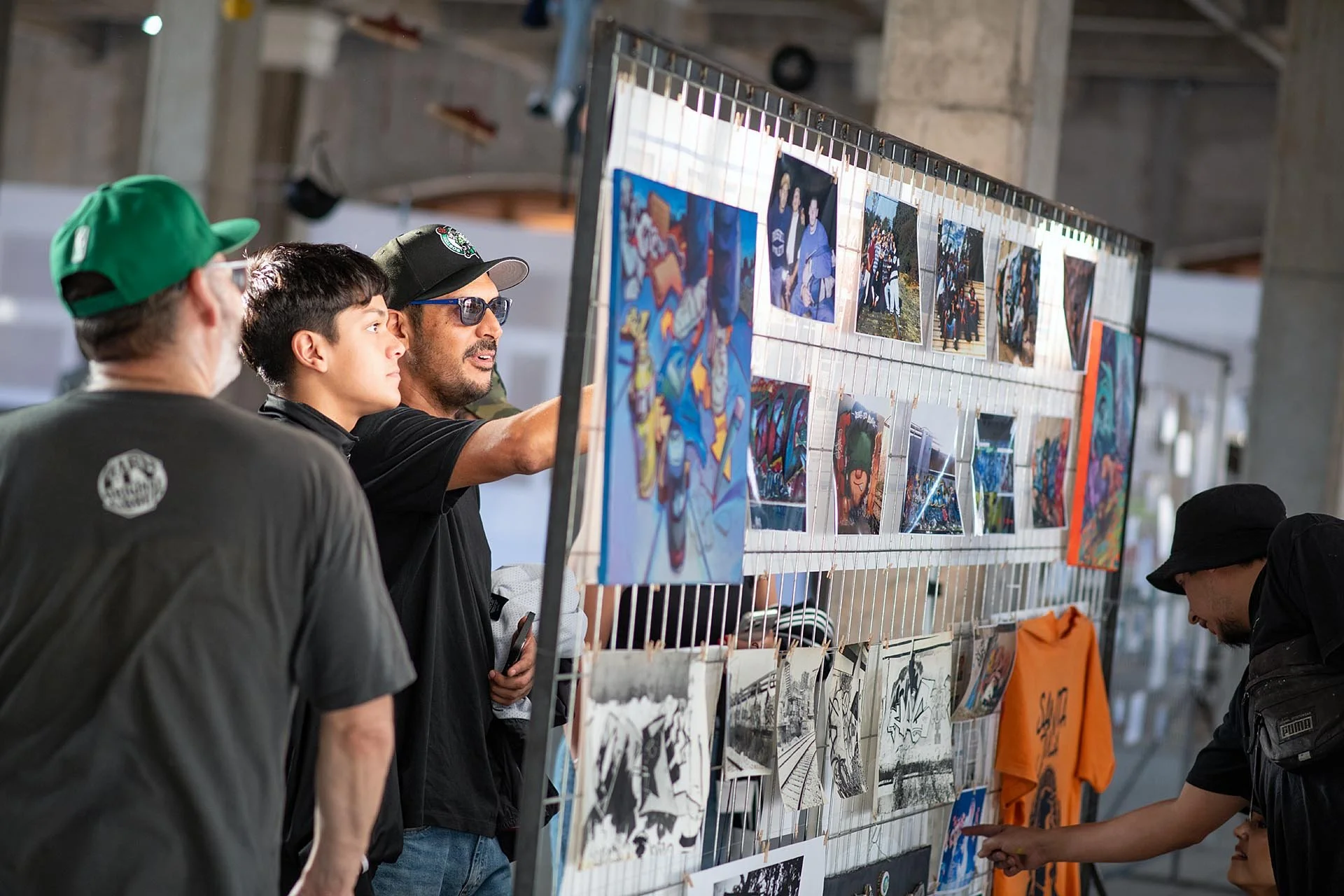
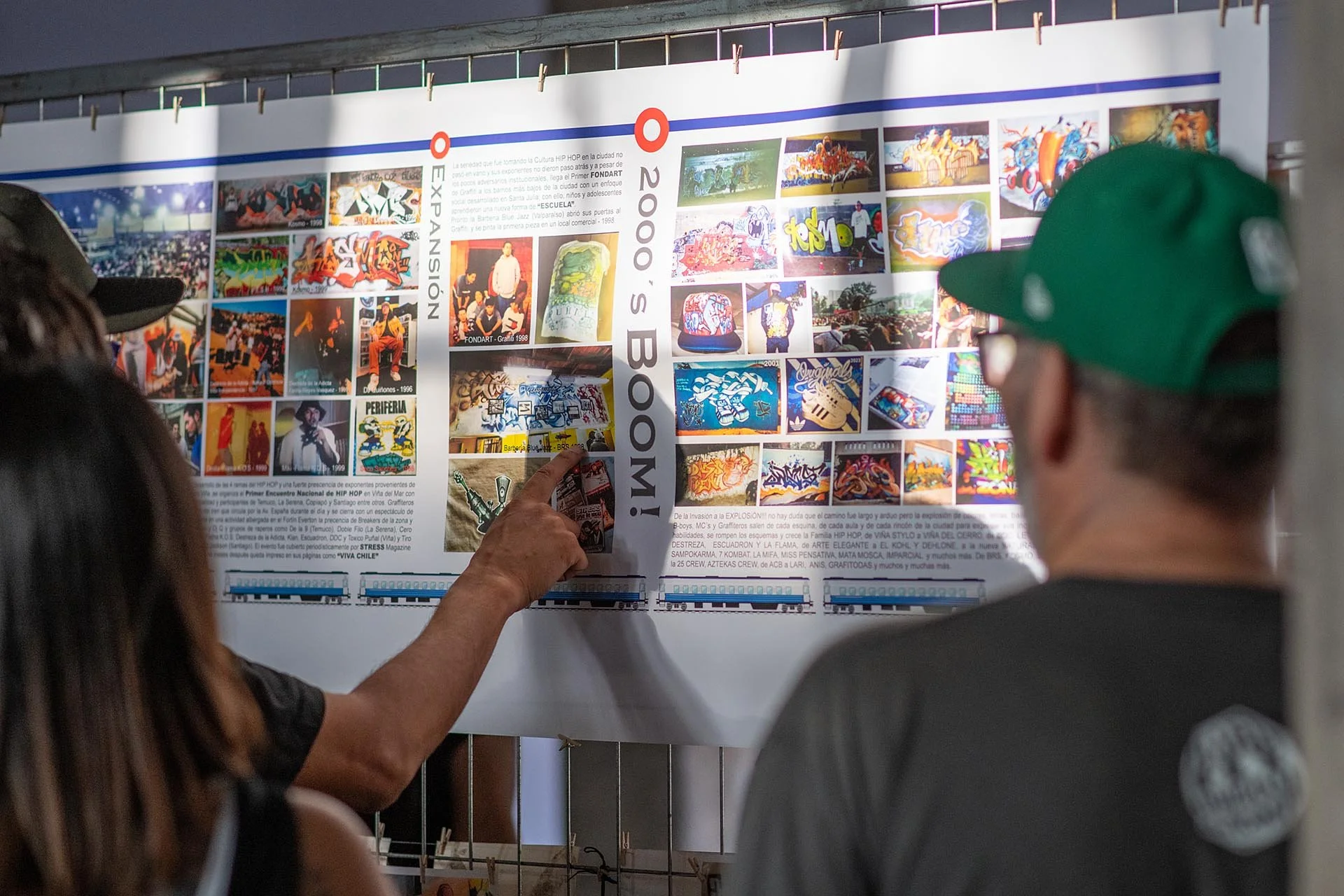
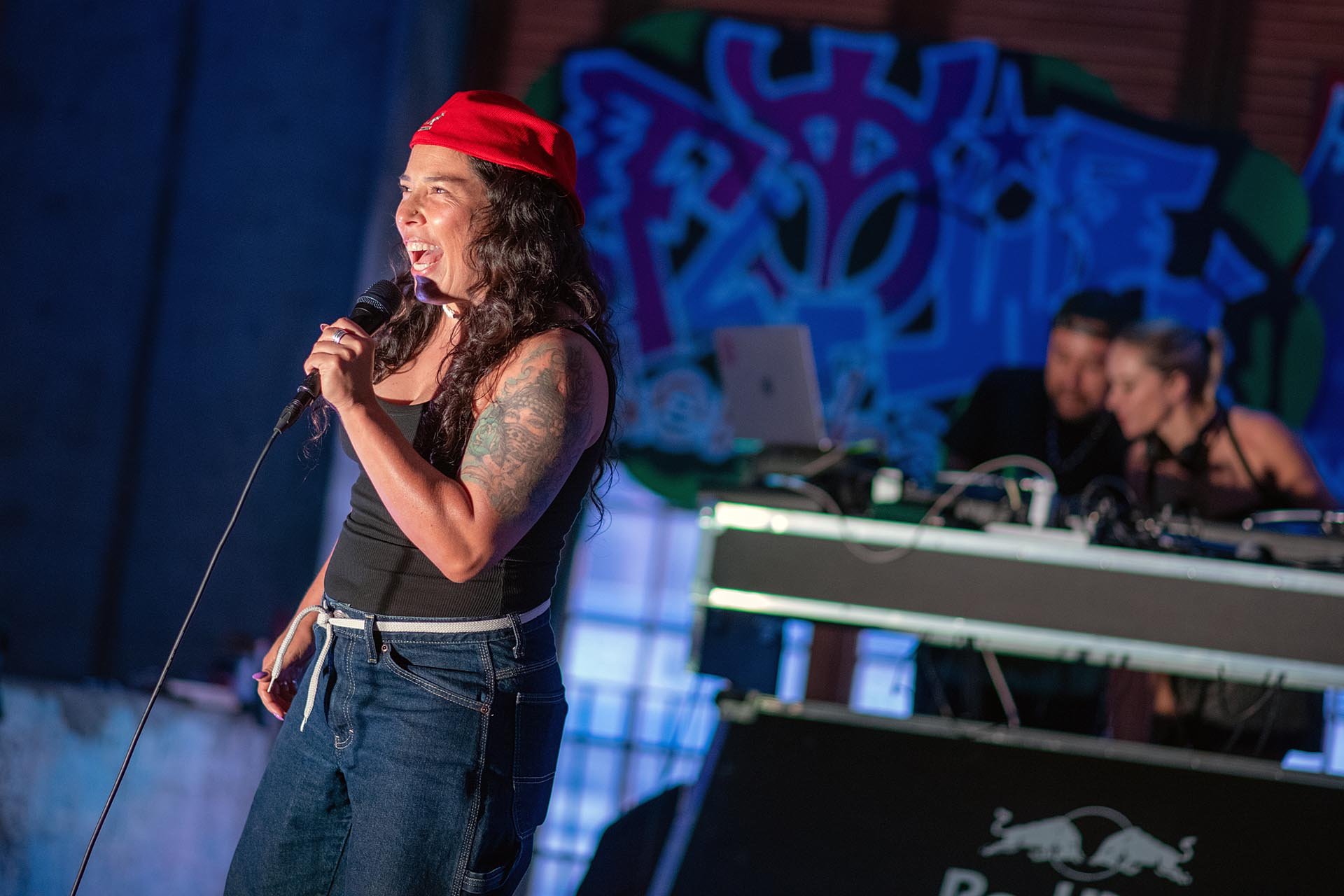
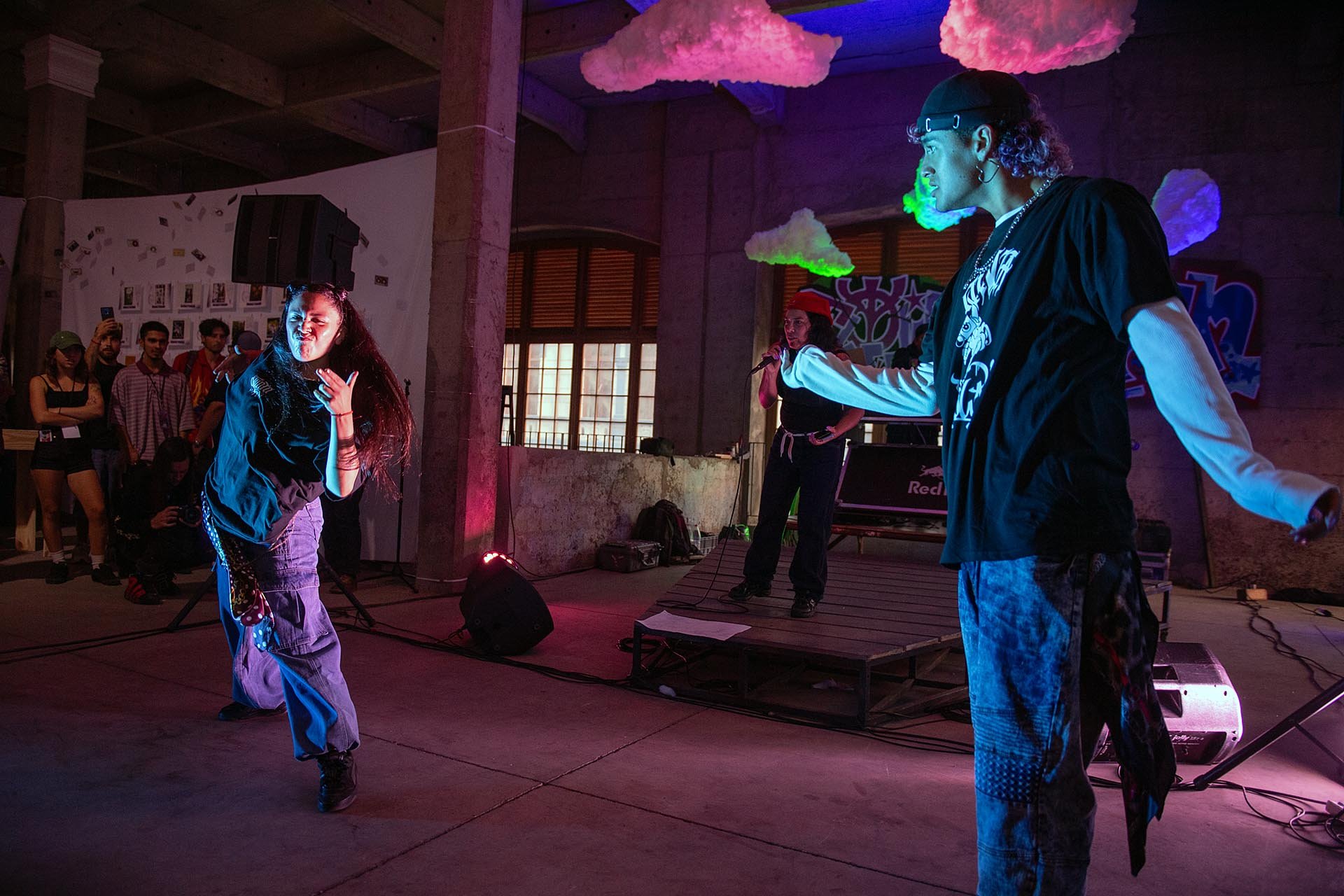
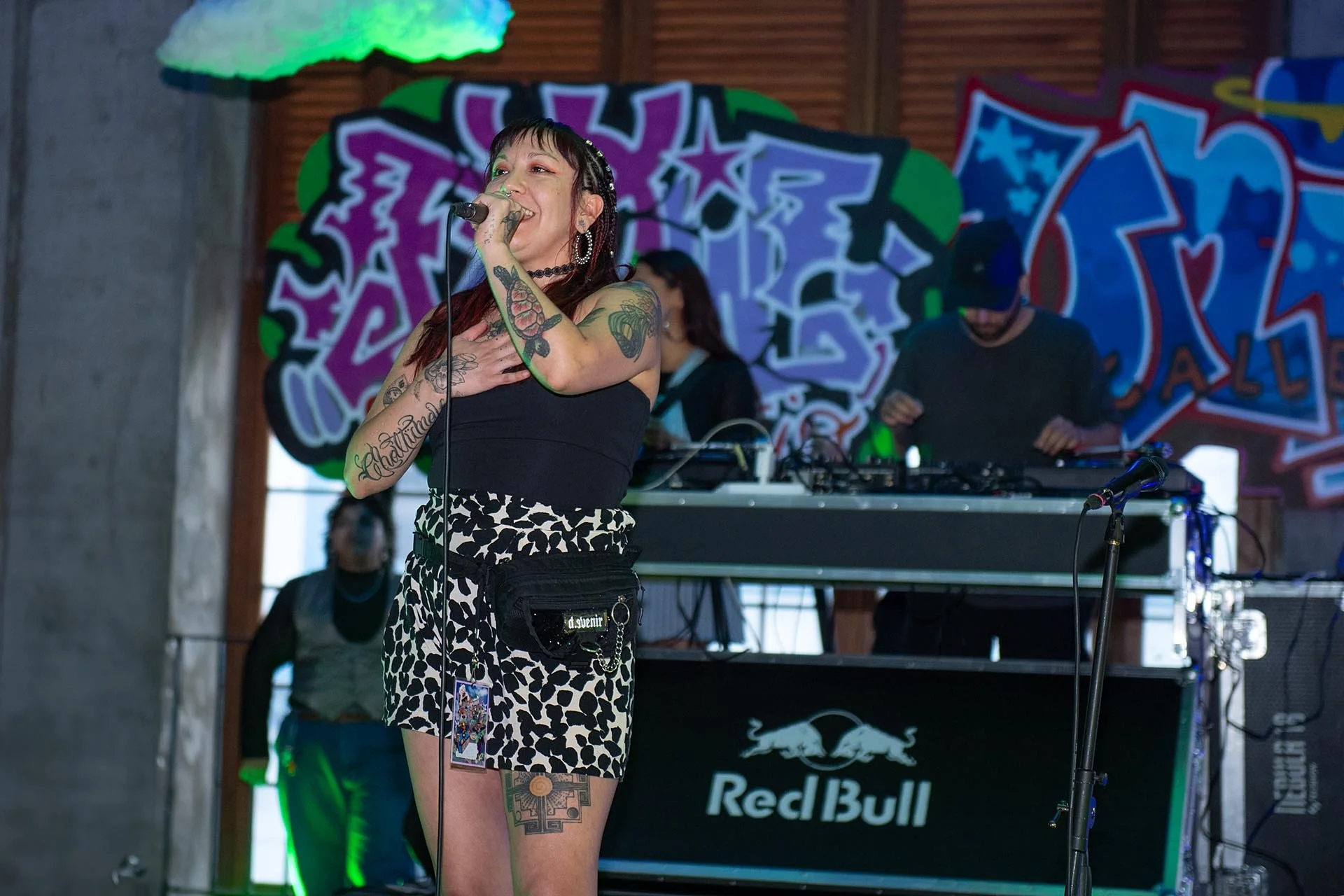
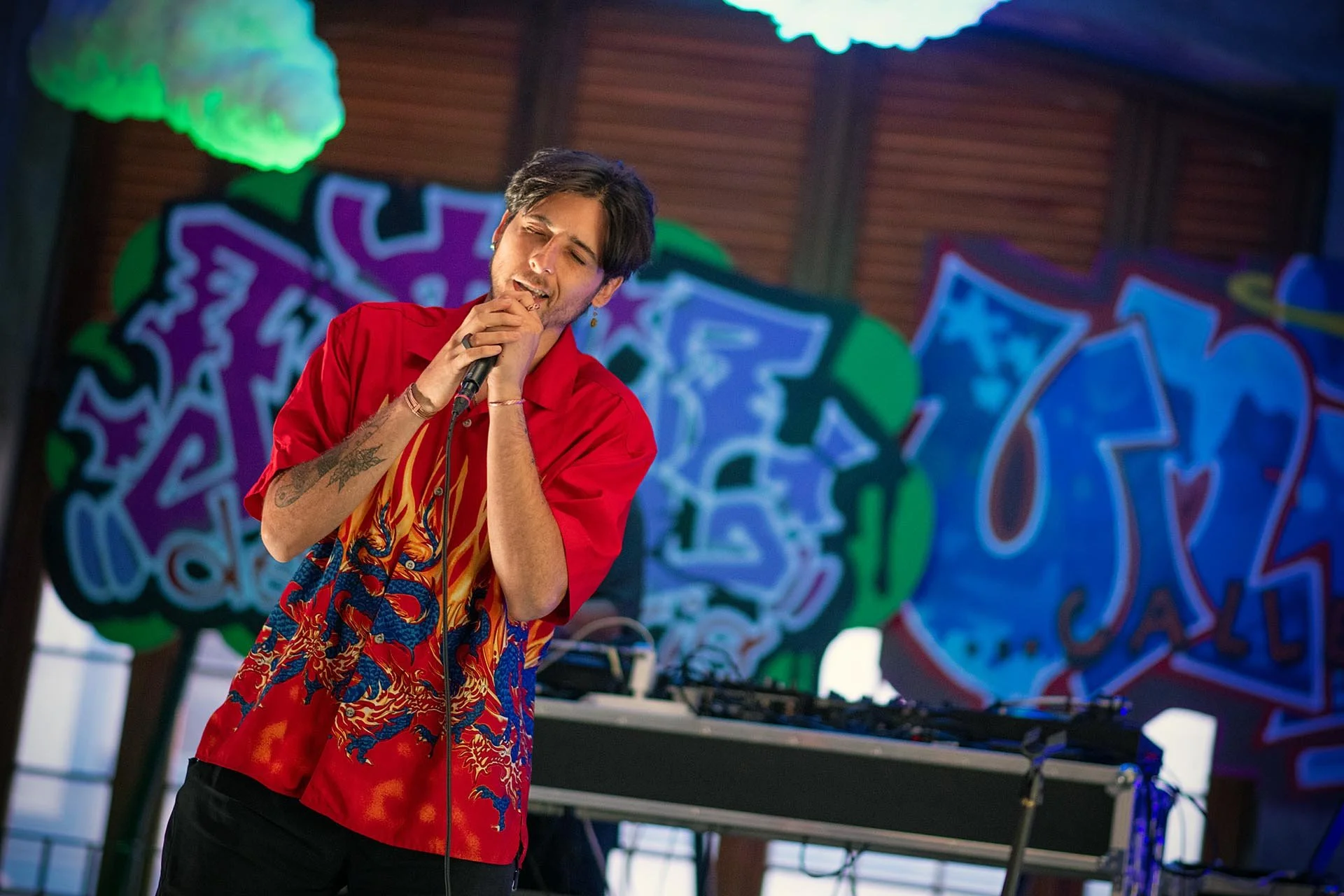
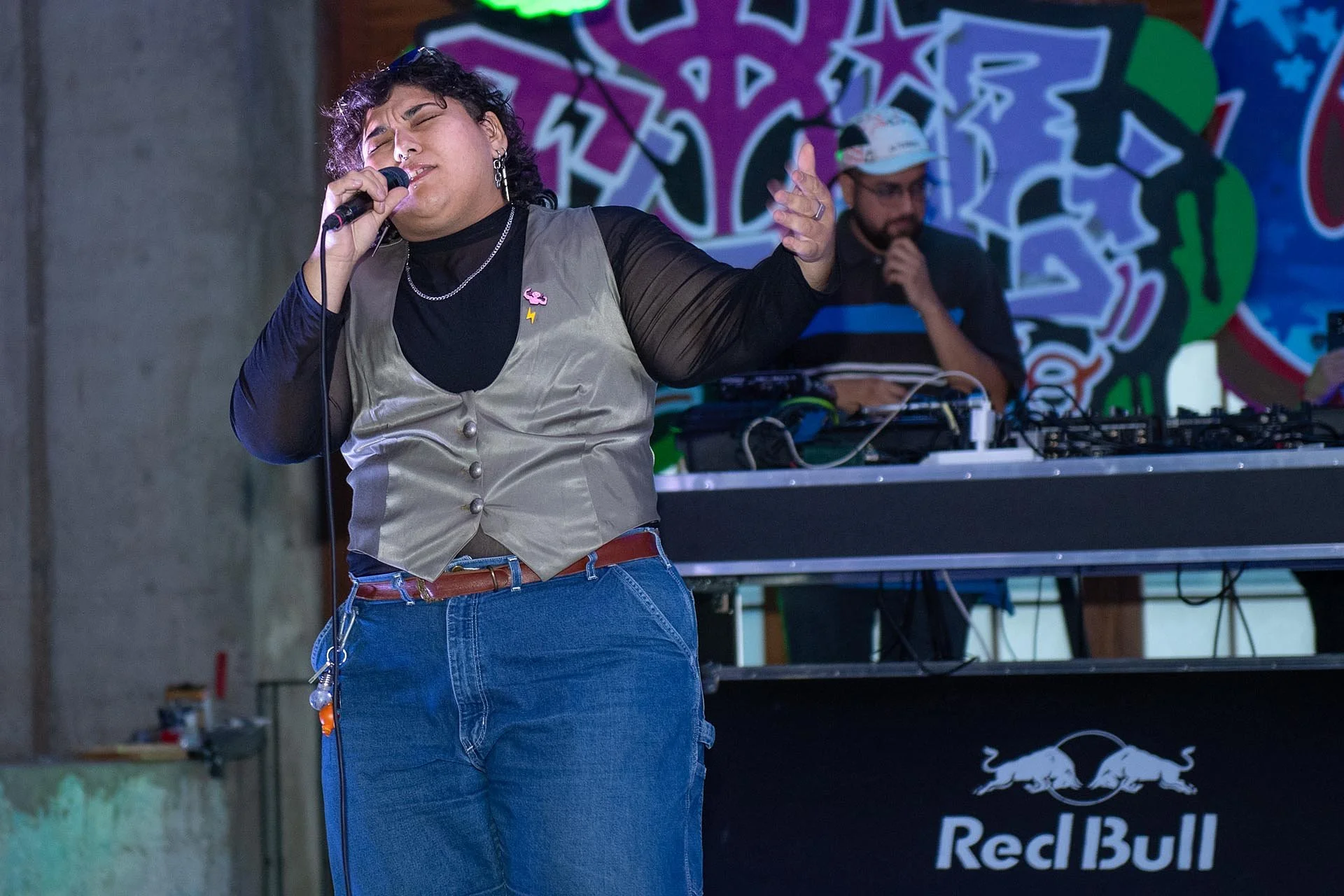
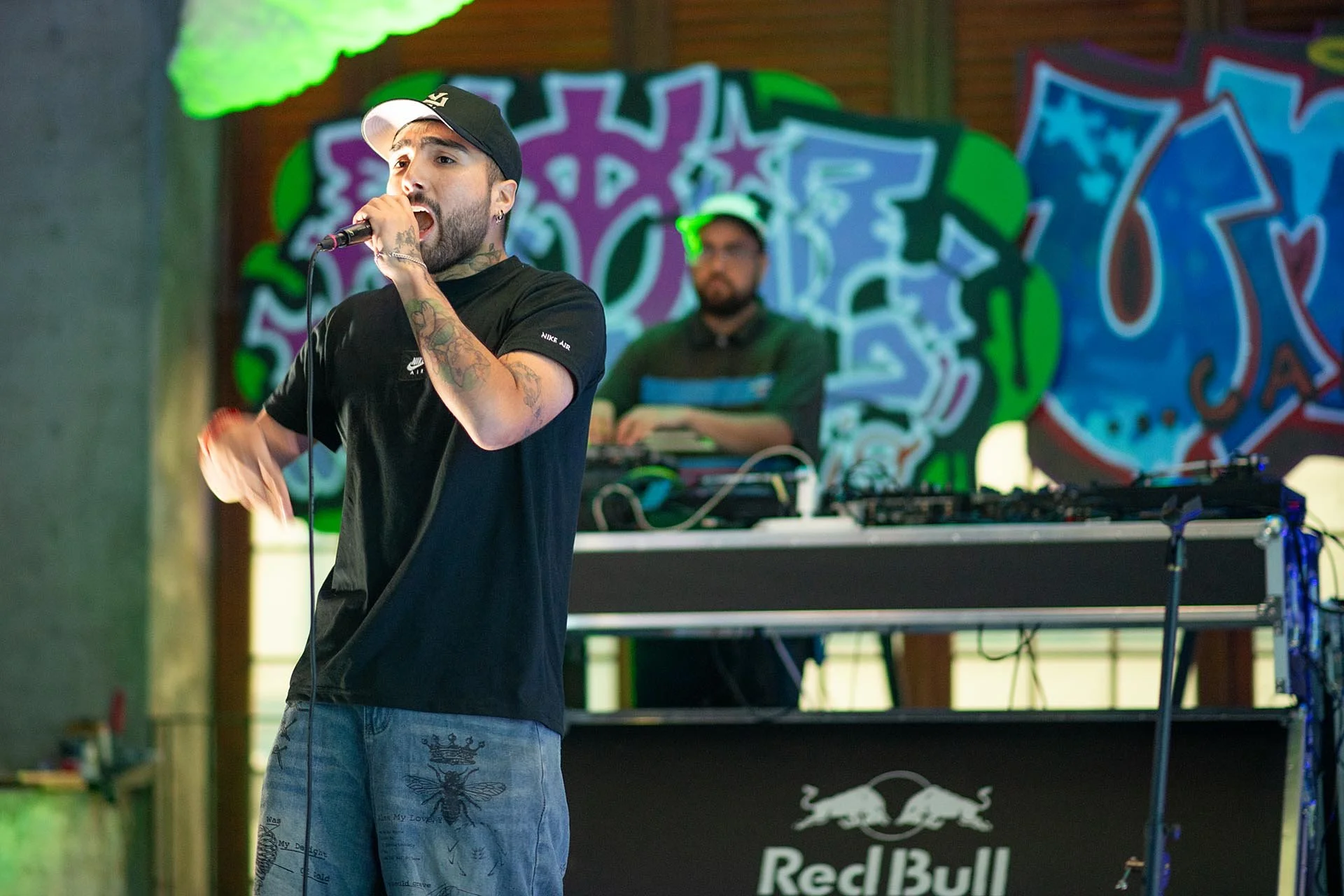
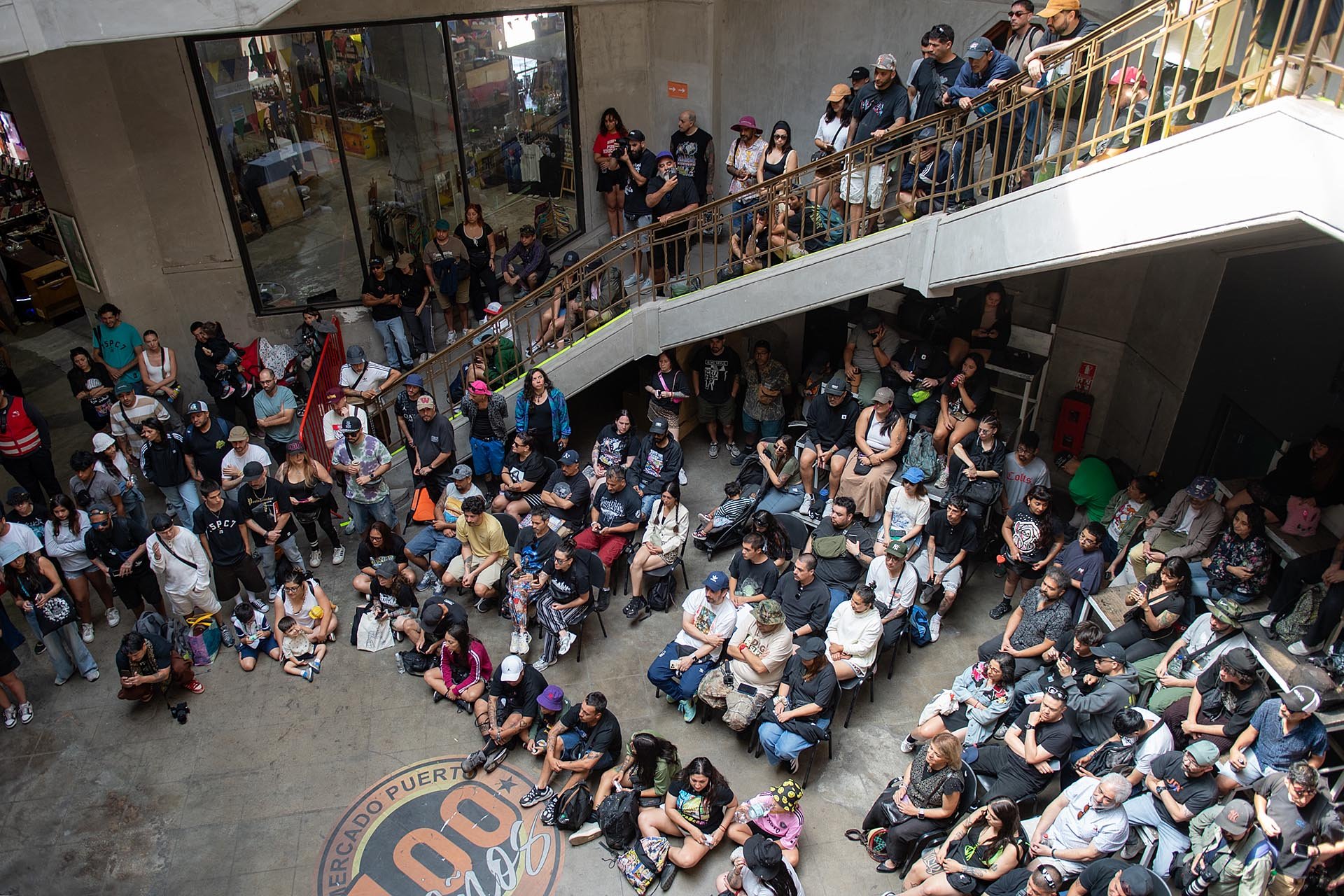
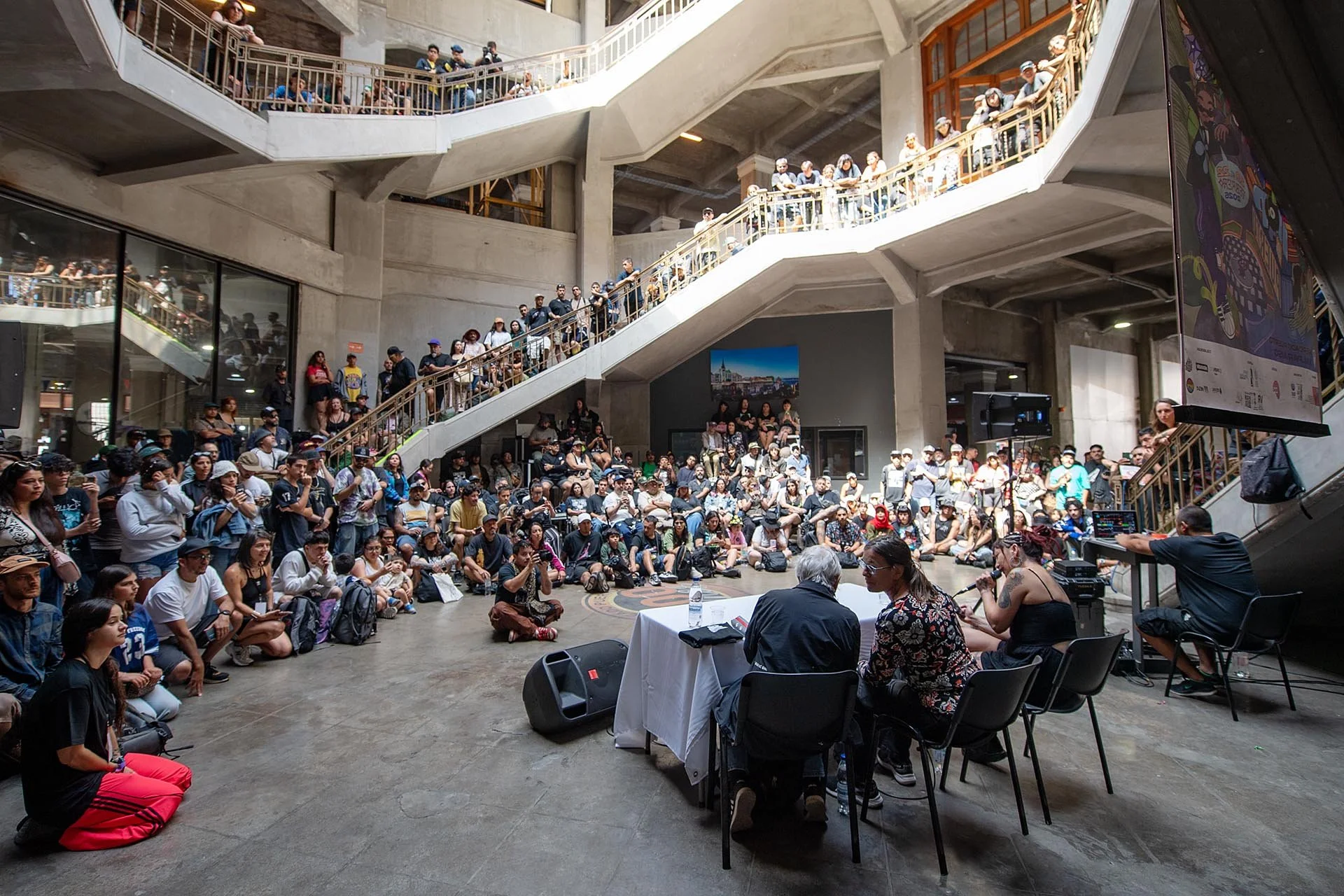
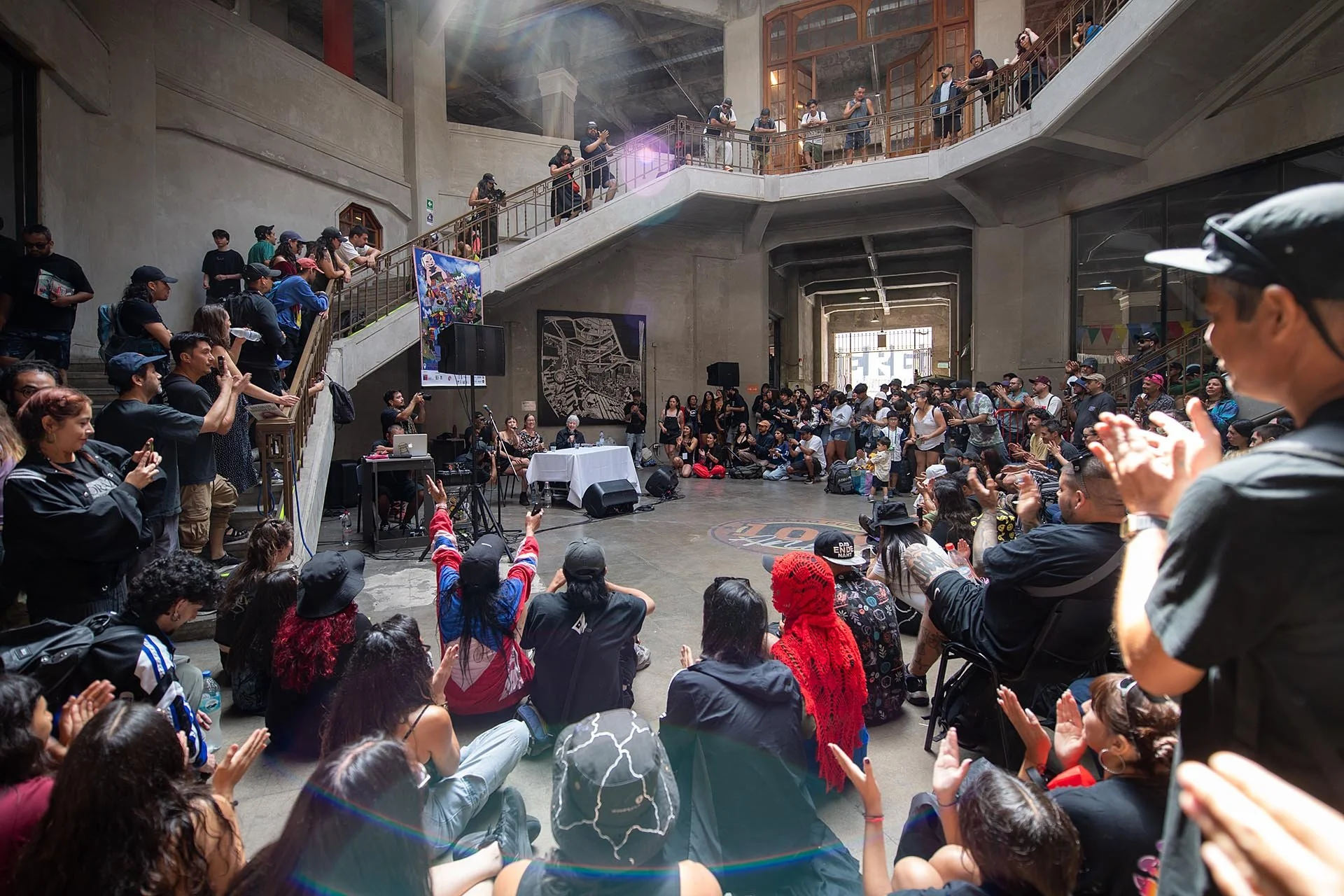
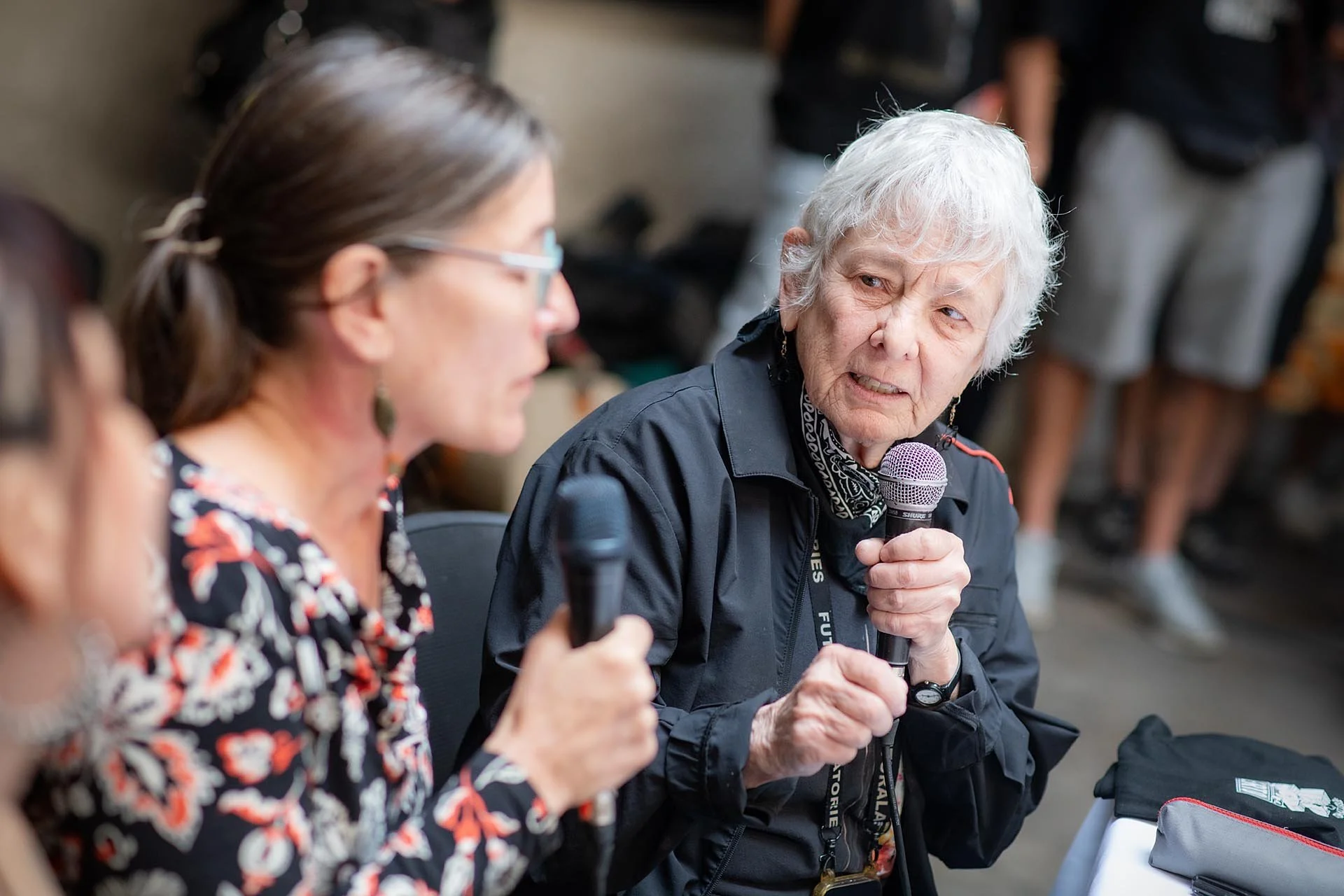
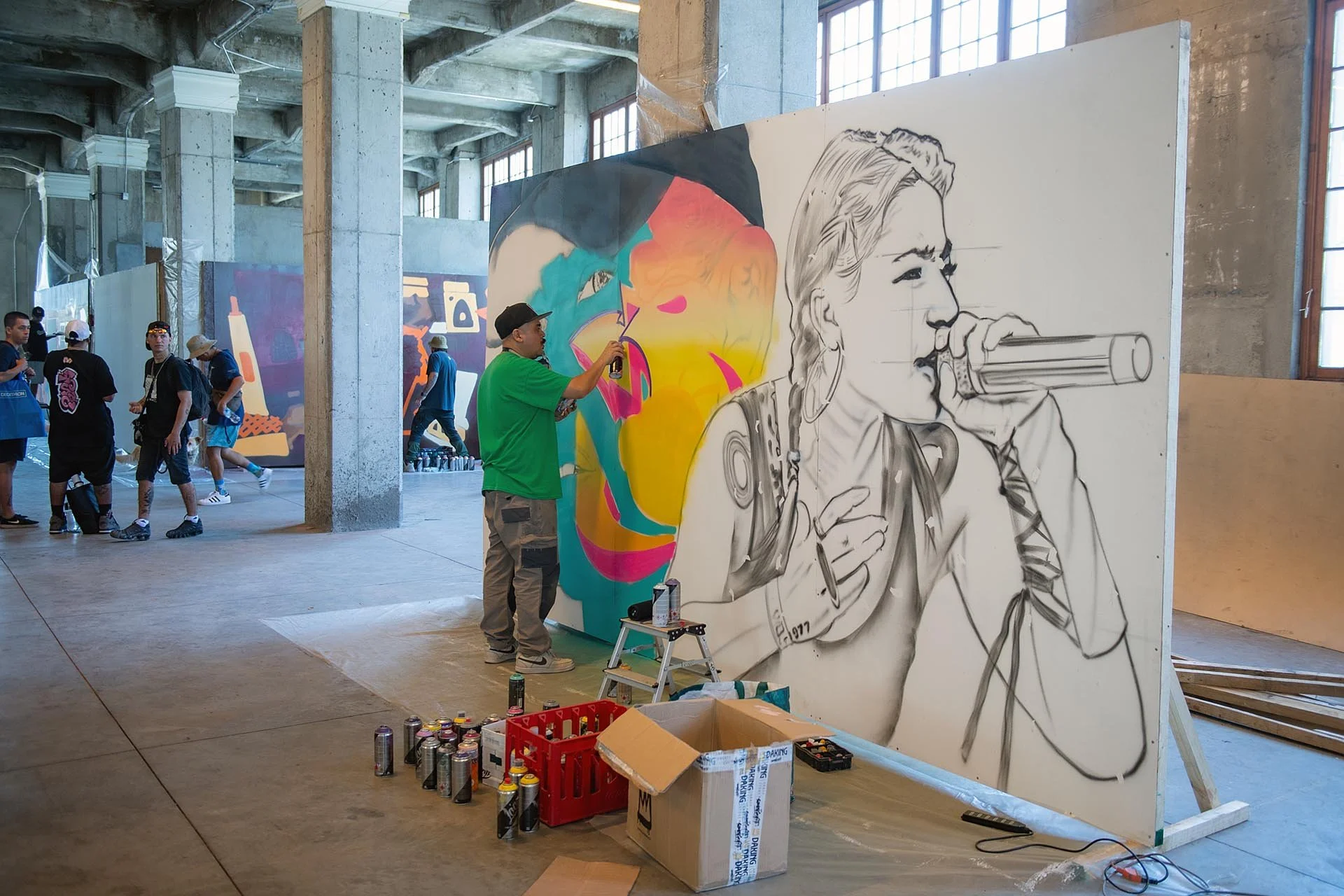
The festival itself was everything it promised to be. Powerful women on stage. B-girls owning the floor. Rappers commanding space. The energy was electric. And the love for Marty was overwhelming.
Overwhelming in the most literal sense.
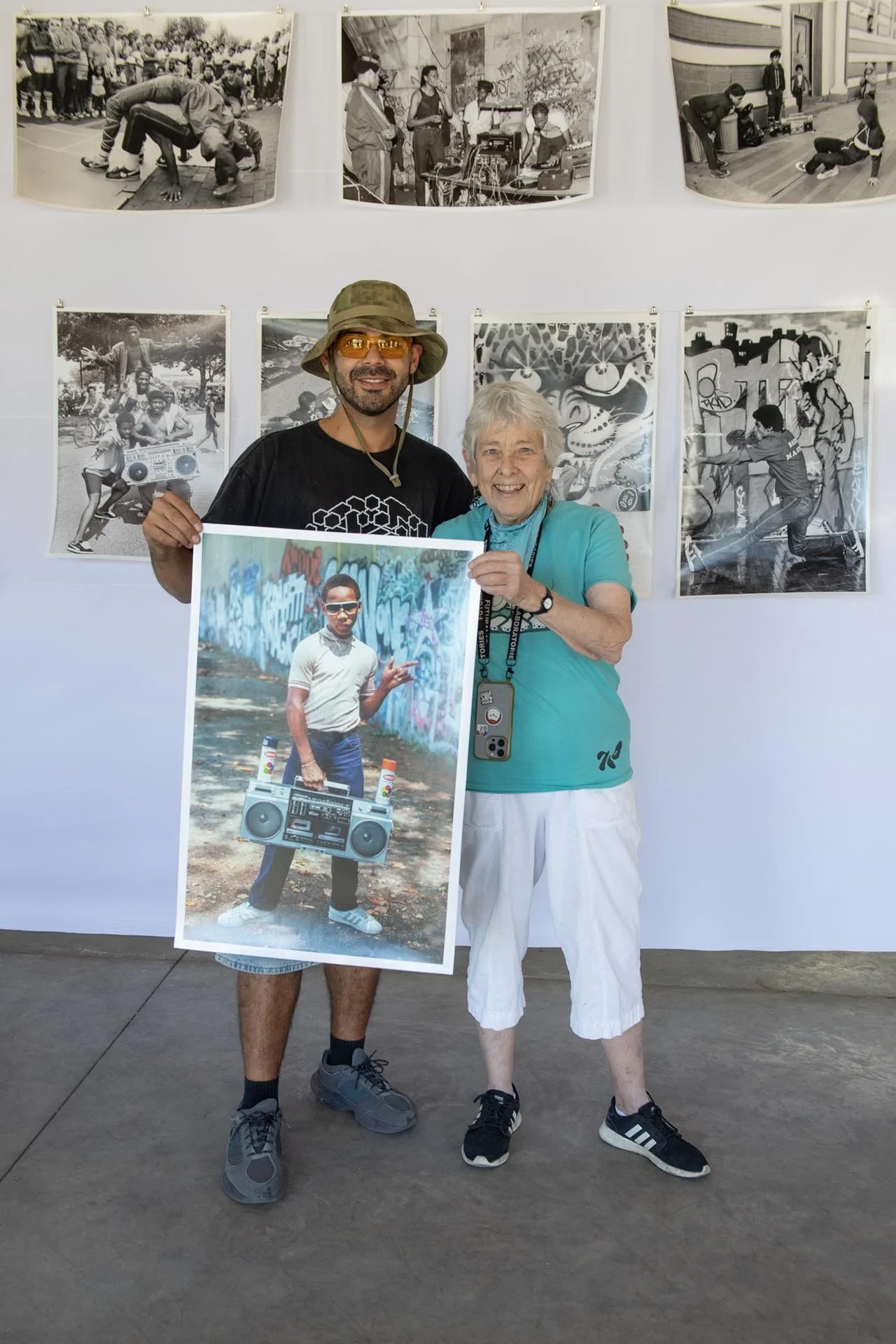
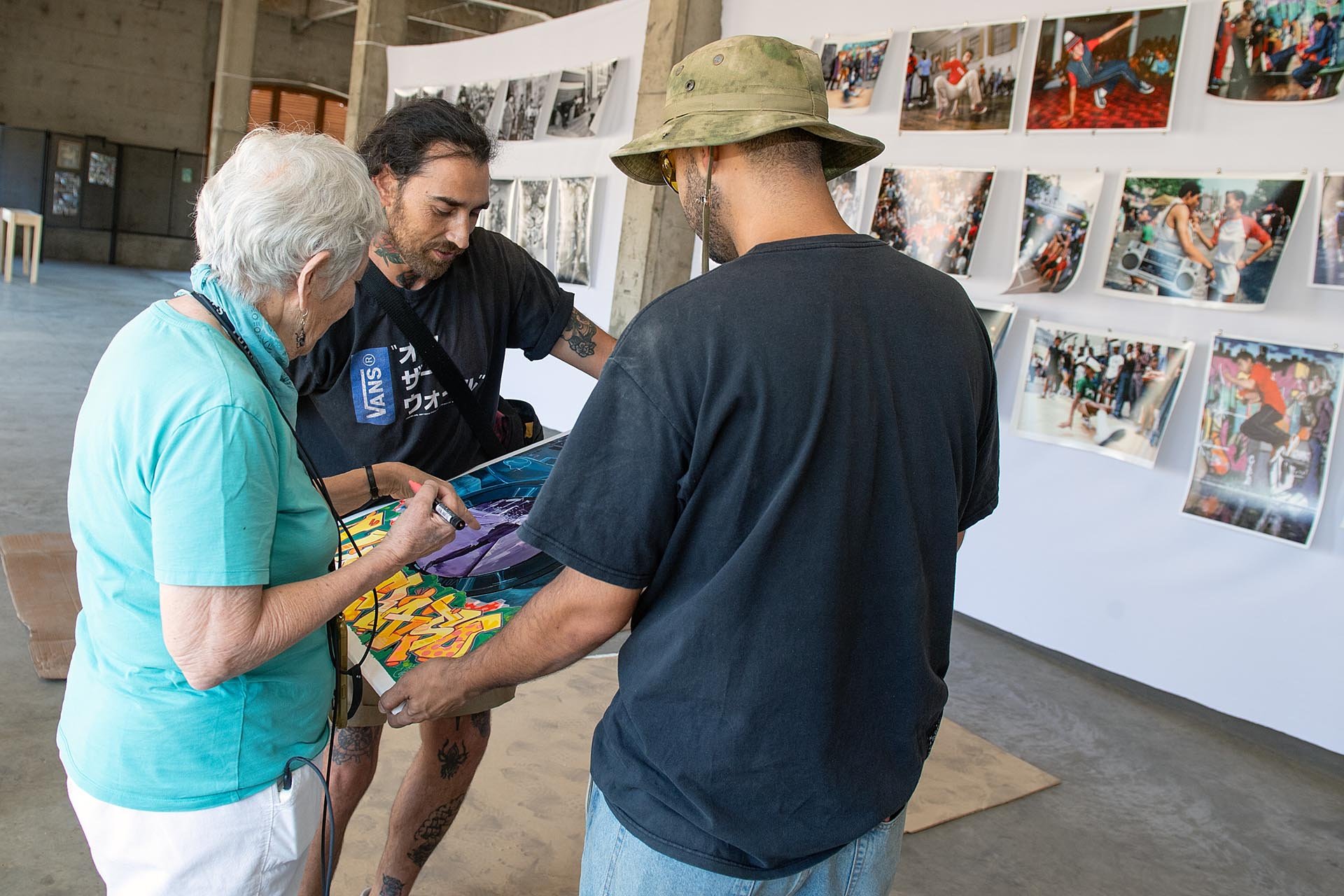
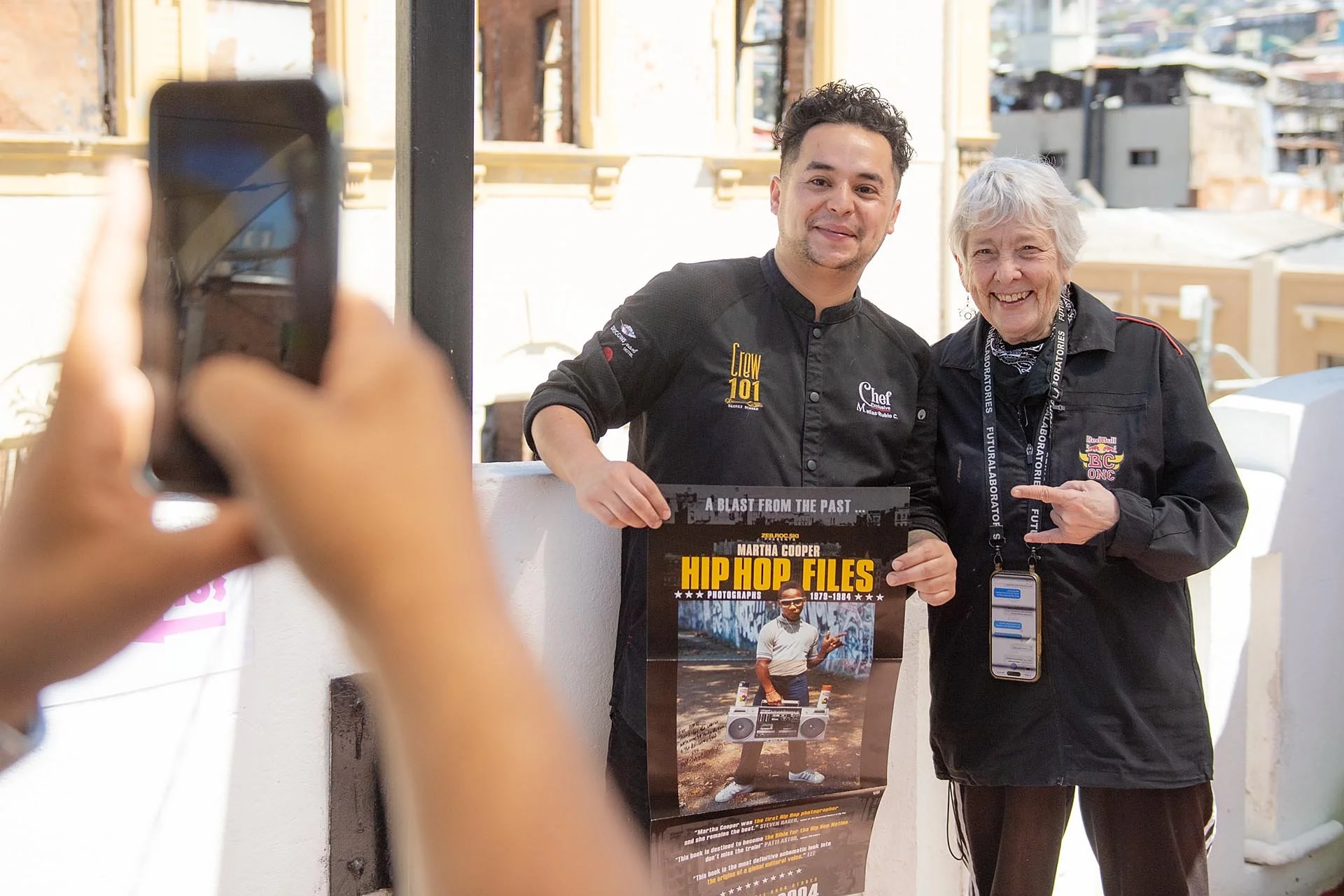
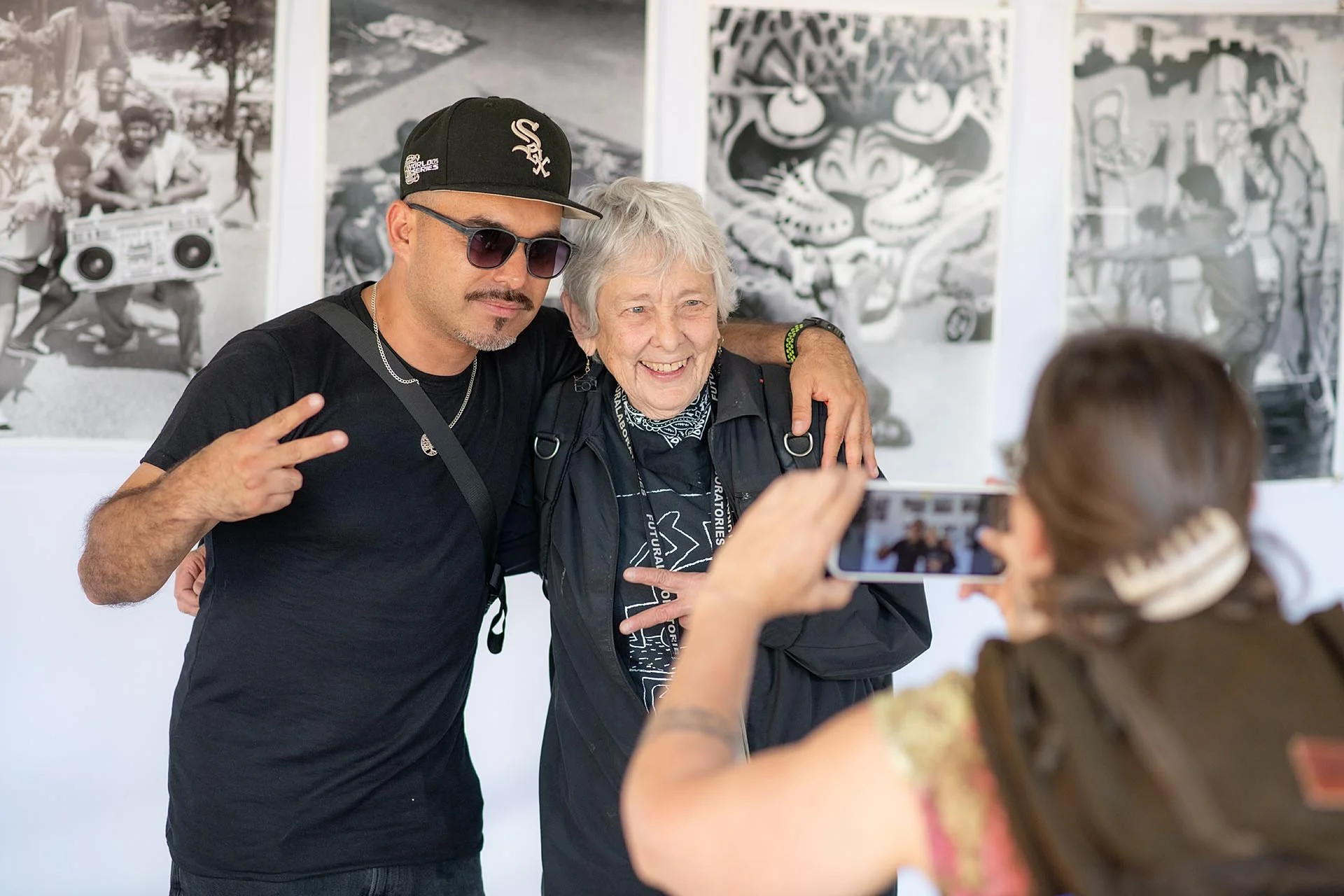
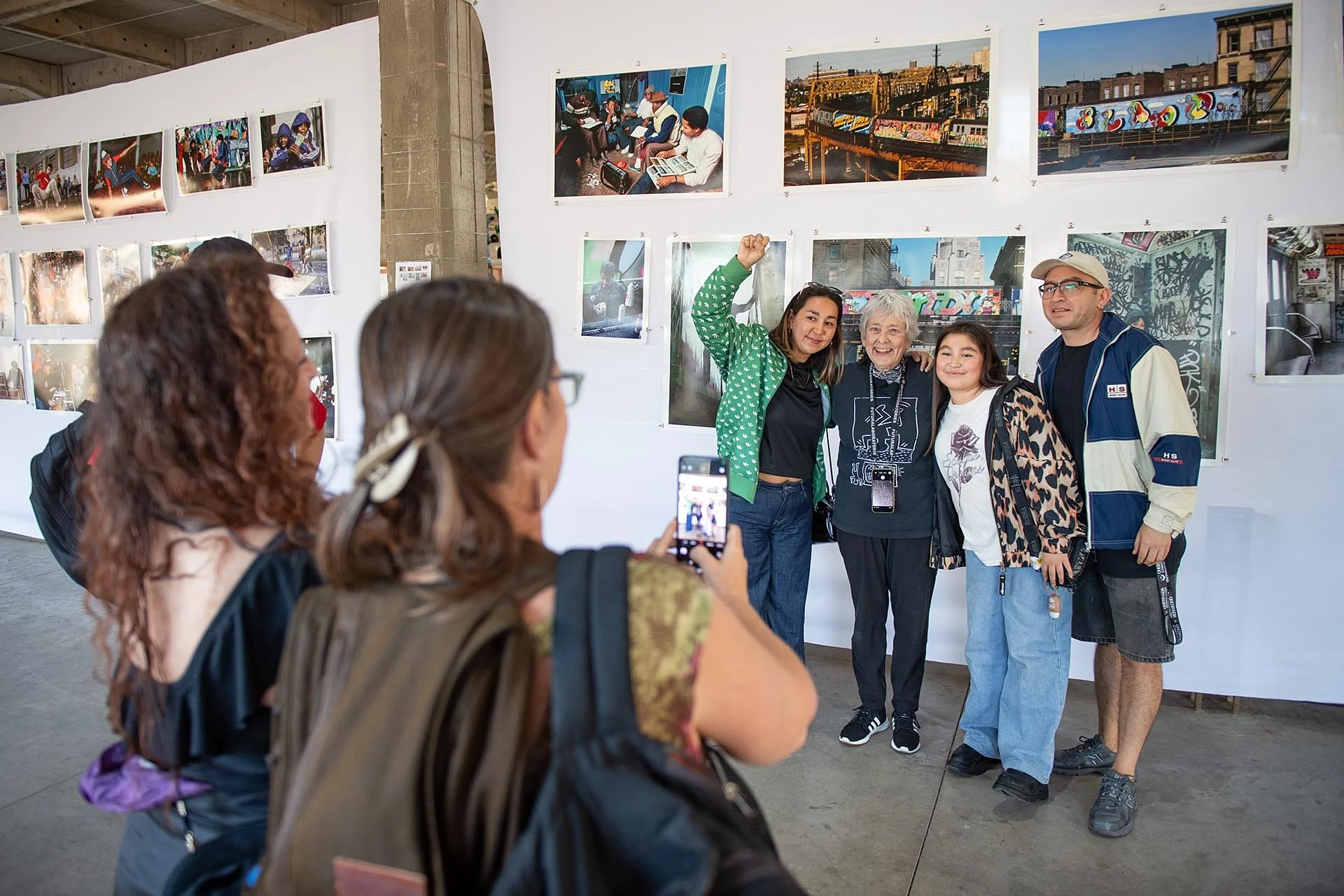
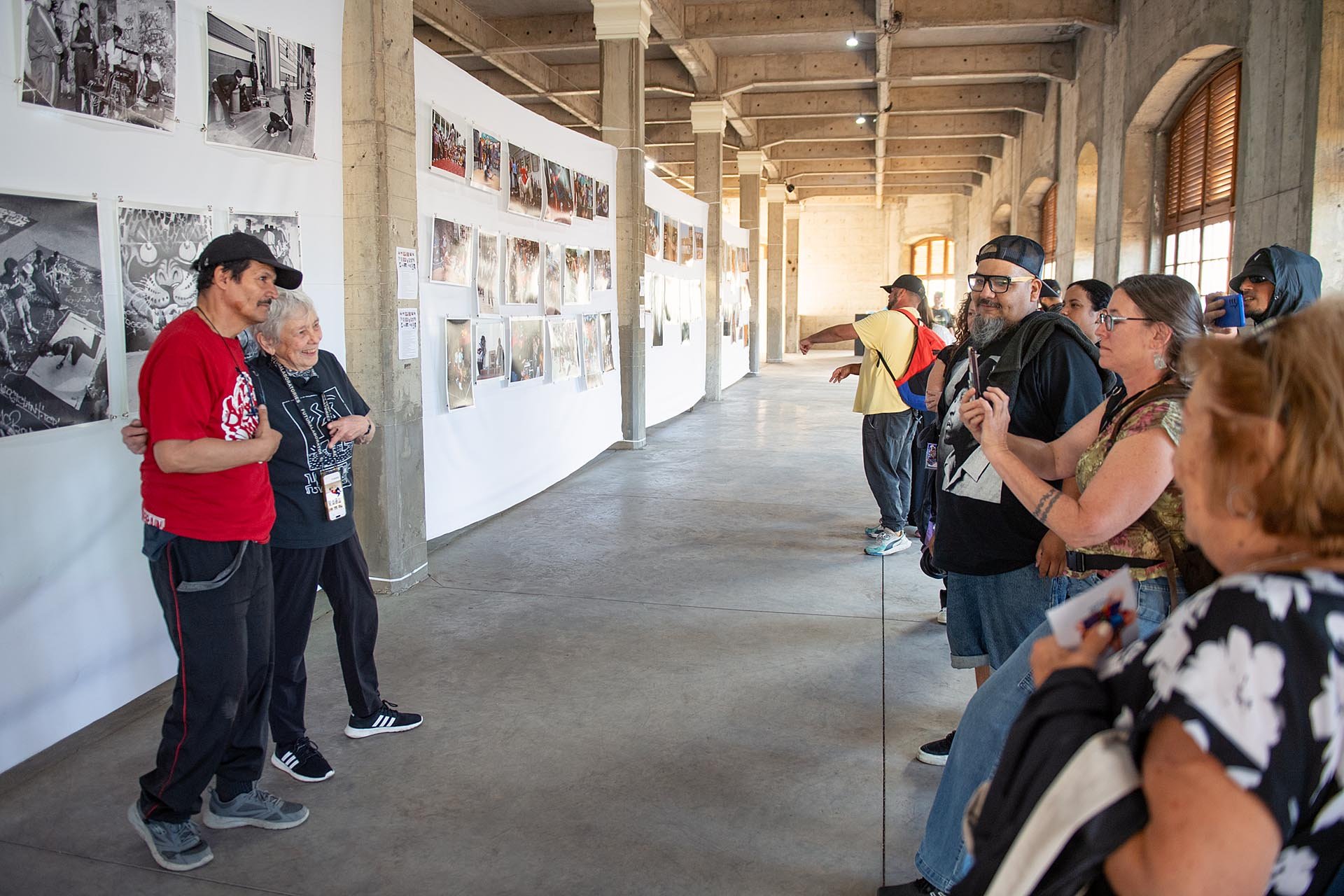
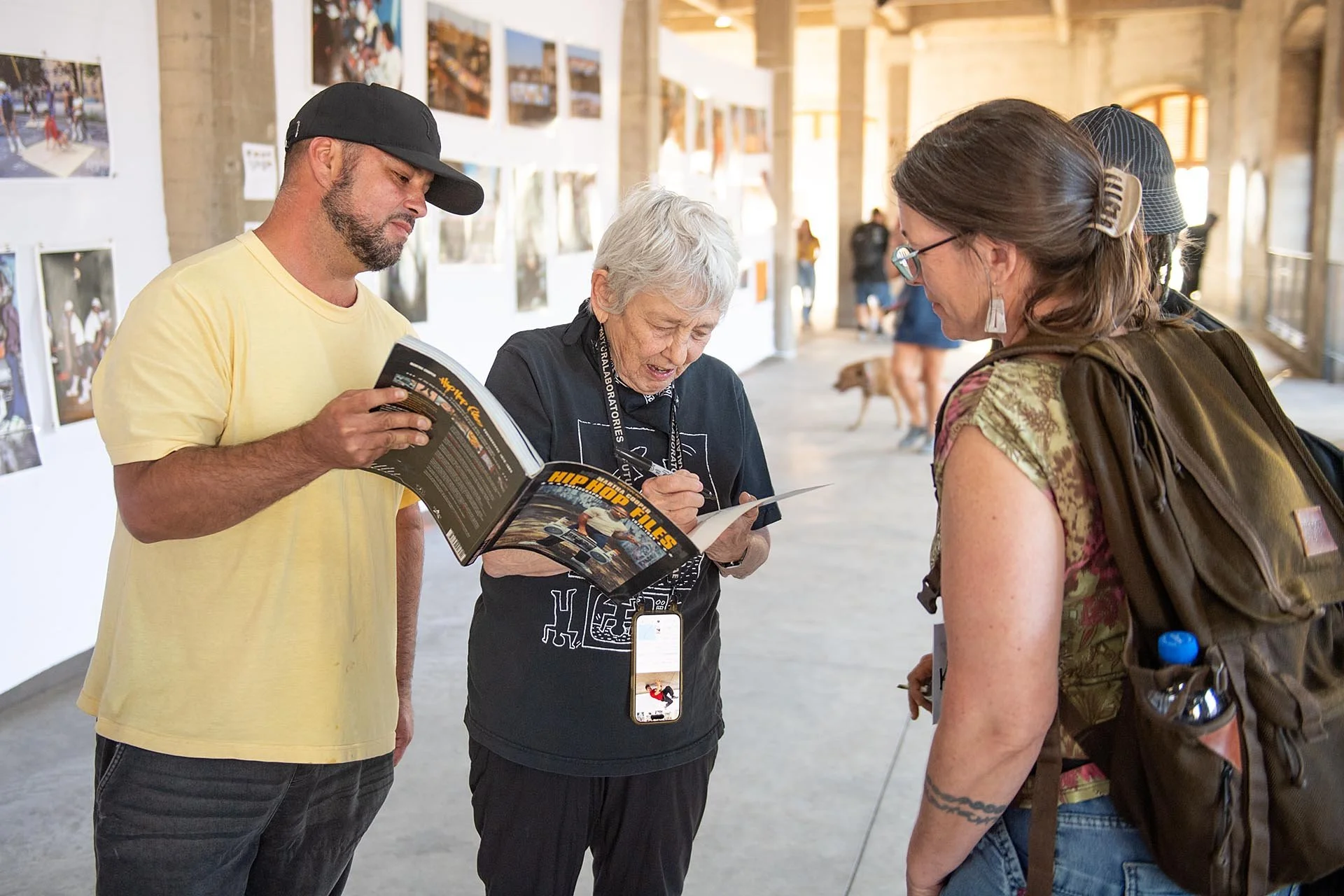
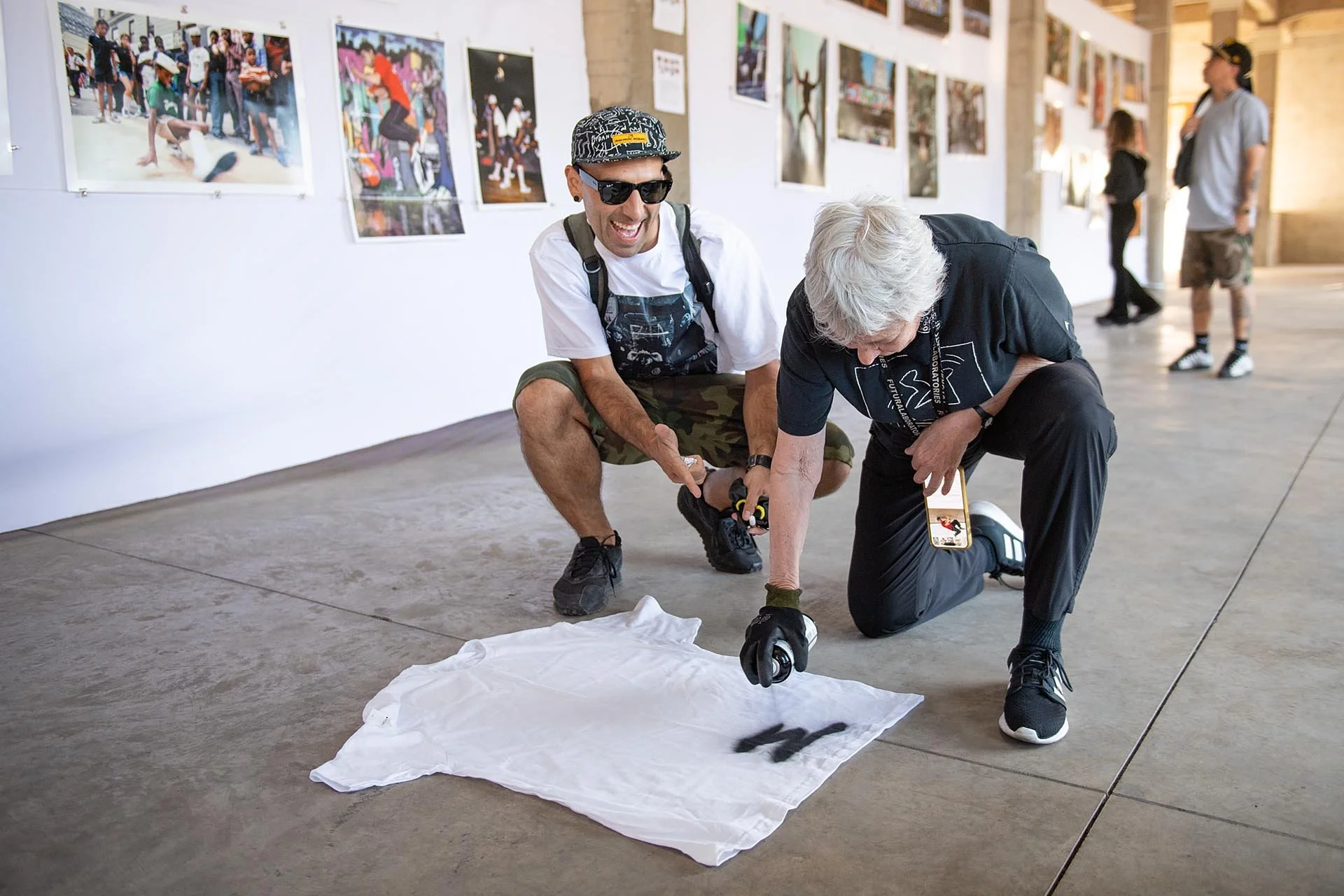
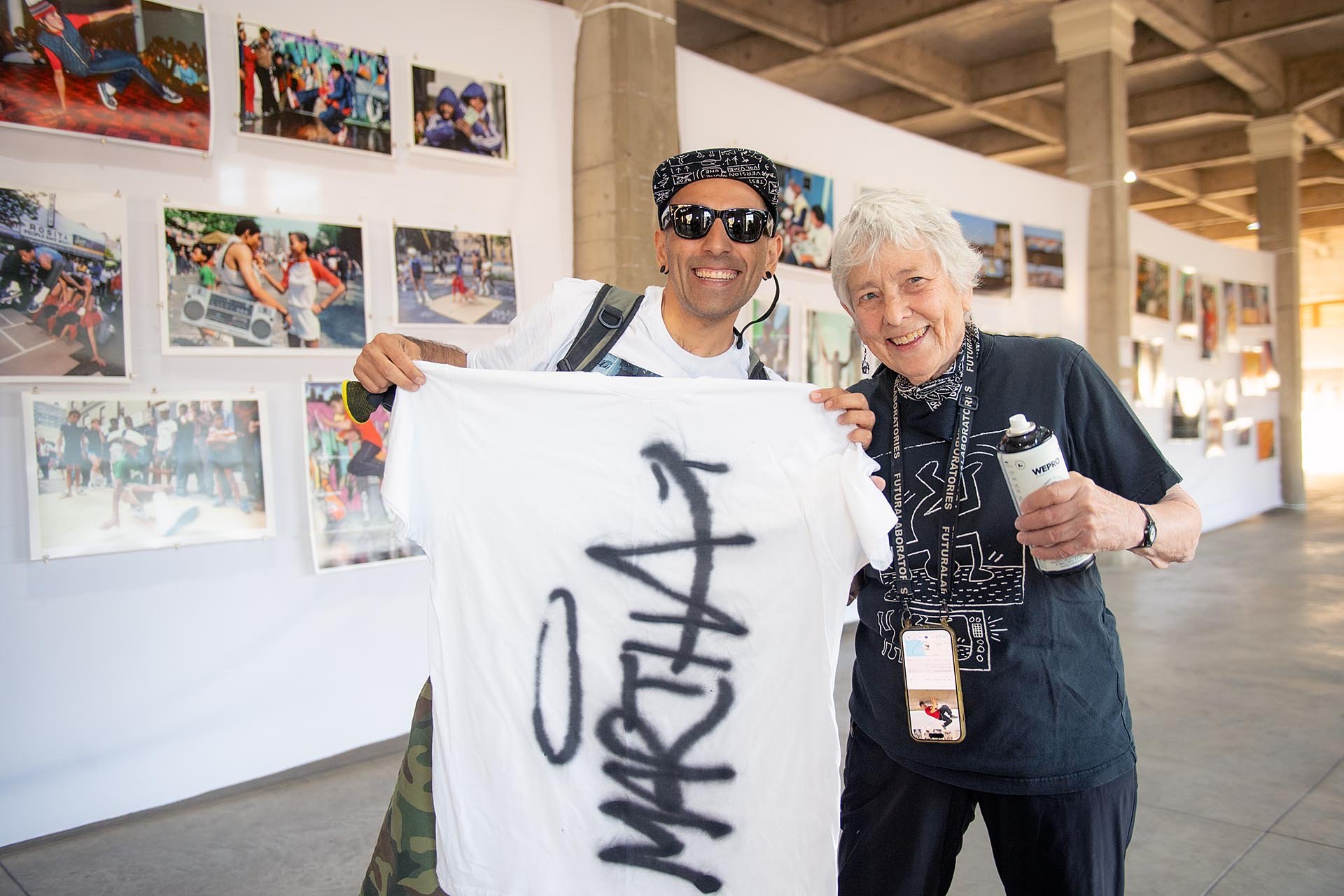
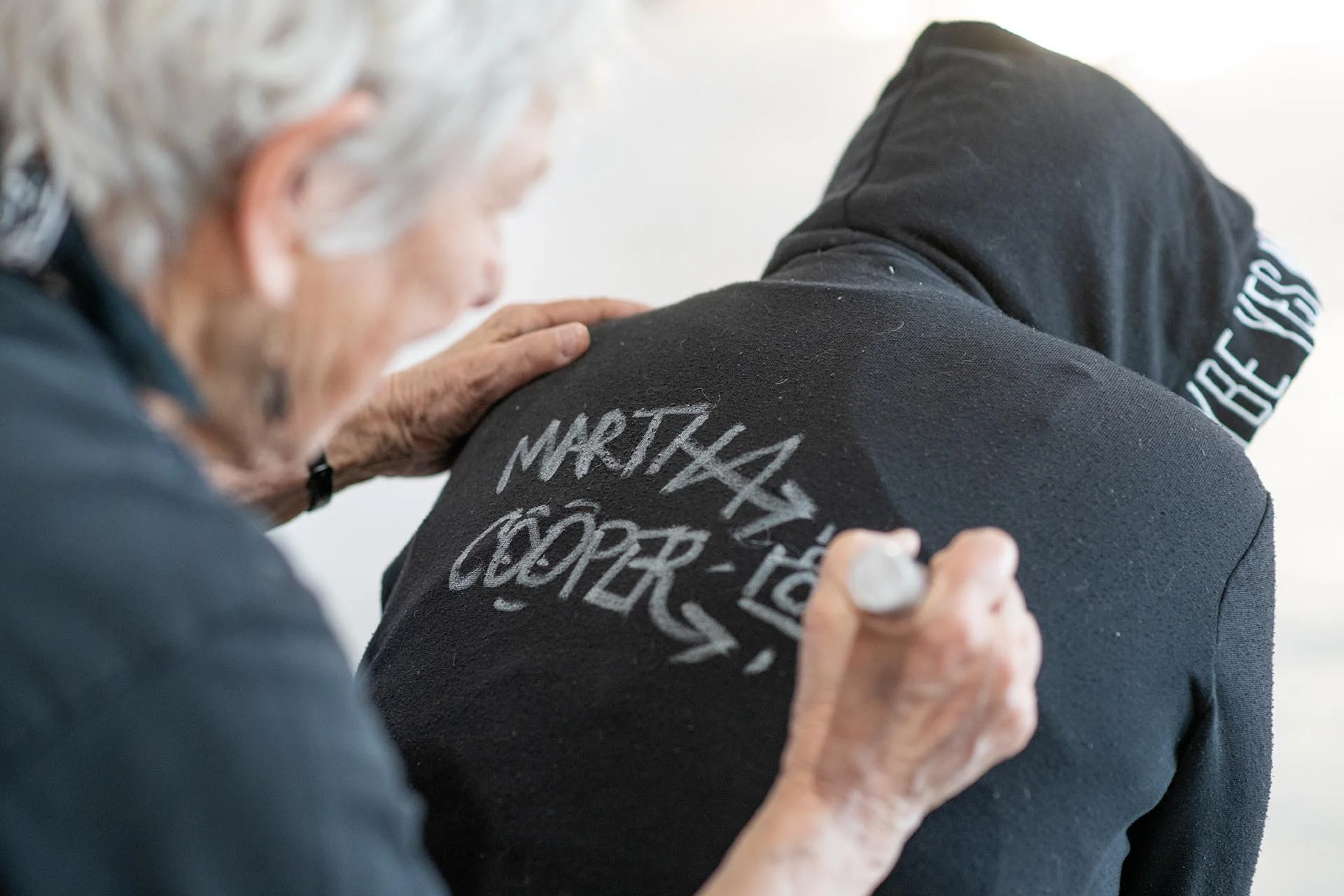
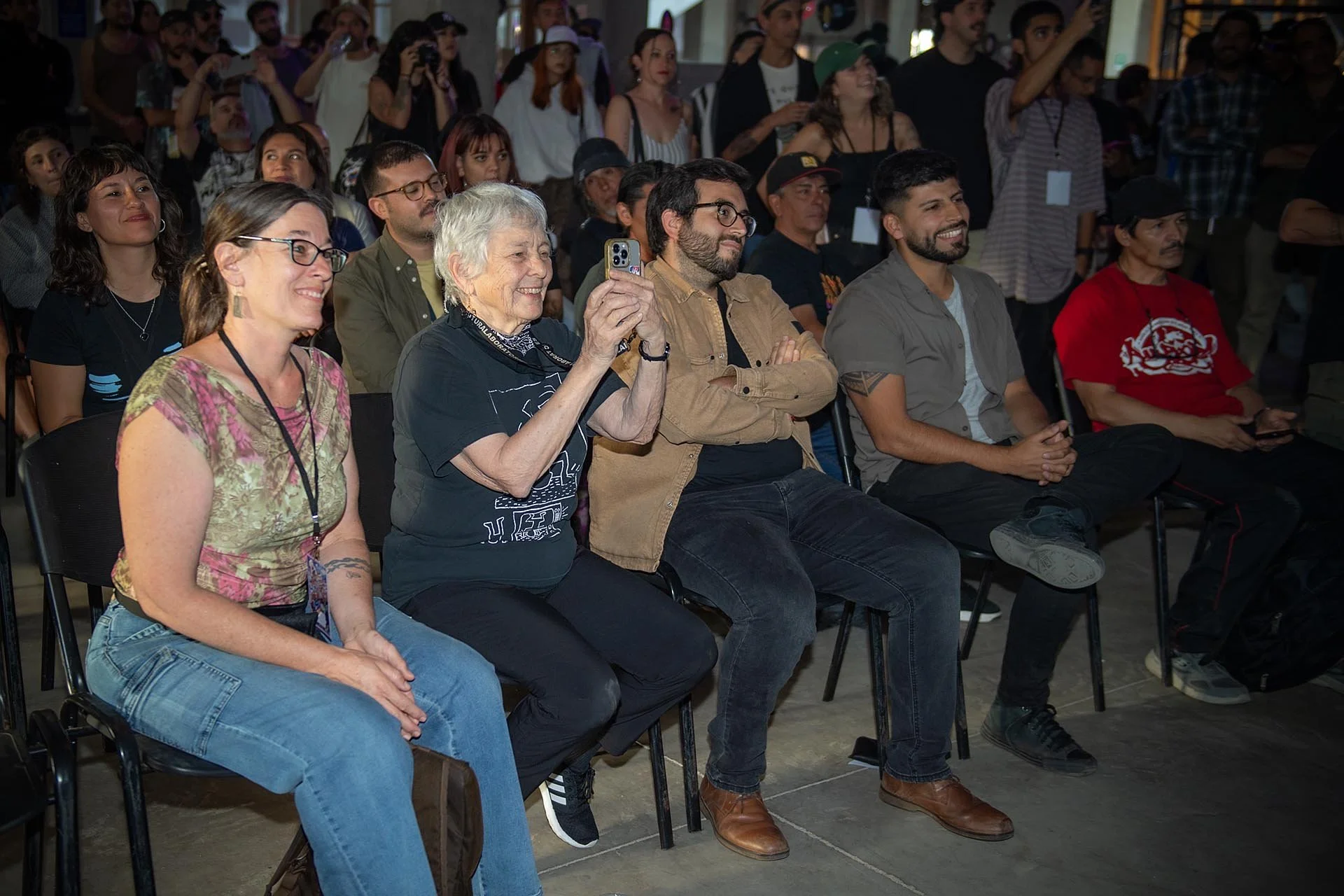
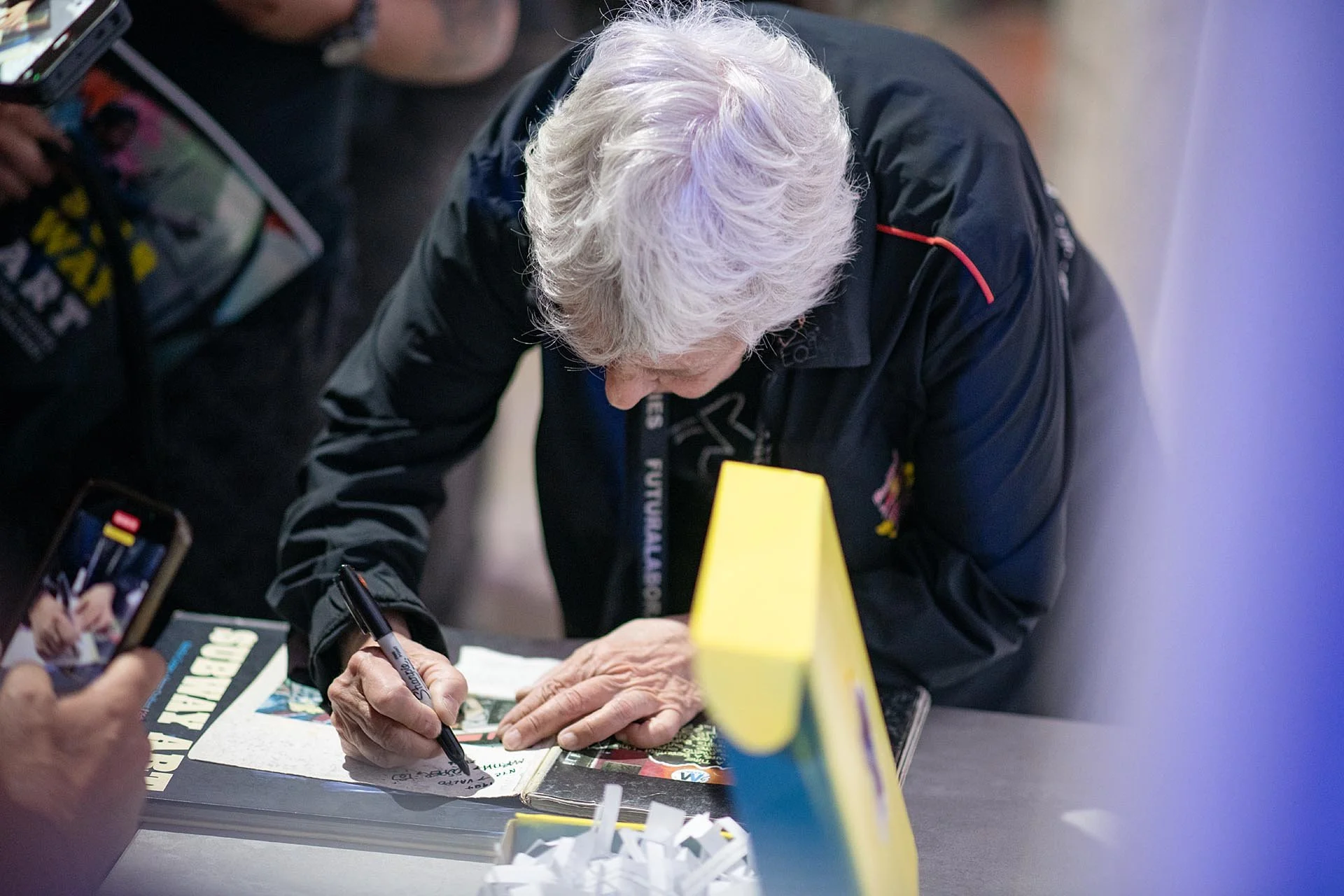
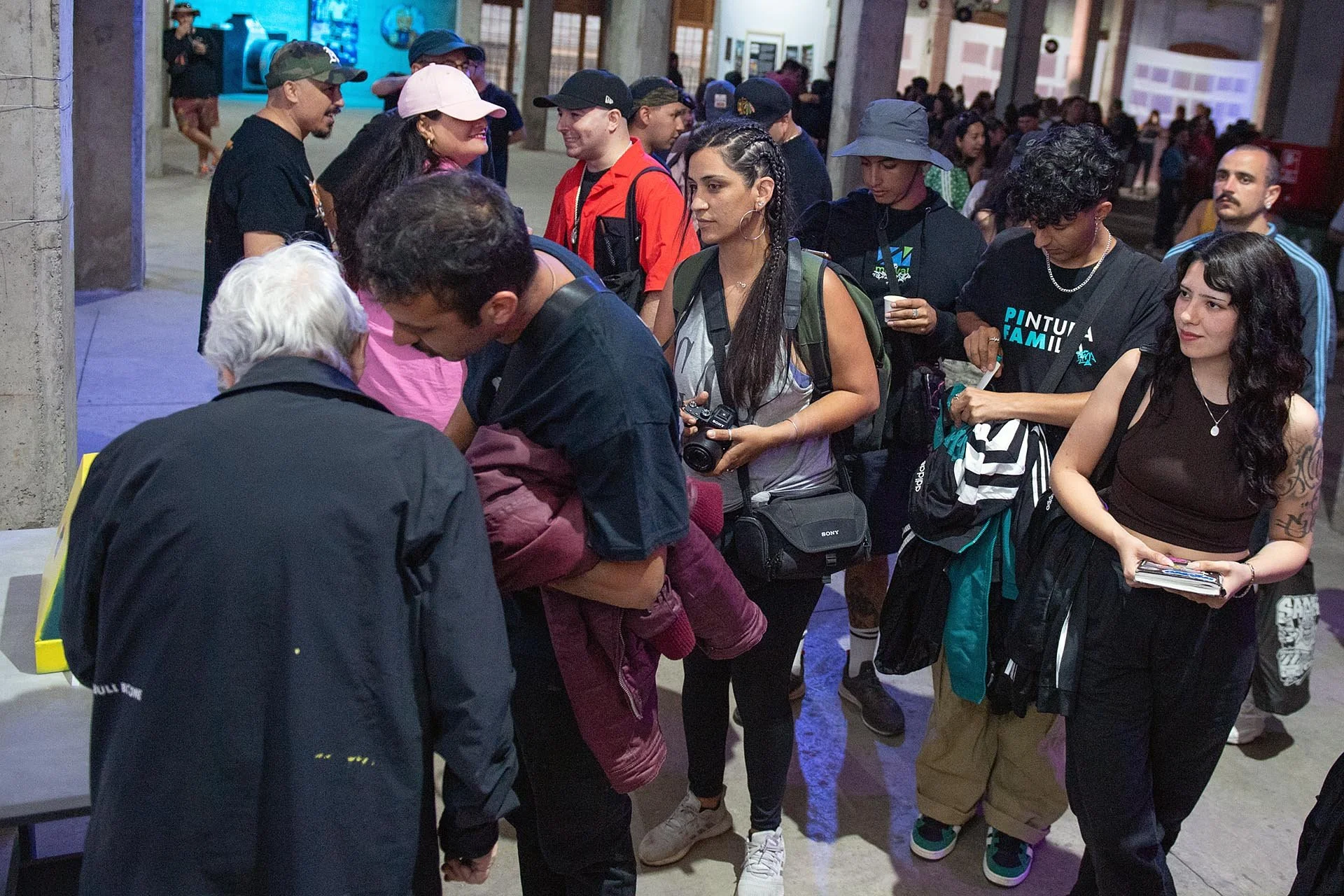
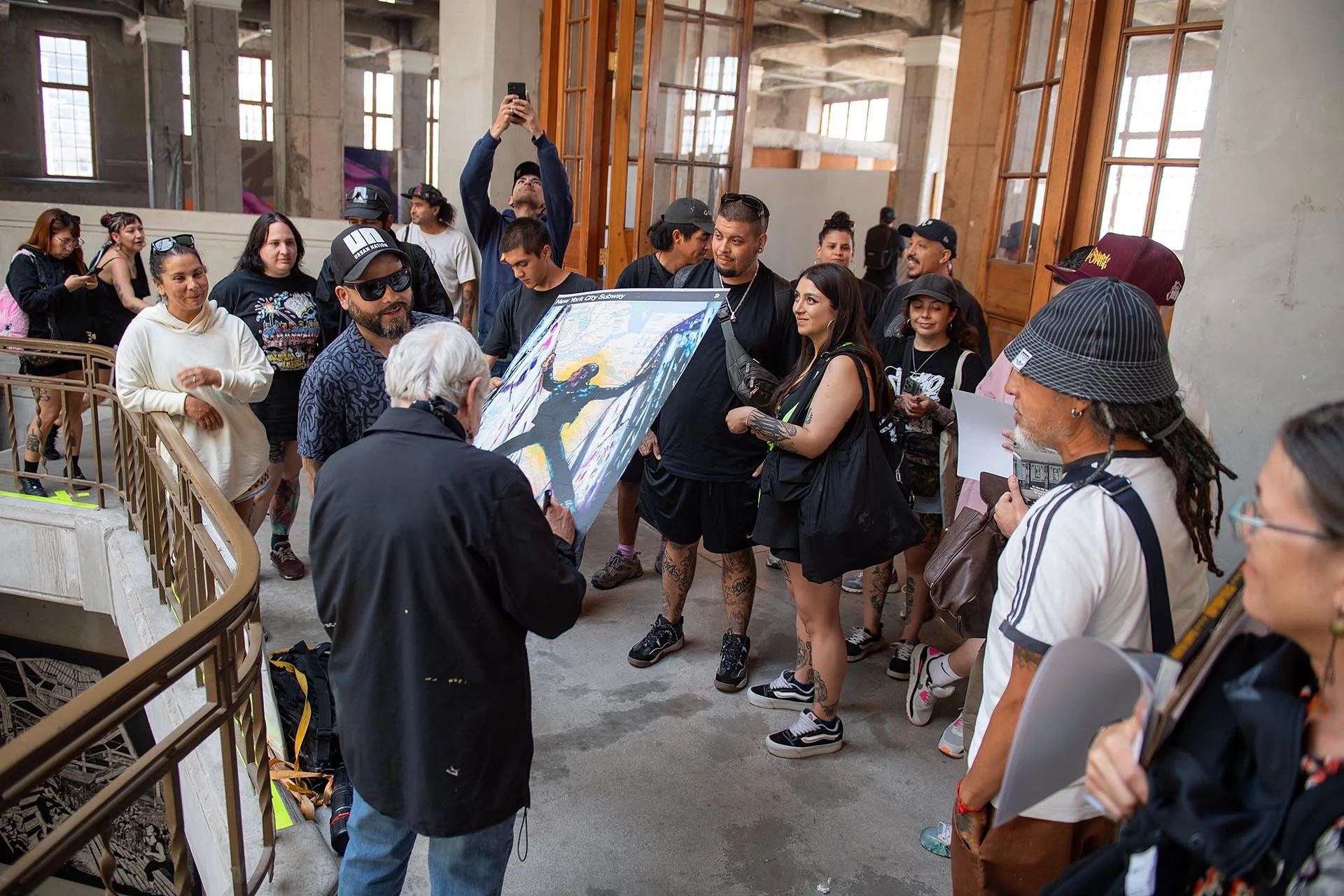
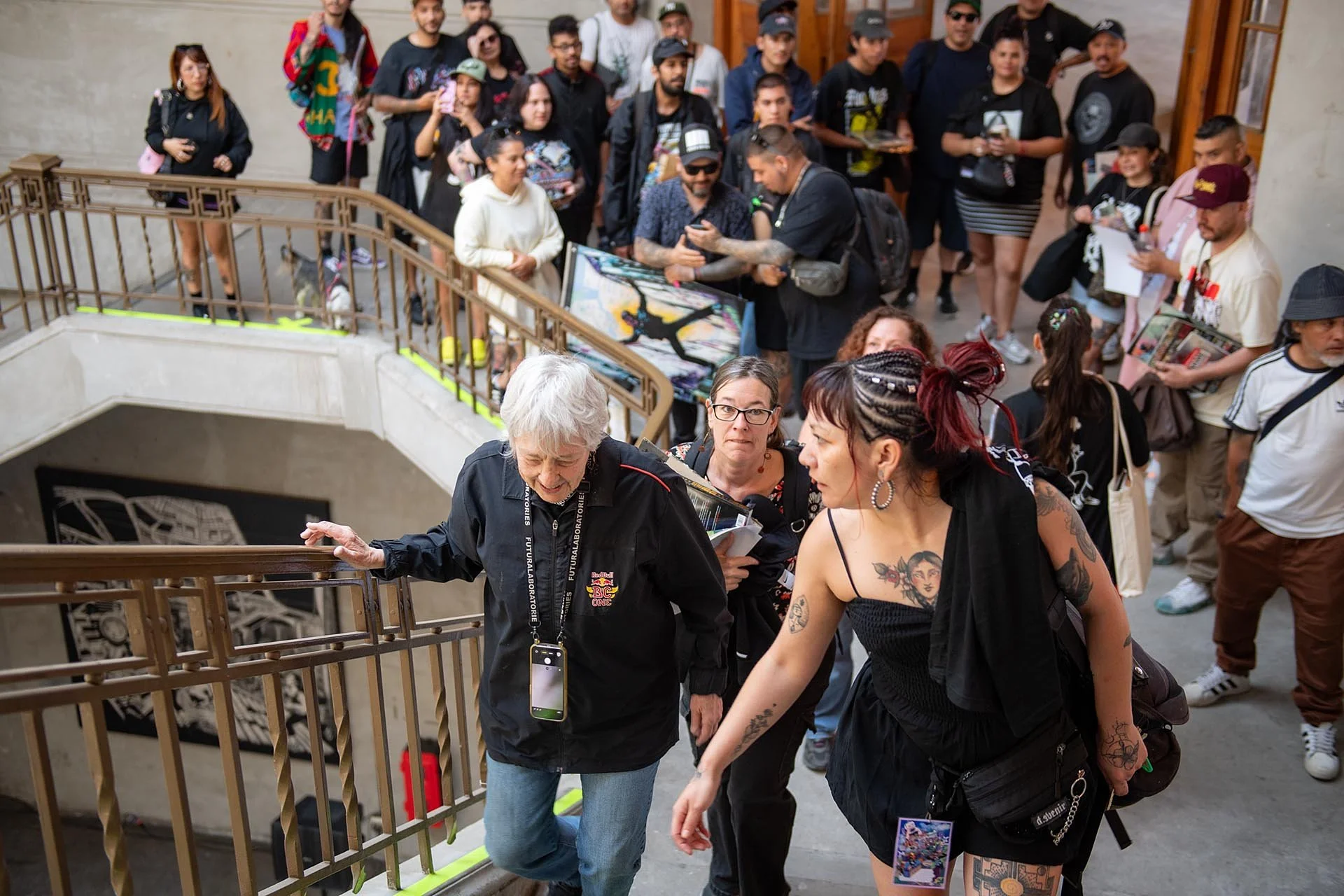
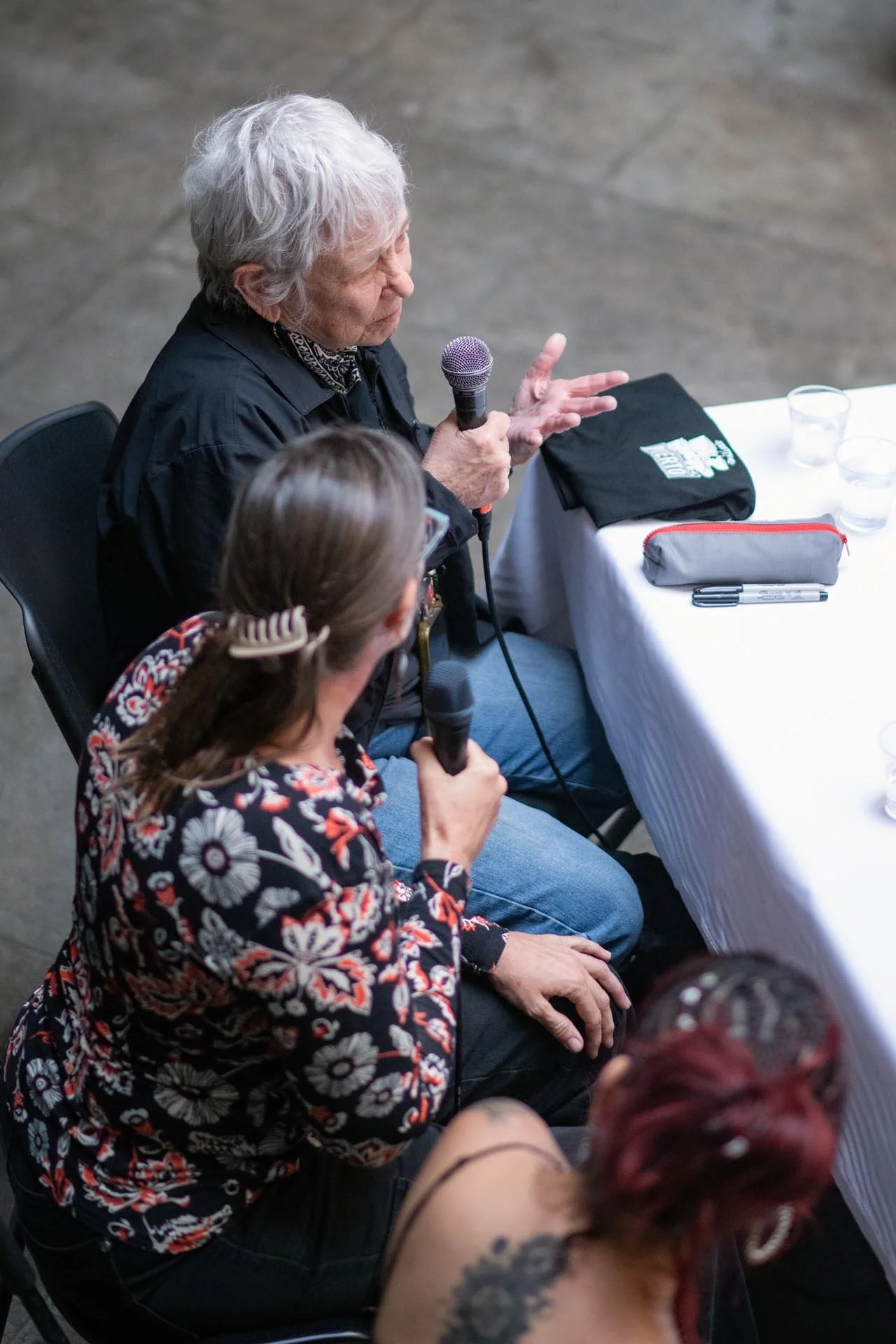
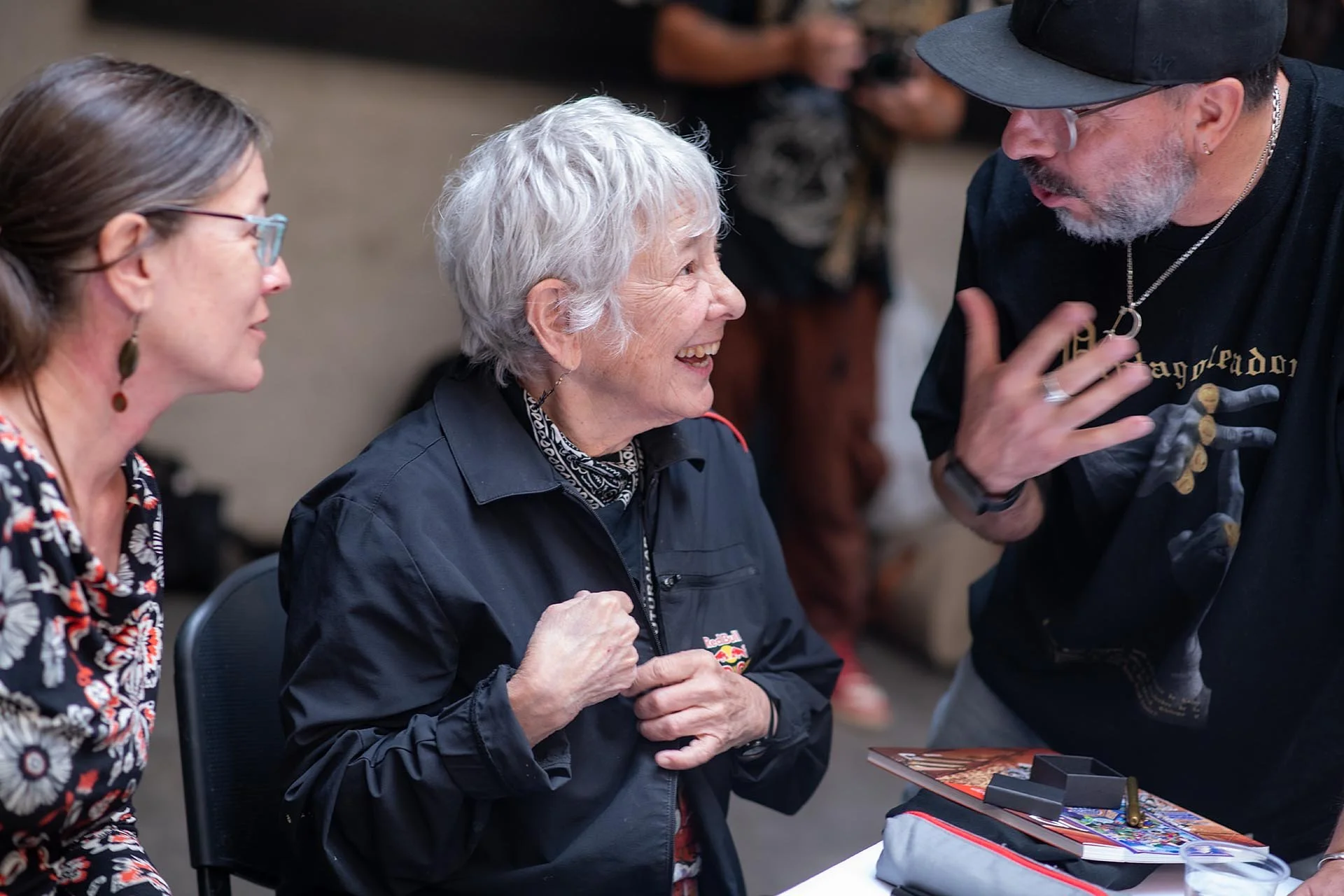
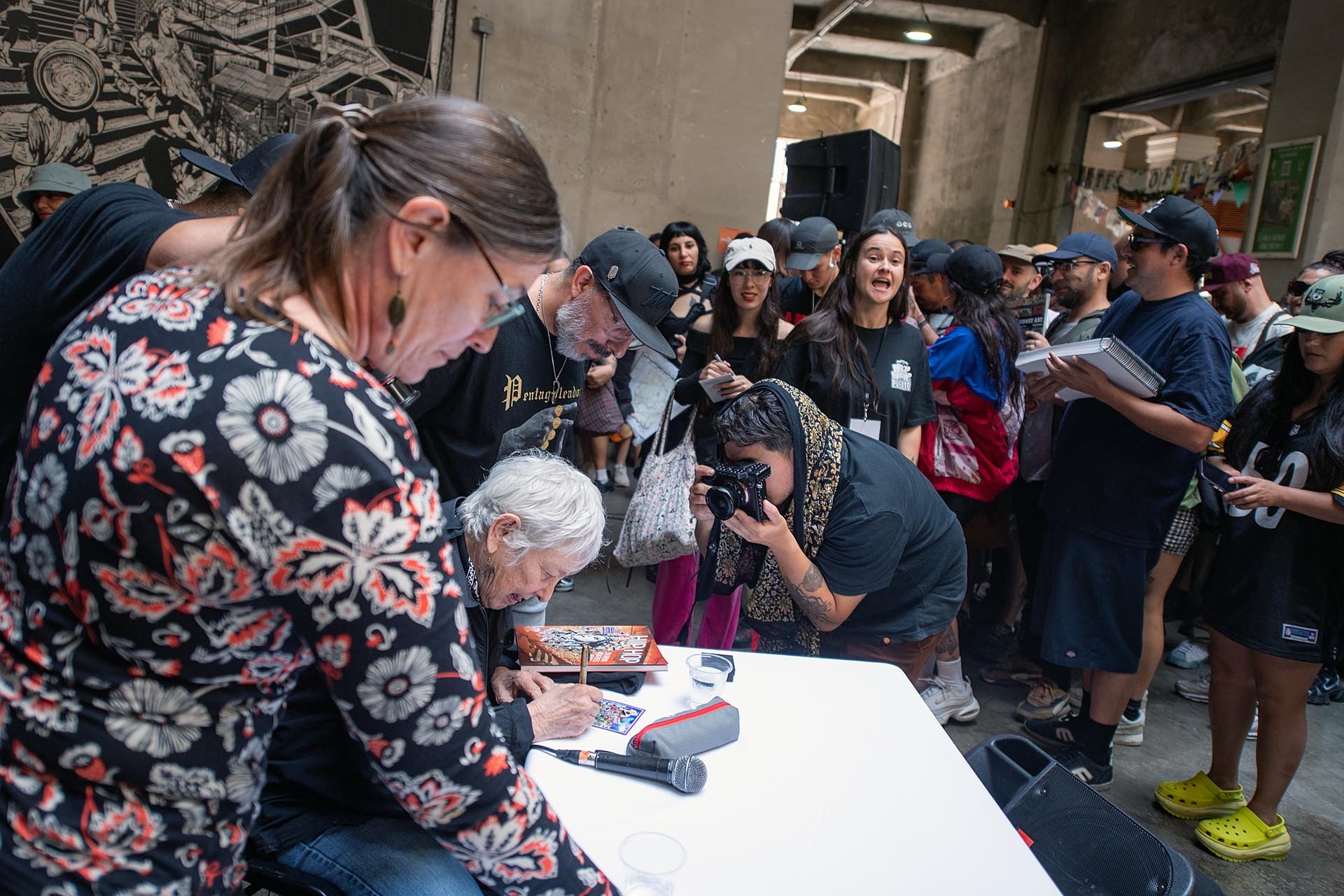
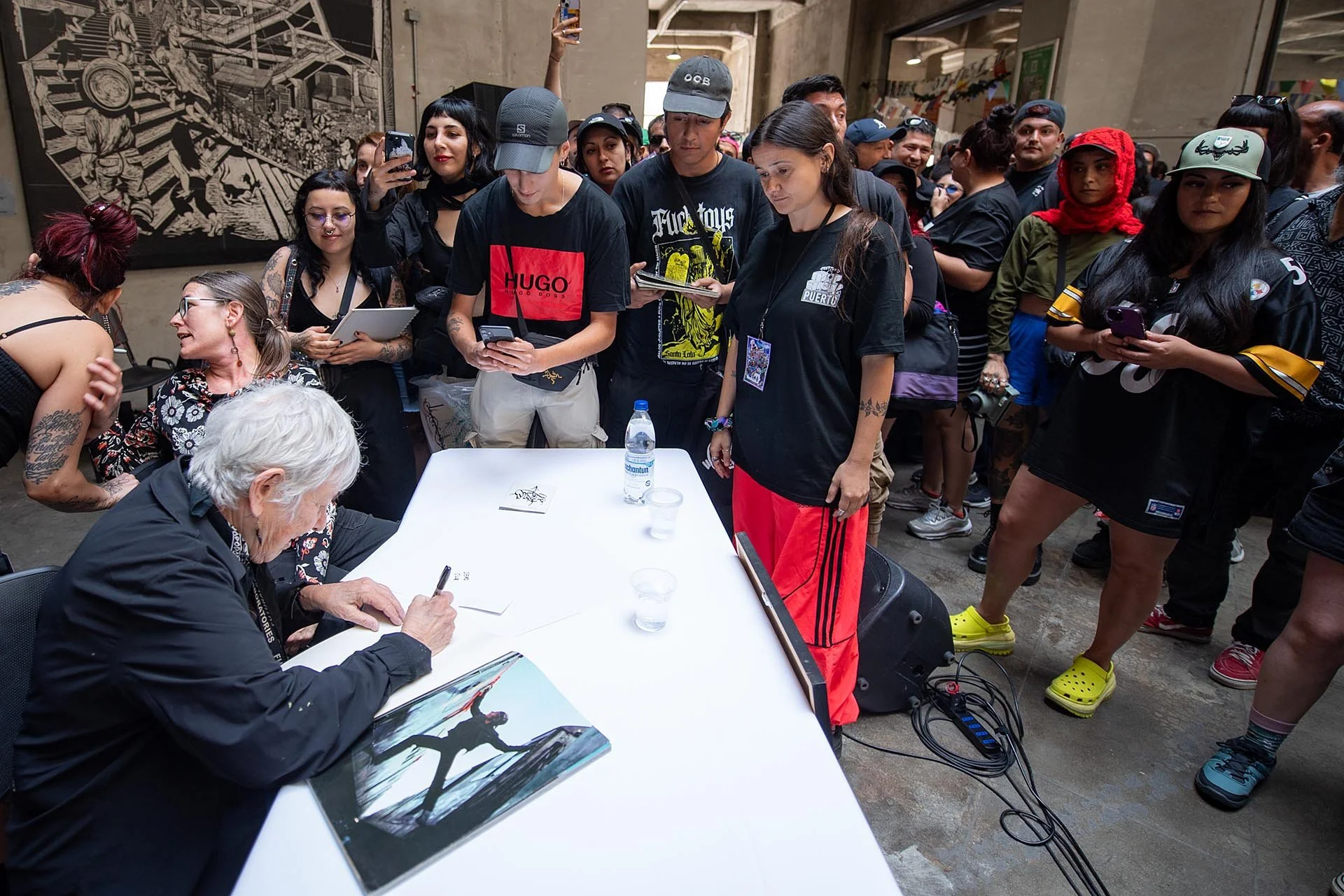
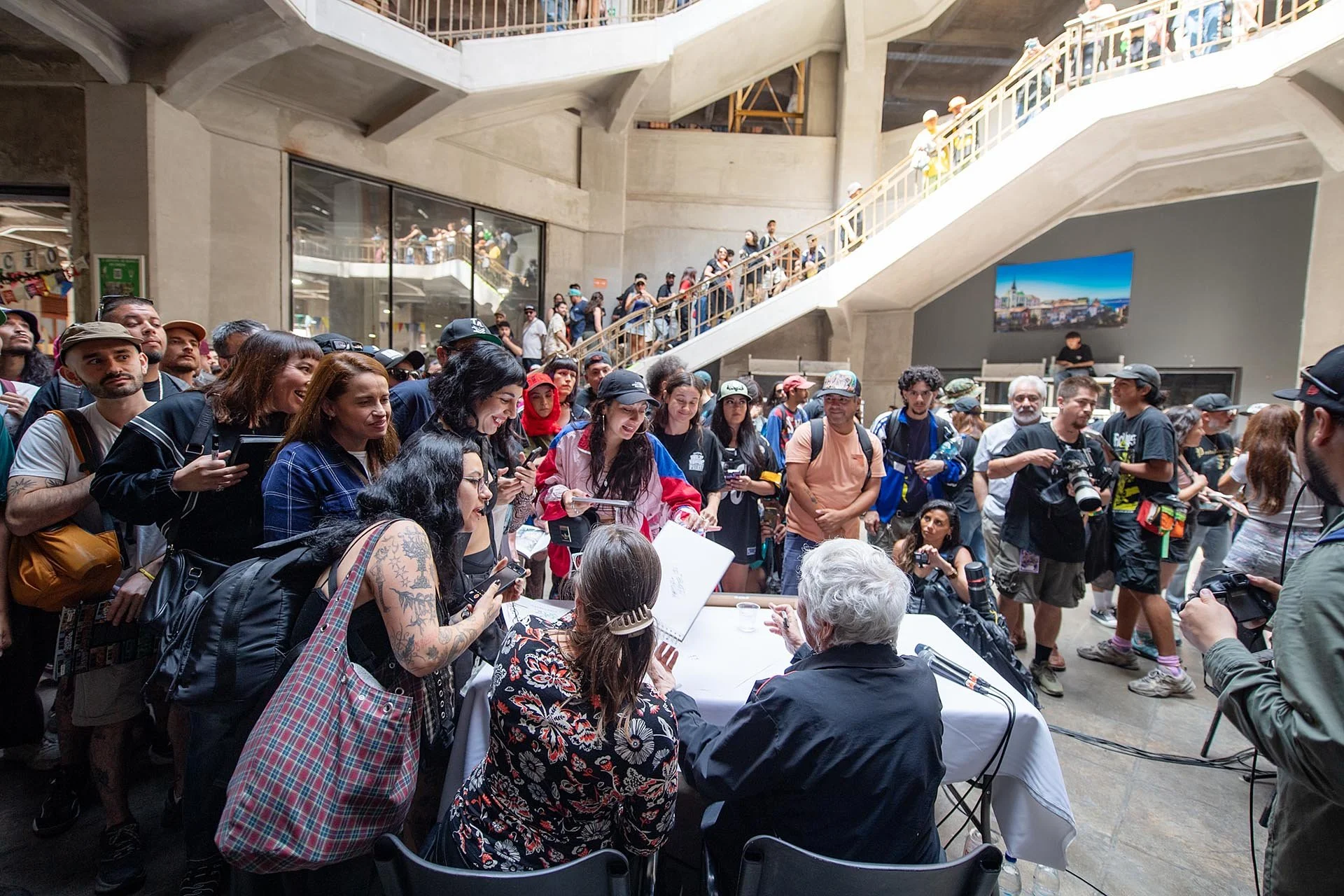
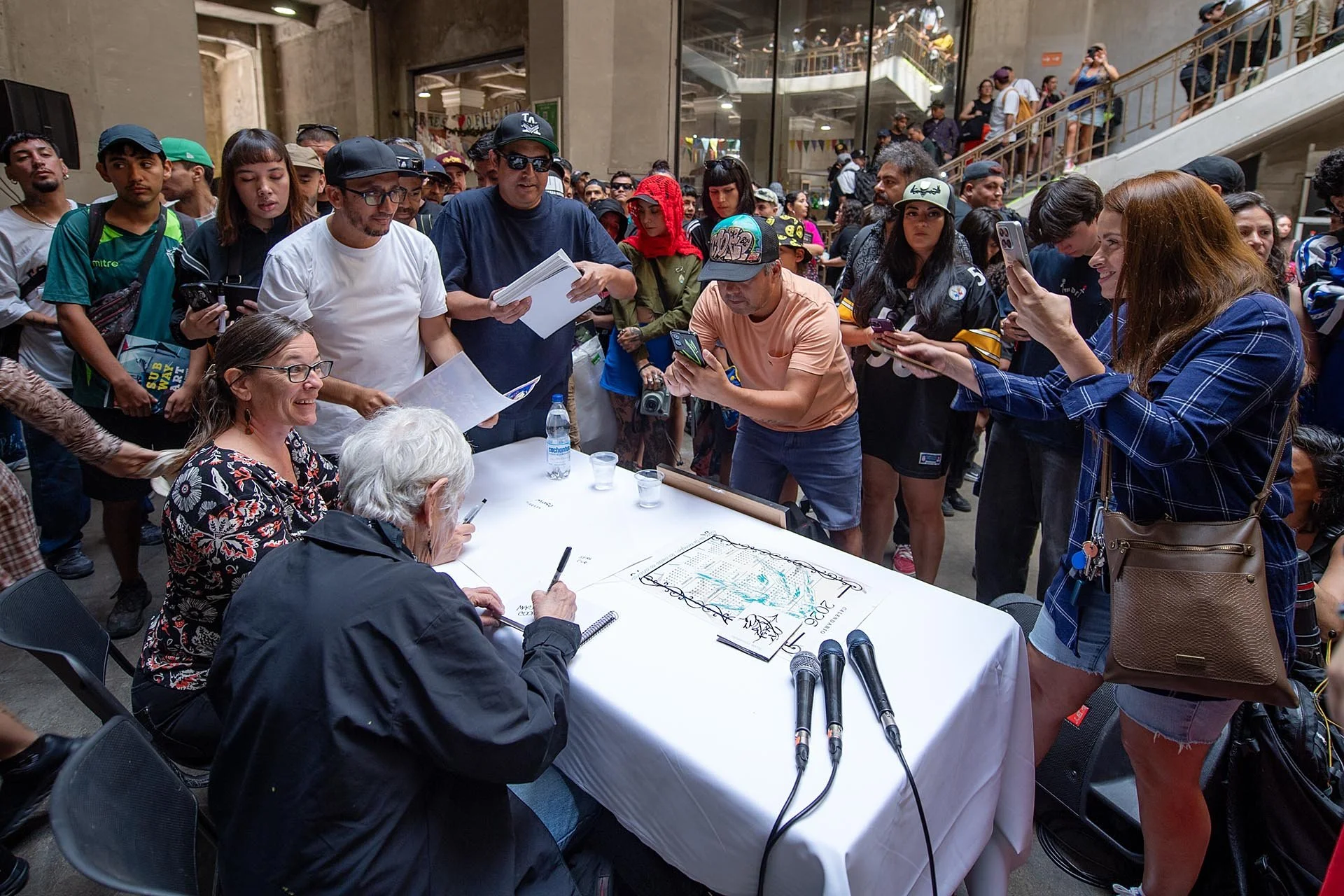
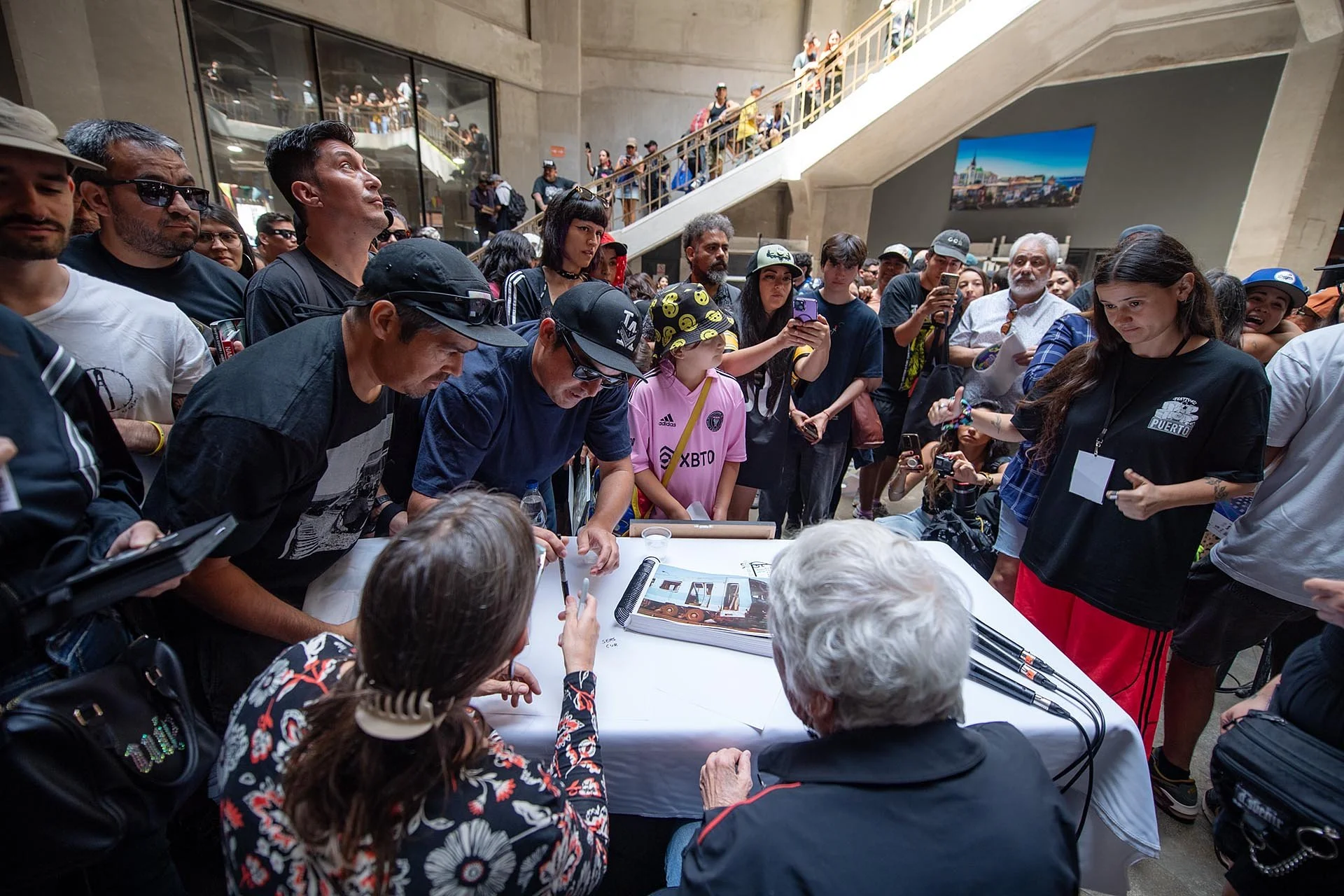
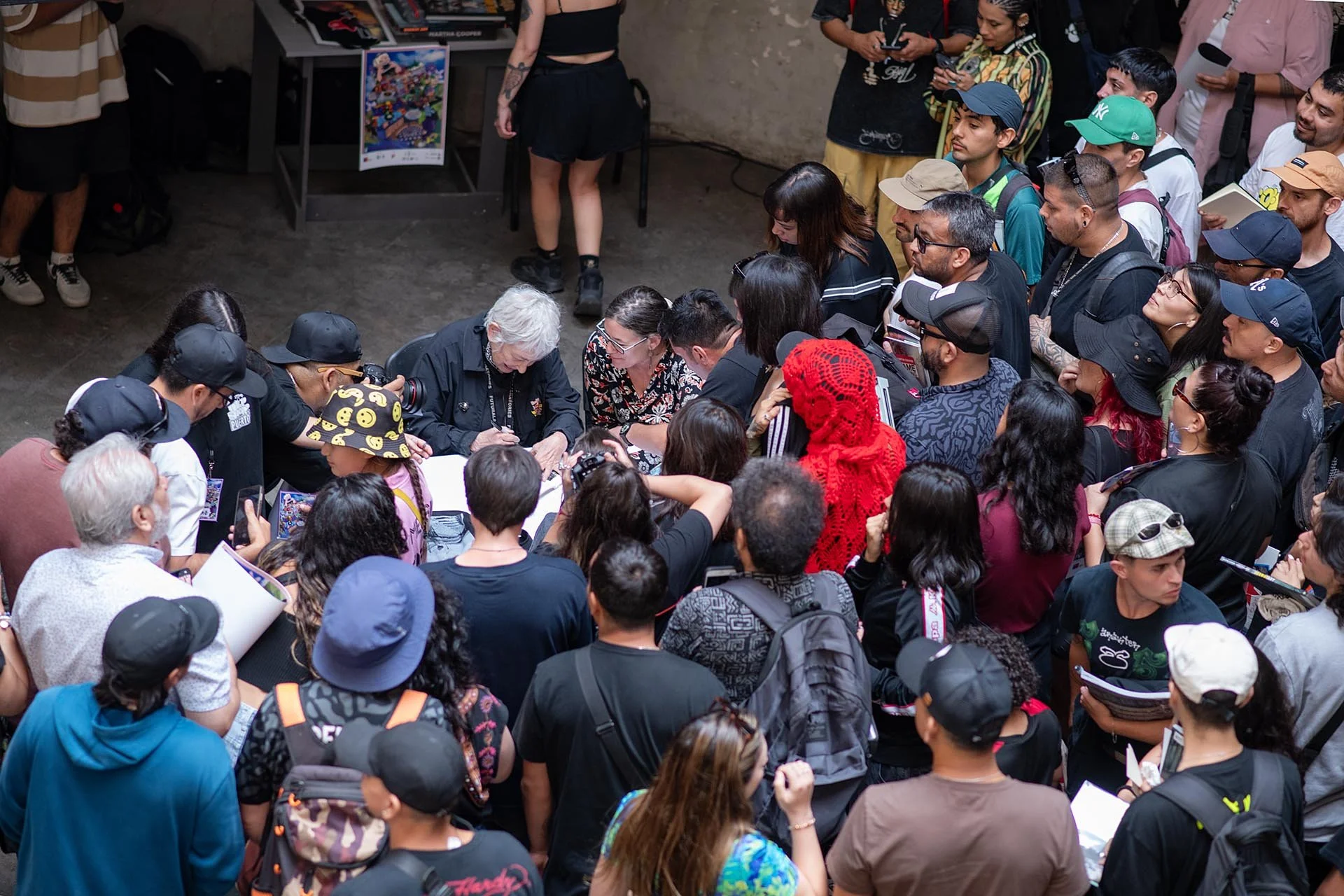
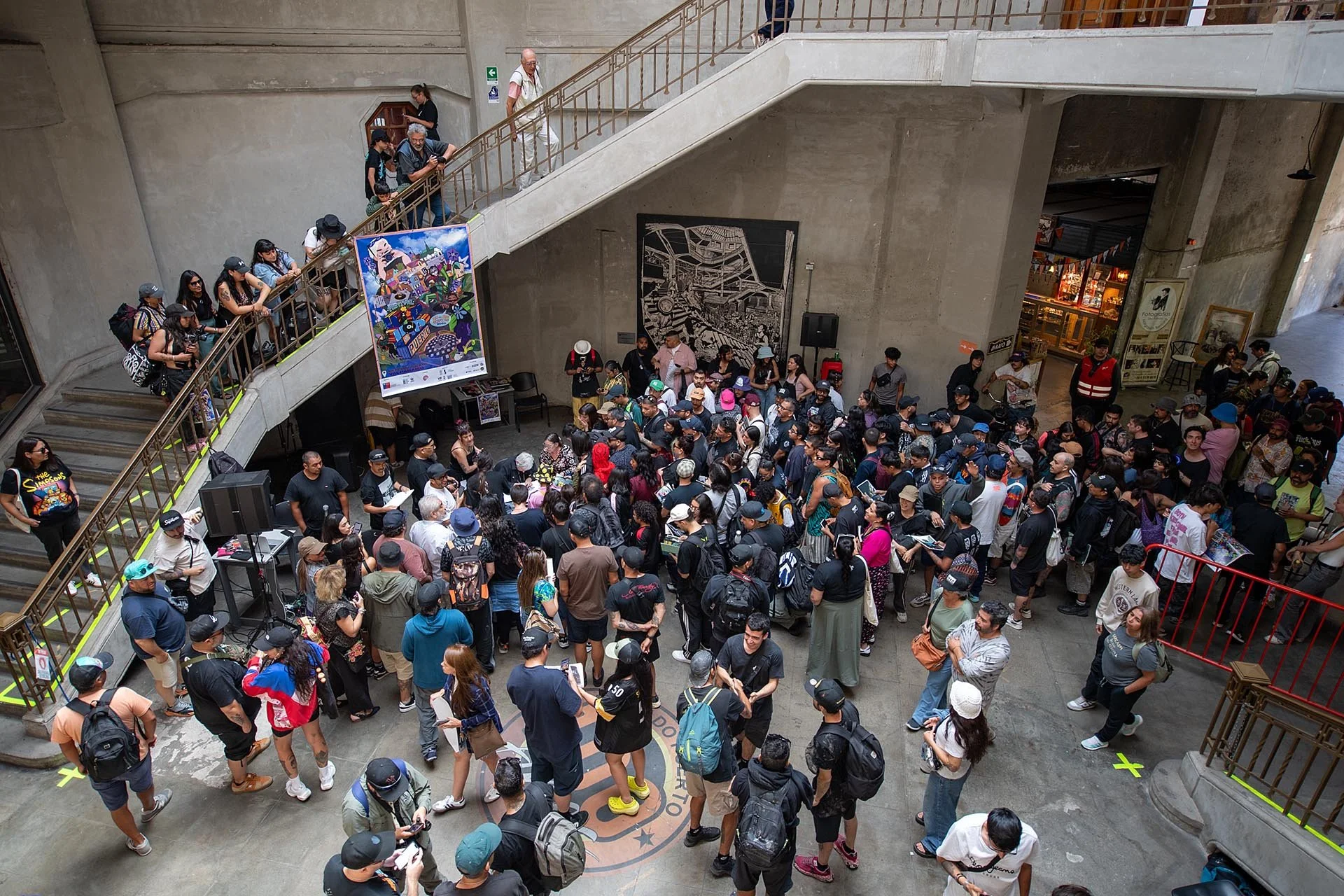
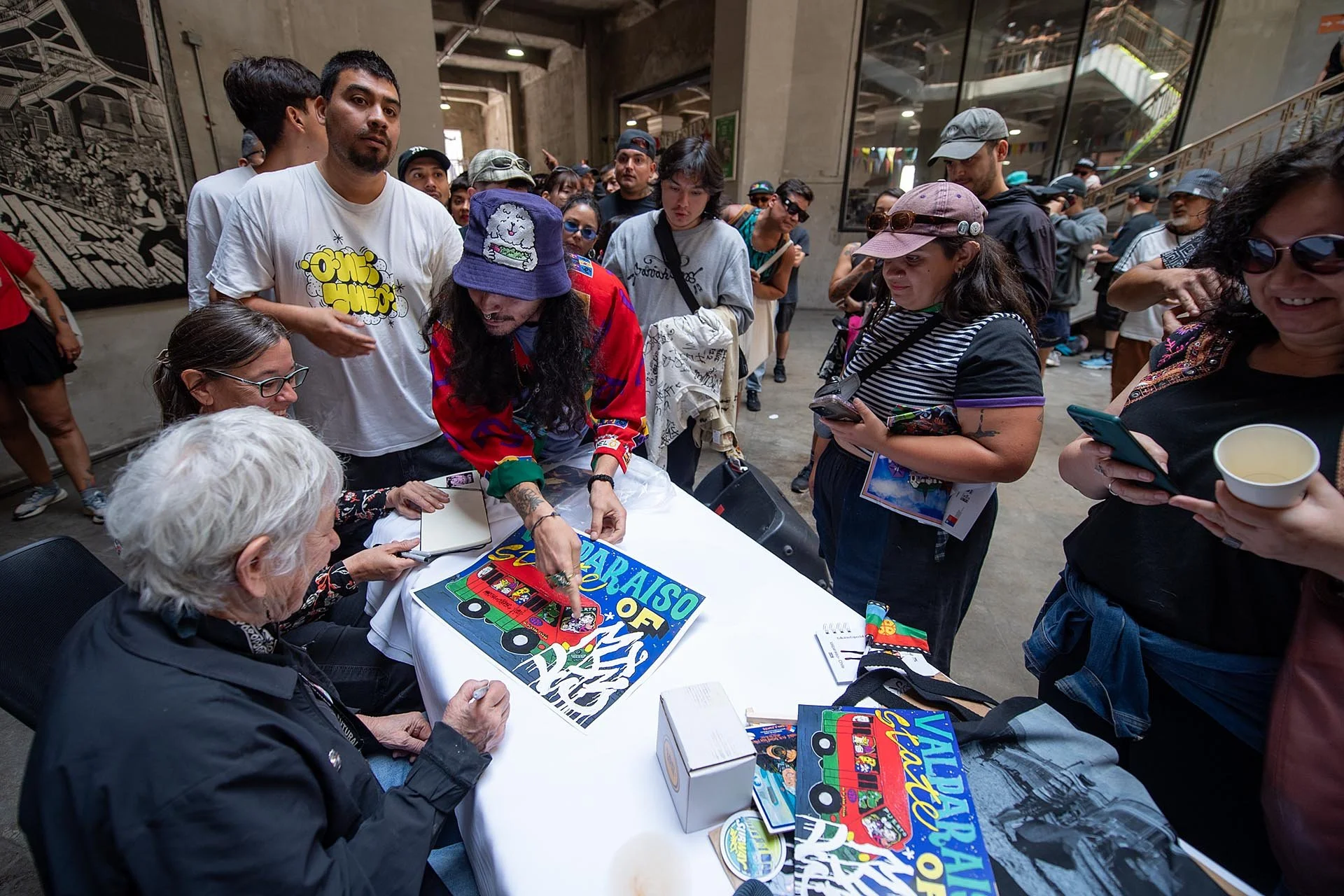
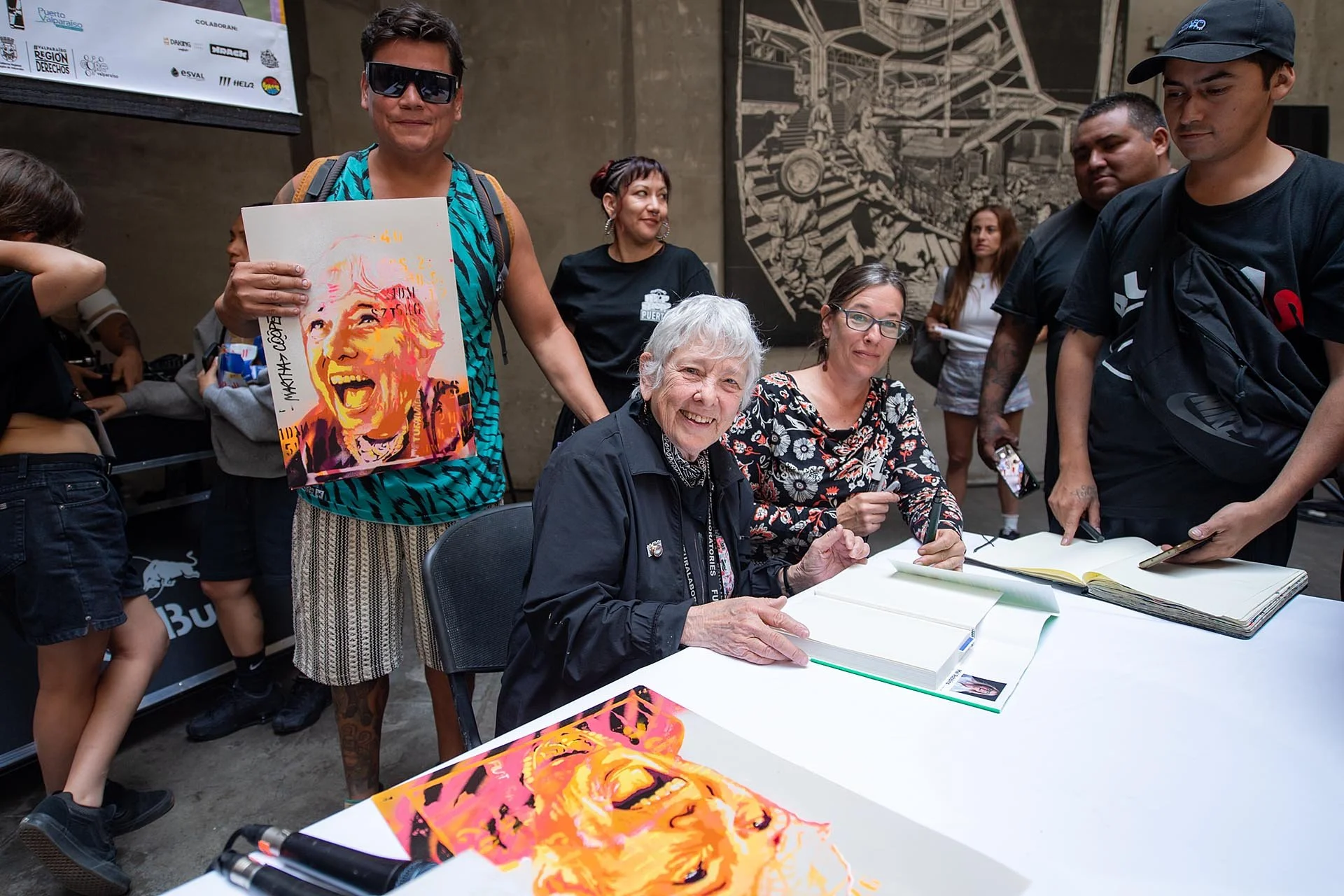
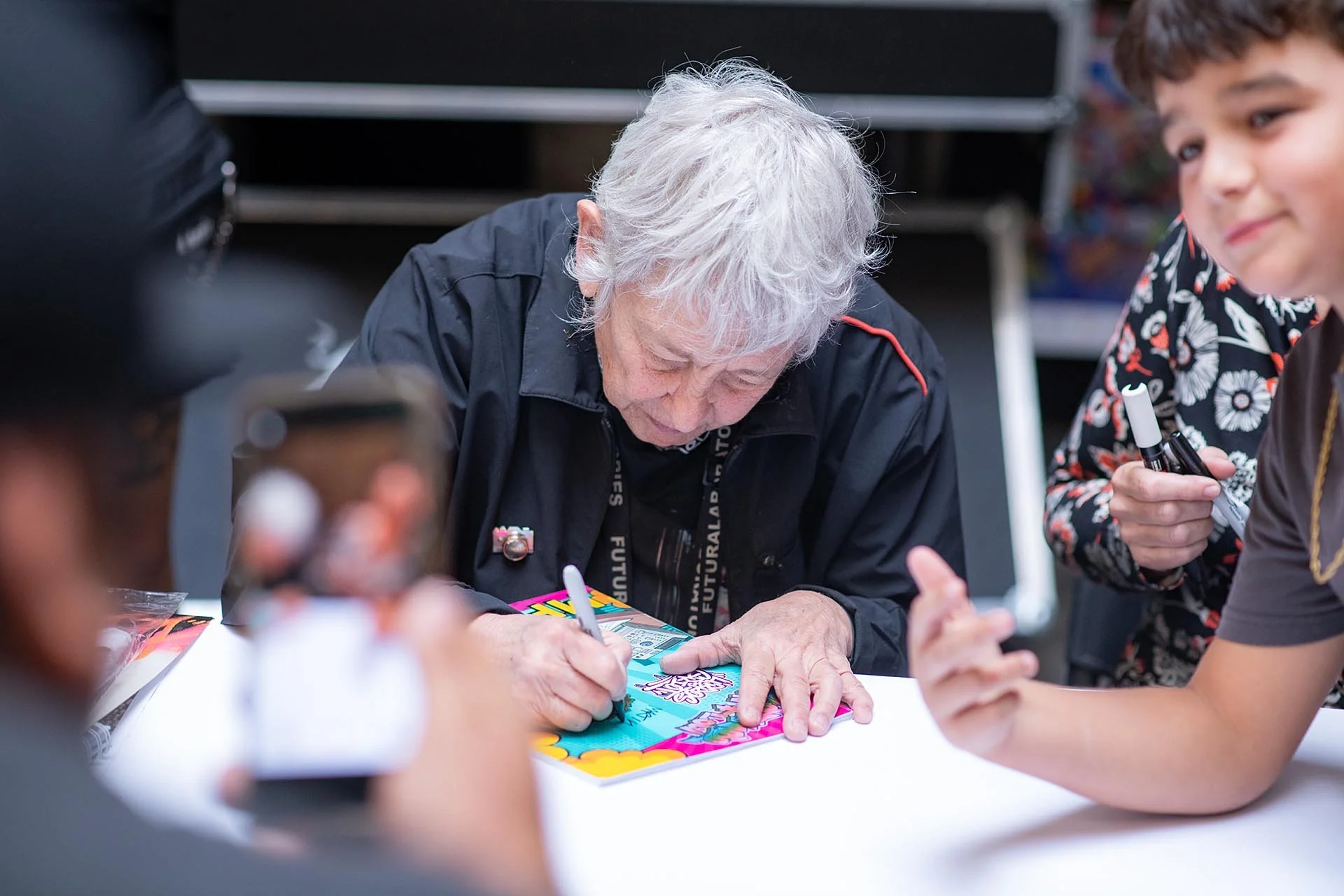
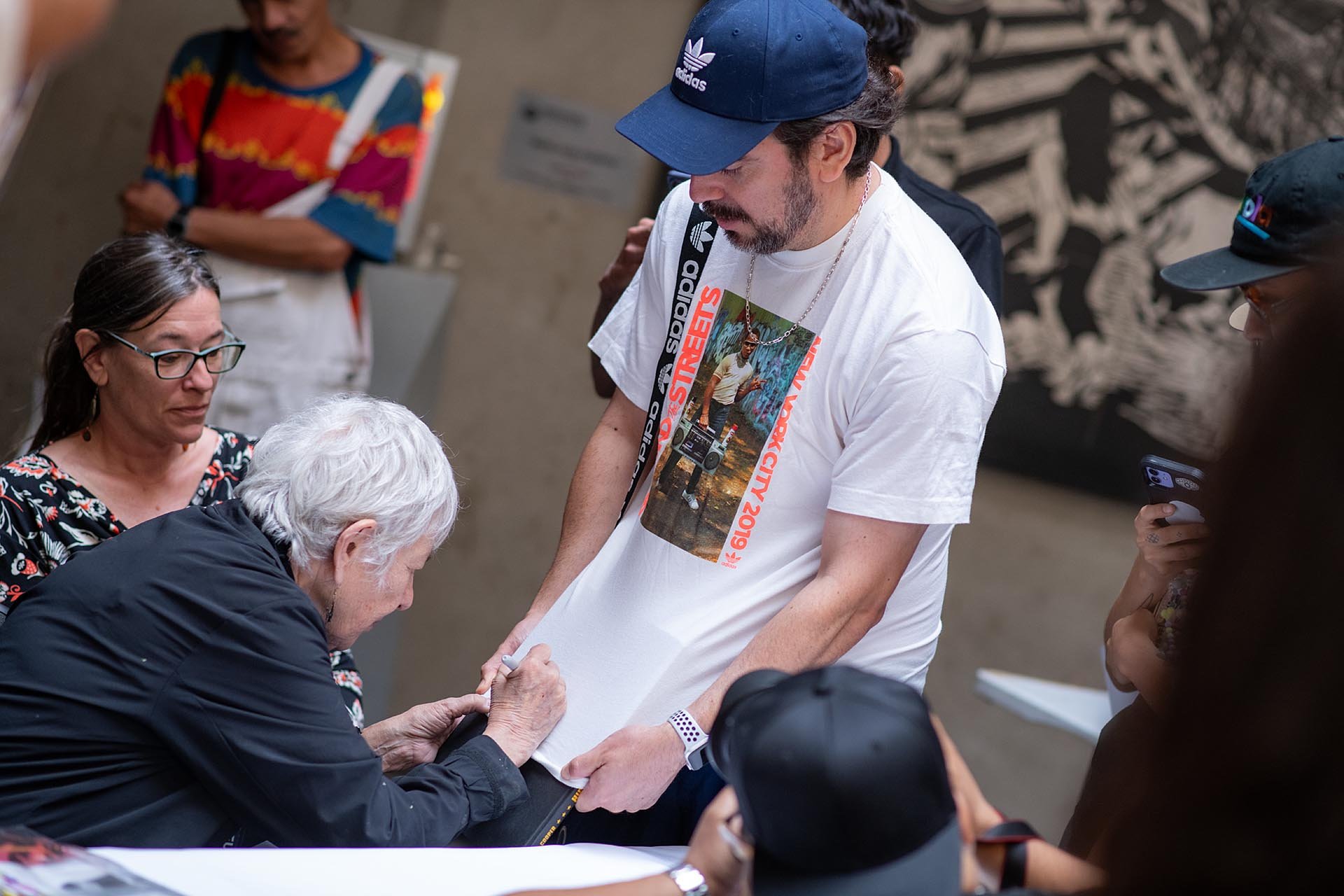
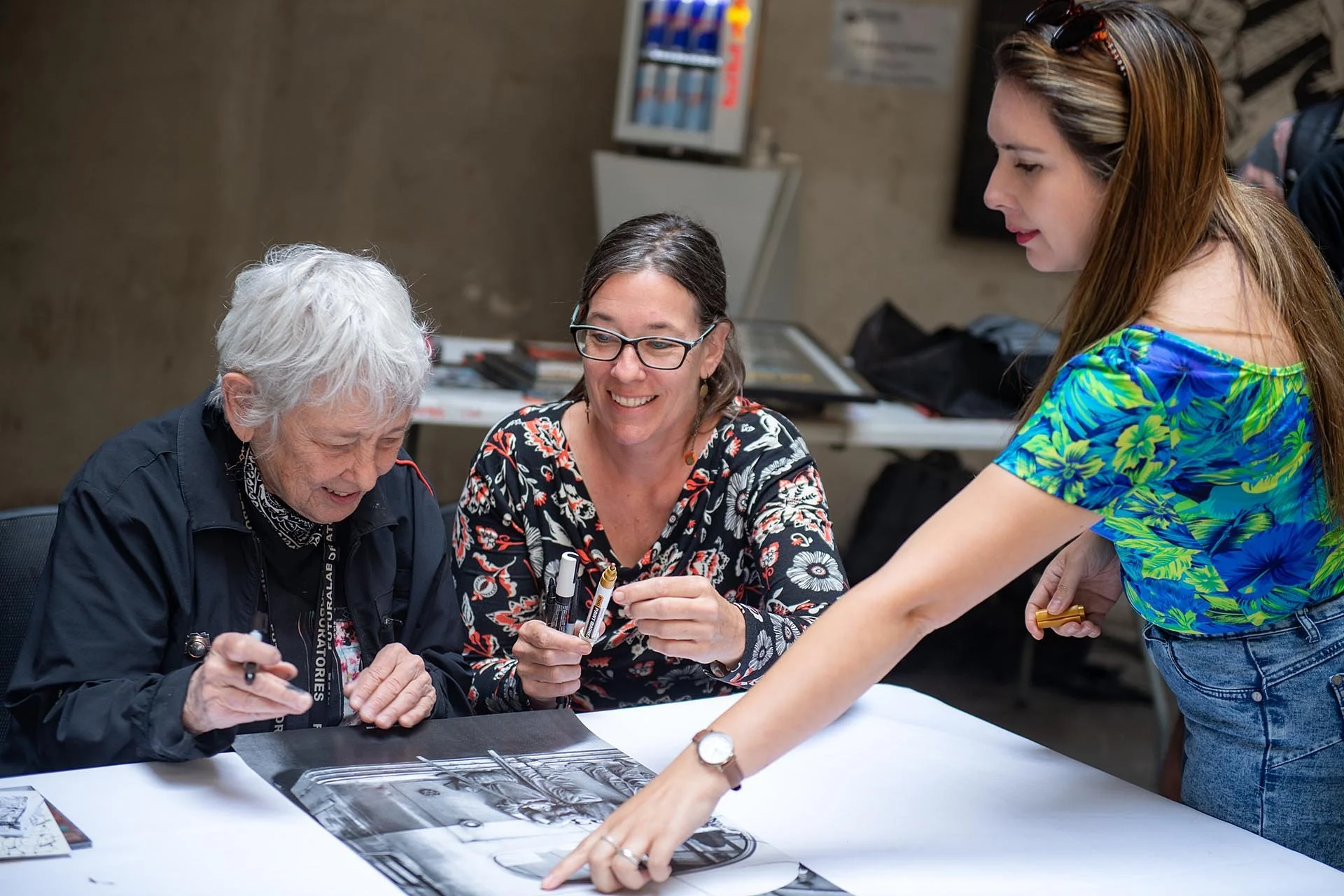
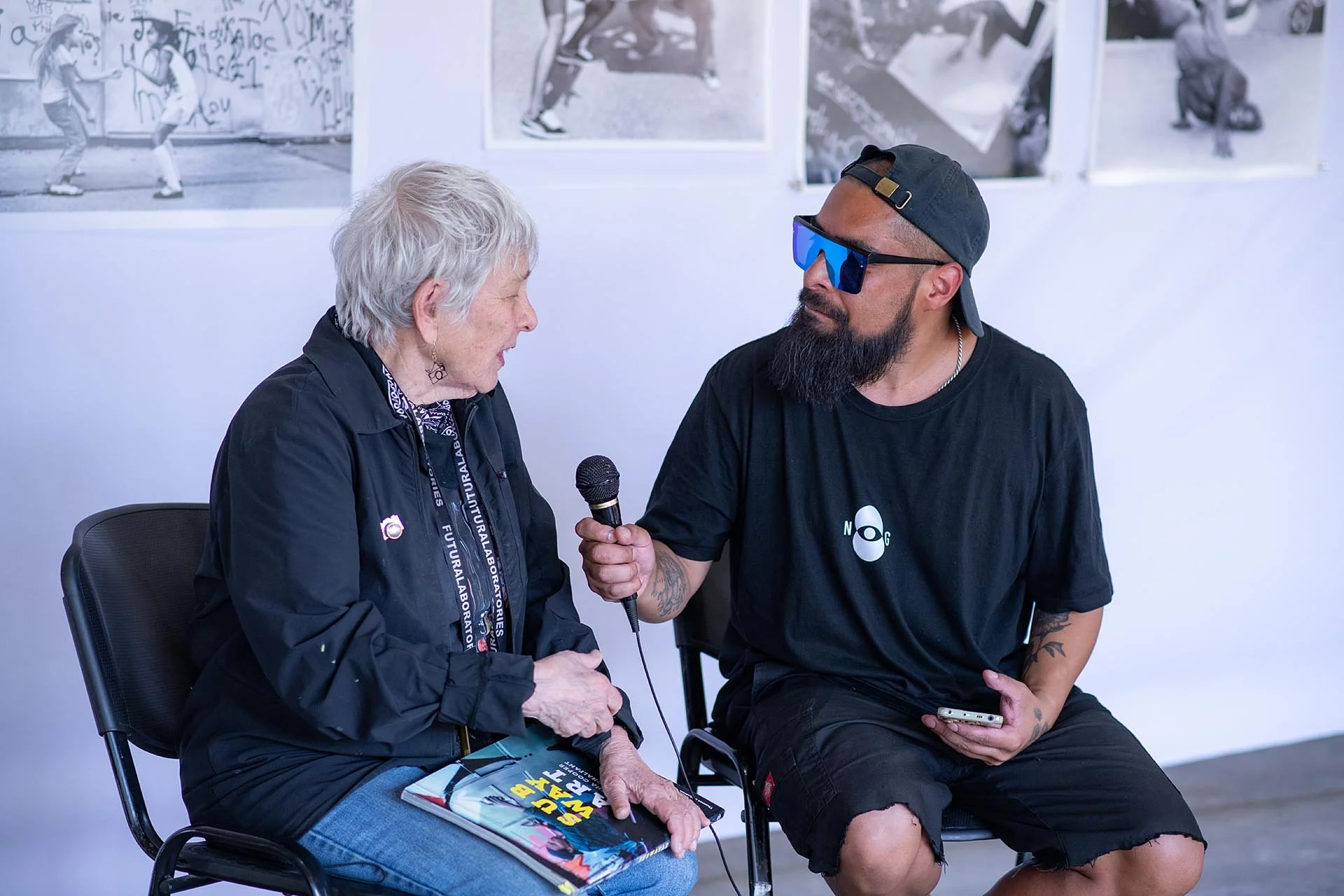
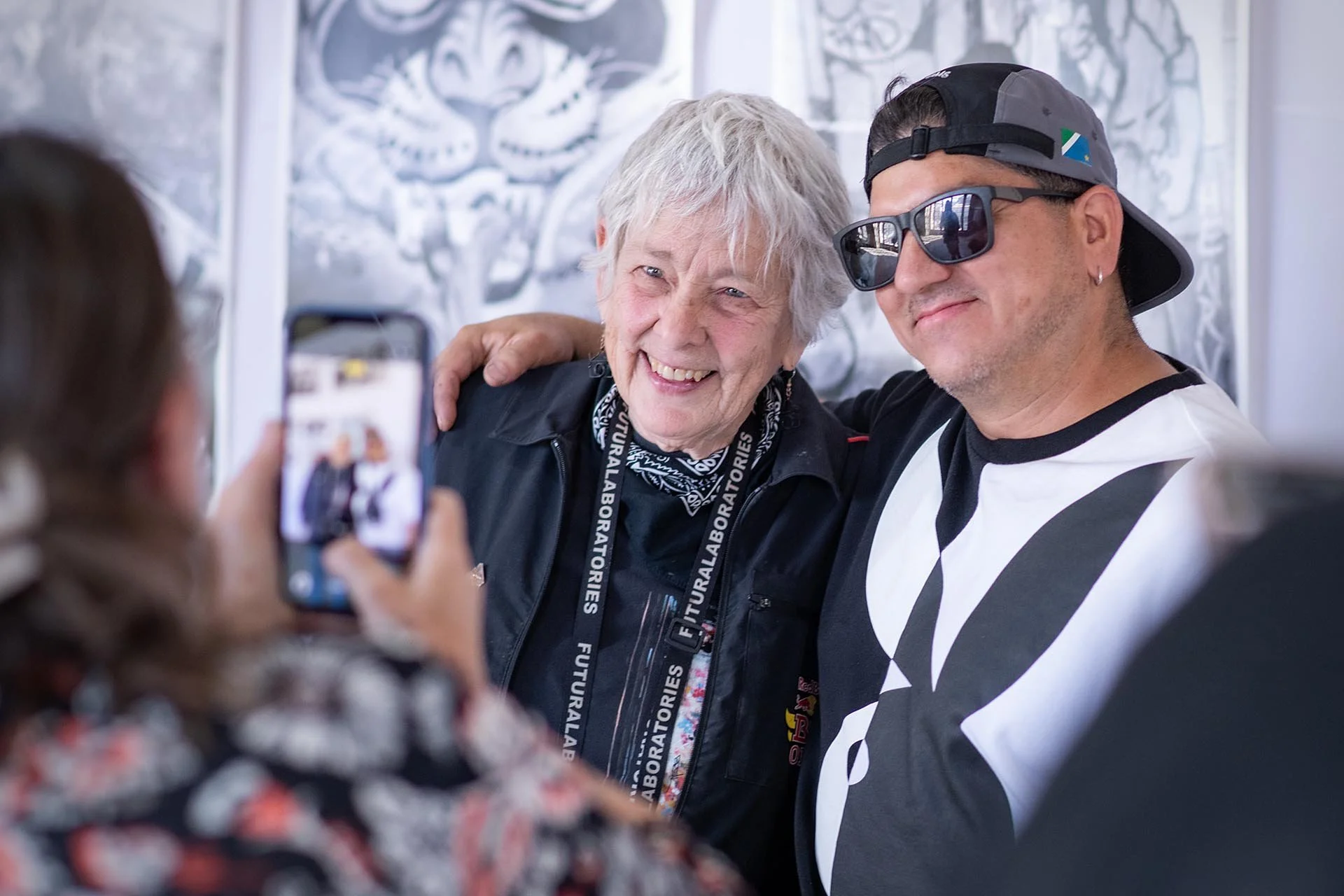
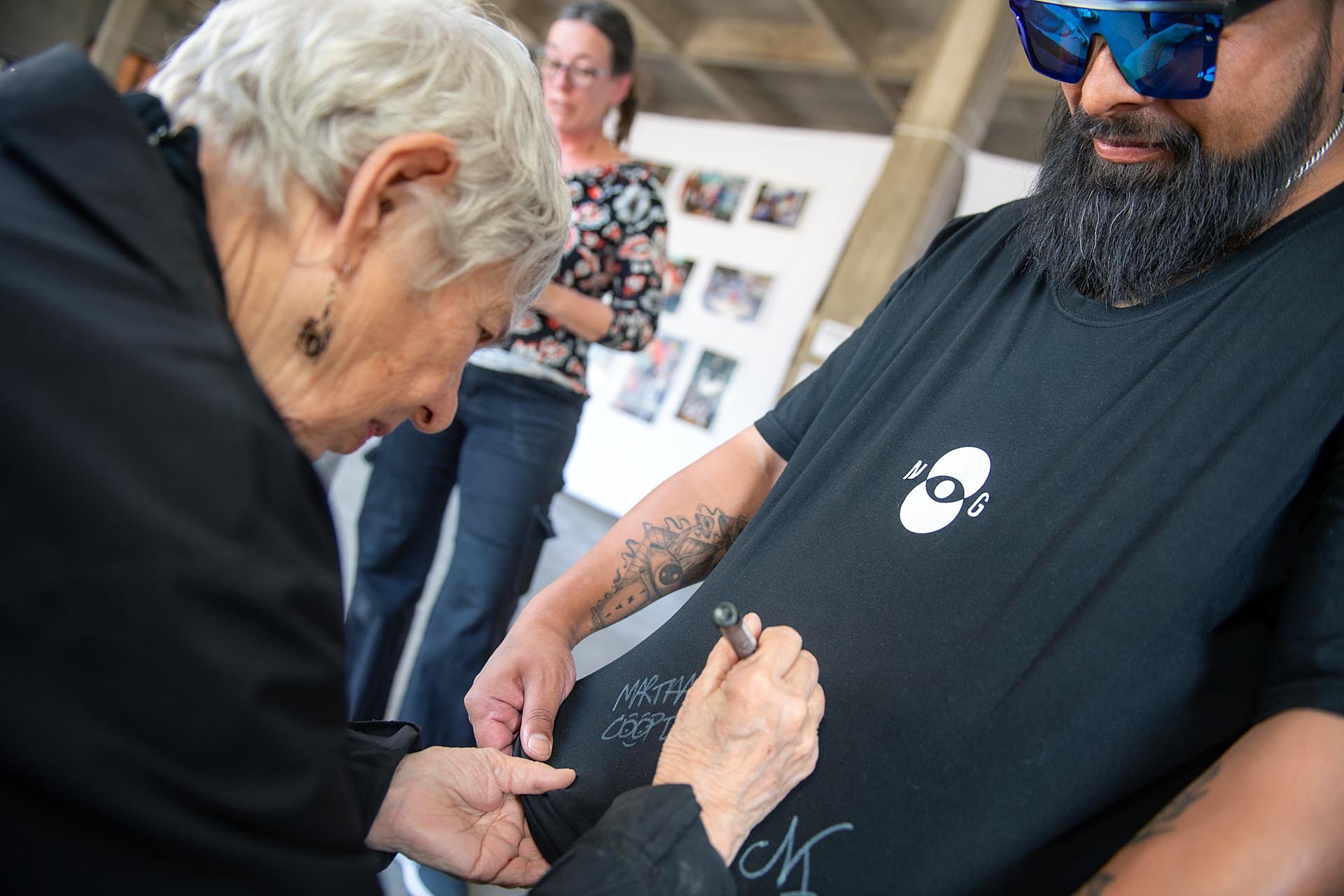
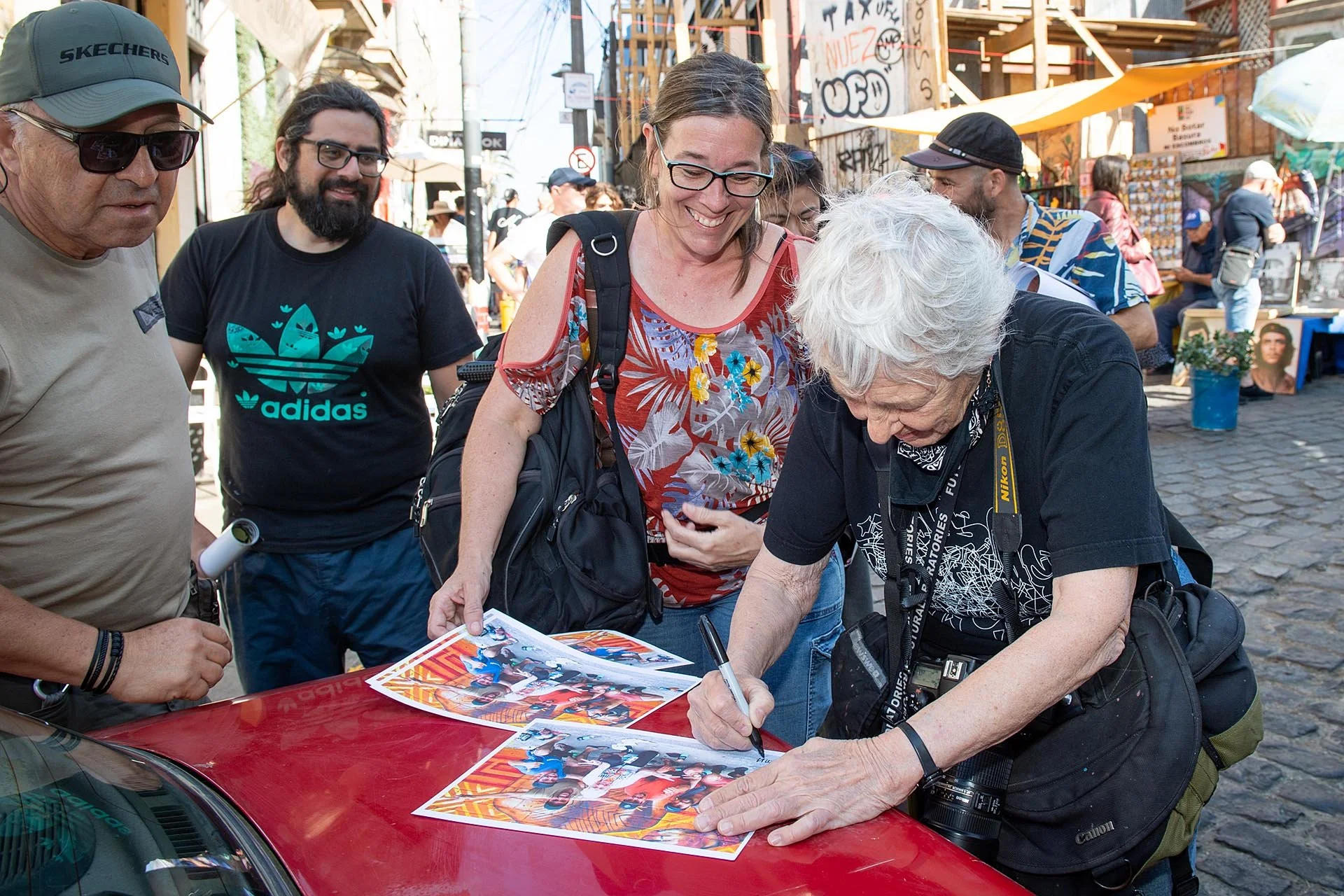
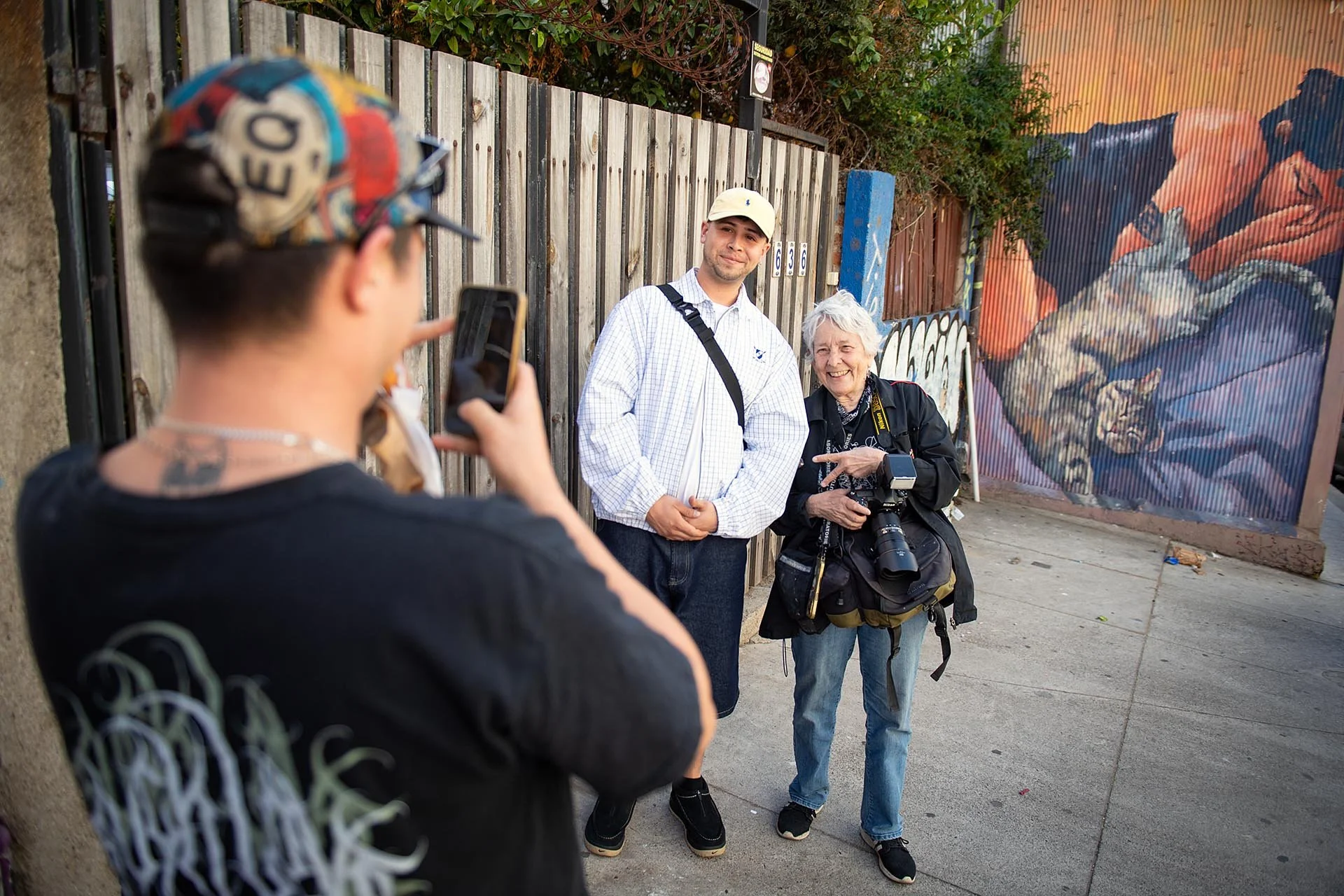
The moment she entered the event, she was surrounded. People shouting. People thanking her. People handing her books, flyers, posters, jackets, shoes — anything that could hold a signature. She signed for hours. She posed for photos without pause. She listened to stories about how her work changed lives. She’s such a trooper, she never wants to disappoint her fans, so she keeps on signing and smiling for photos. I believe she also received more presents than ever before.
It was beautiful.
And it was impossible.
We couldn’t move. We couldn’t watch the battles. We couldn’t stand in the crowd and just be there. Which makes us kind of sad. We started organizing events for women in Hip Hop, when there weren’t many and now we were at this amazing event in this wonderful country and couldn’t really check it out.
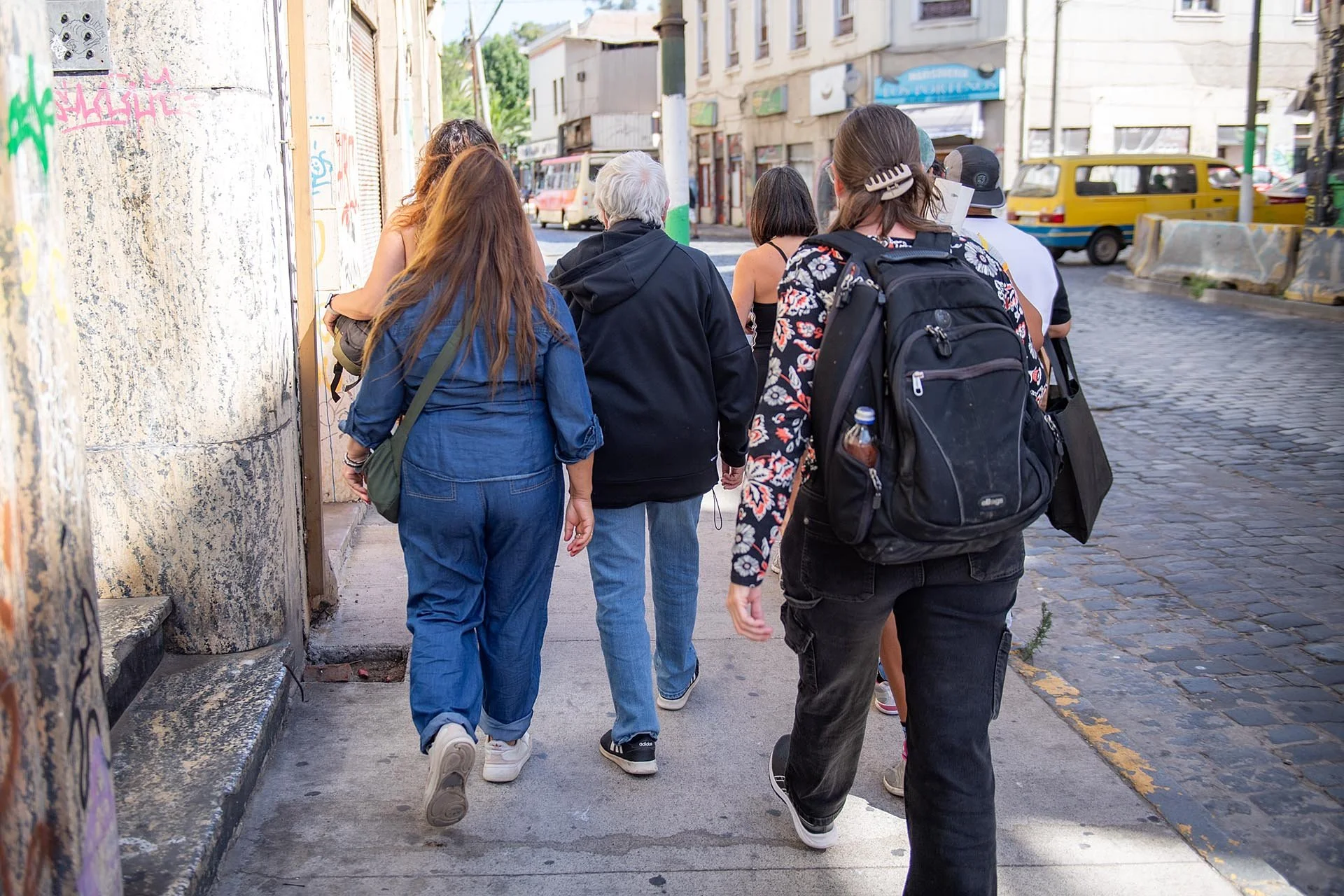
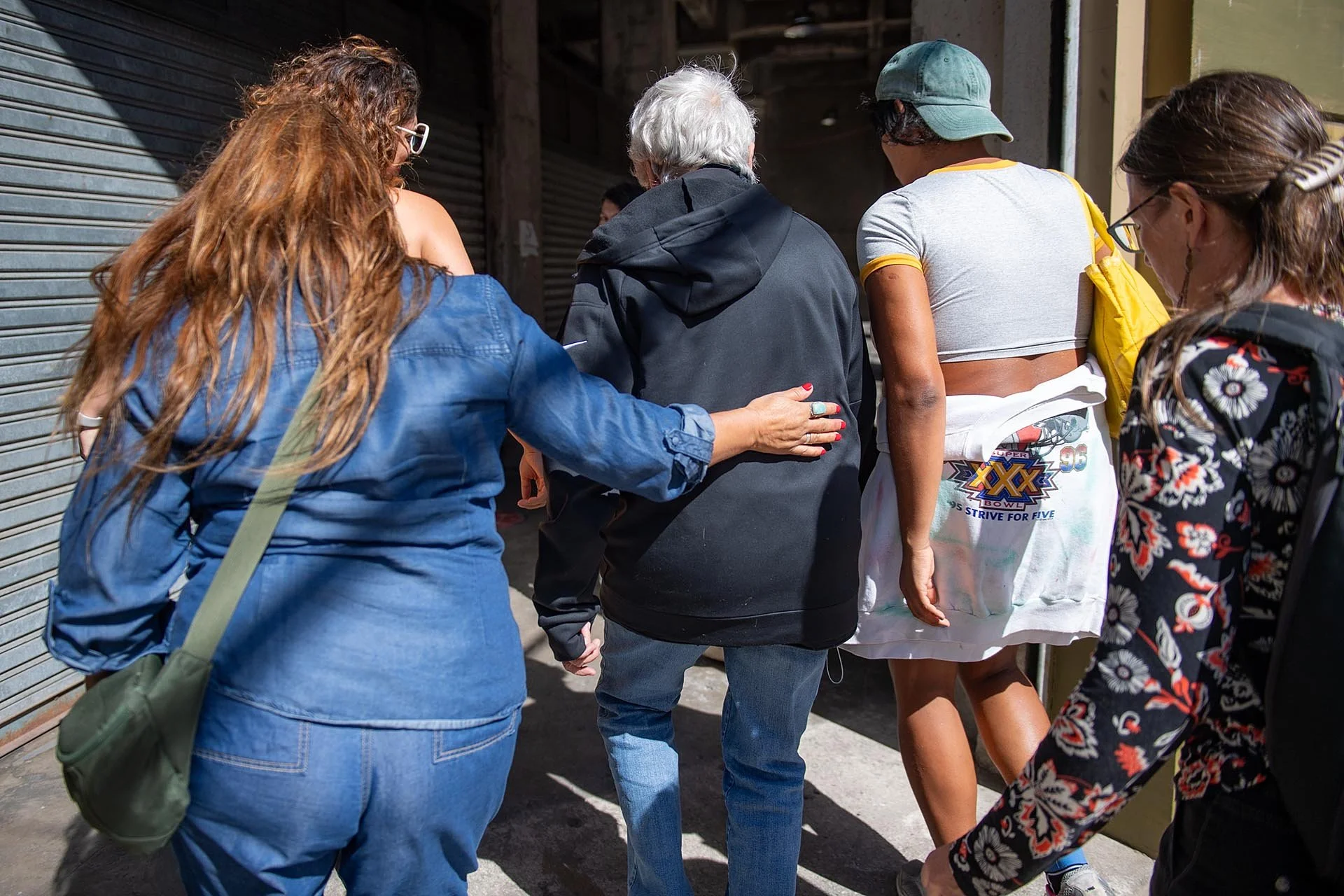
At some points, we had to physically escort Marty in and out, forming a protective circle around her, just so she could reach a car. After her talk and the official signing, we had to leave. Not because we wanted to — but because staying meant chaos.
And here is the truth: I love and admire her endlessly. She’s genorous, thoughtful, funny and has very high standards for herself. And I’m deeply grateful and so happy that she receives the recognition she deserves. She has documented the culture with integrity and love for decades. She showed up when few others did. She listened. She cared. The fact that entire generations feel seen because of her work is something extraordinary. When people say her photographs changed their lives, I believe them. She changed mine, when she gave put a camera in my hands.
But I also understand when she says, quietly, “Be careful what you wish for.”
Twenty-three years ago, we traveled to Hip Hop events and were part of the scene. Now Marty has become something else: an icon, a living archive, a symbol. The love is real and deeply deserved. But it has changed everything.
She can no longer simply attend an event.
We would have loved to photograph the dance events and checked out the concerts, but it was not in the cards.
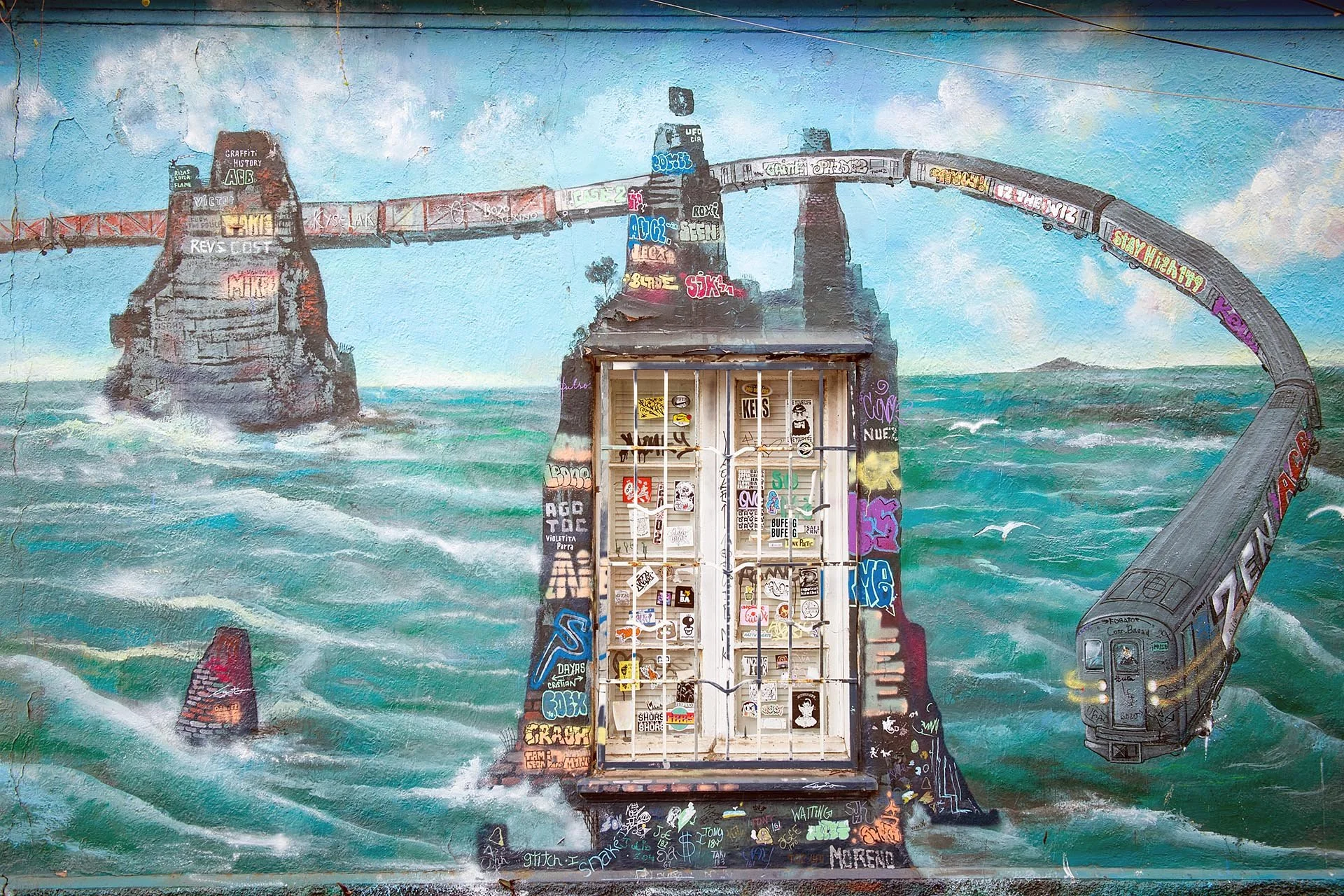
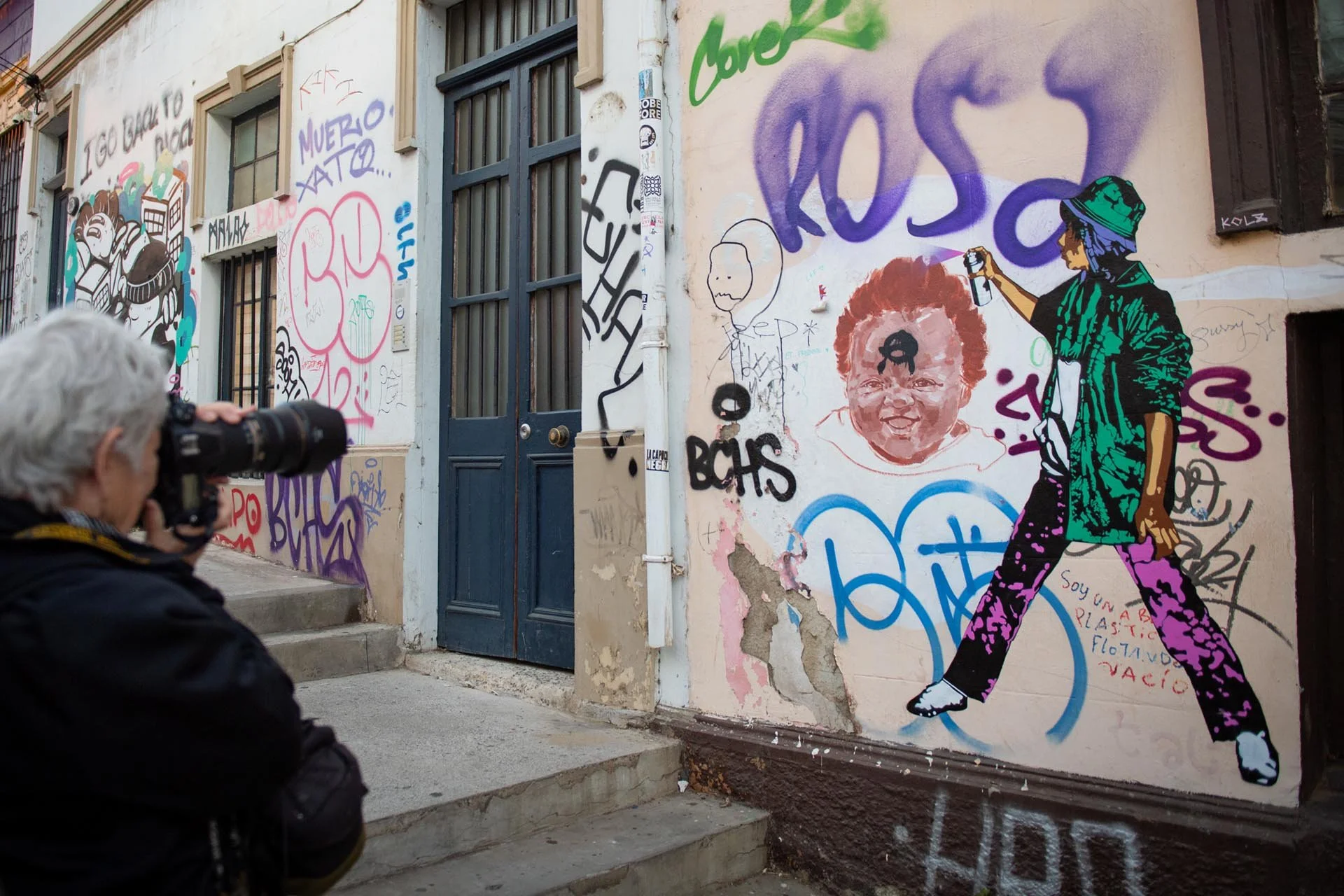
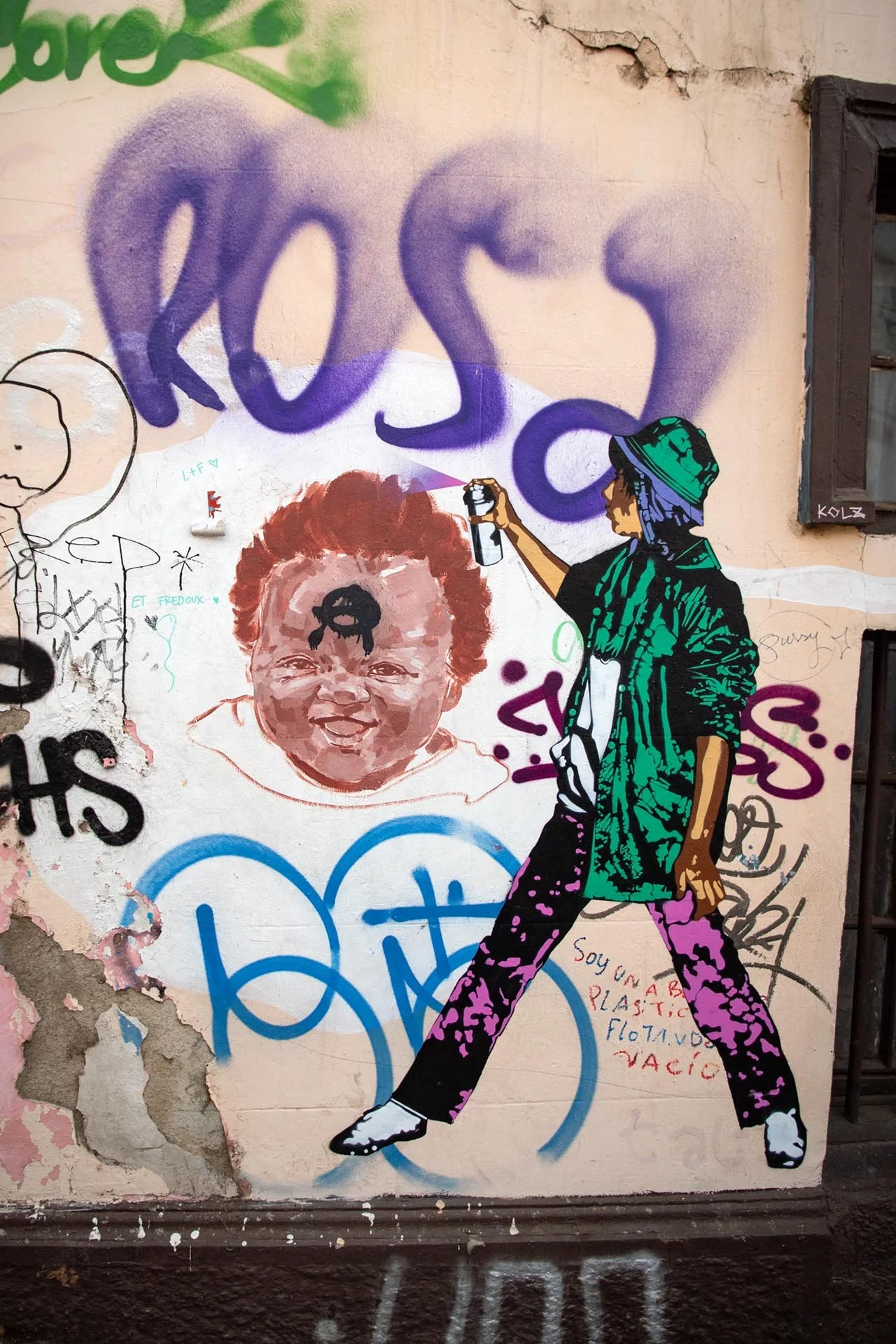
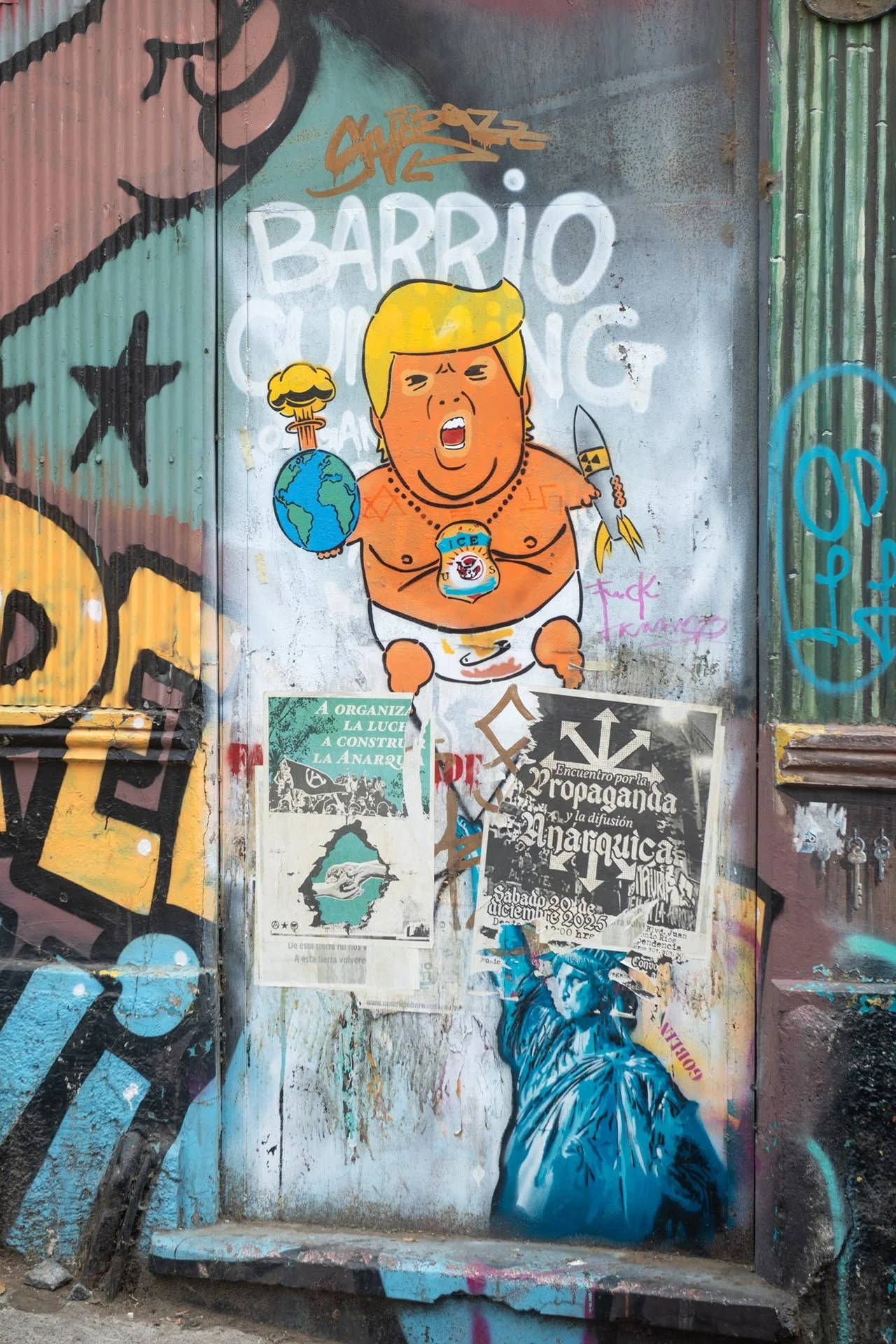
So instead of returning to the festival the next day, we wandered through the city and did what we love: we went looking for walls and cats.
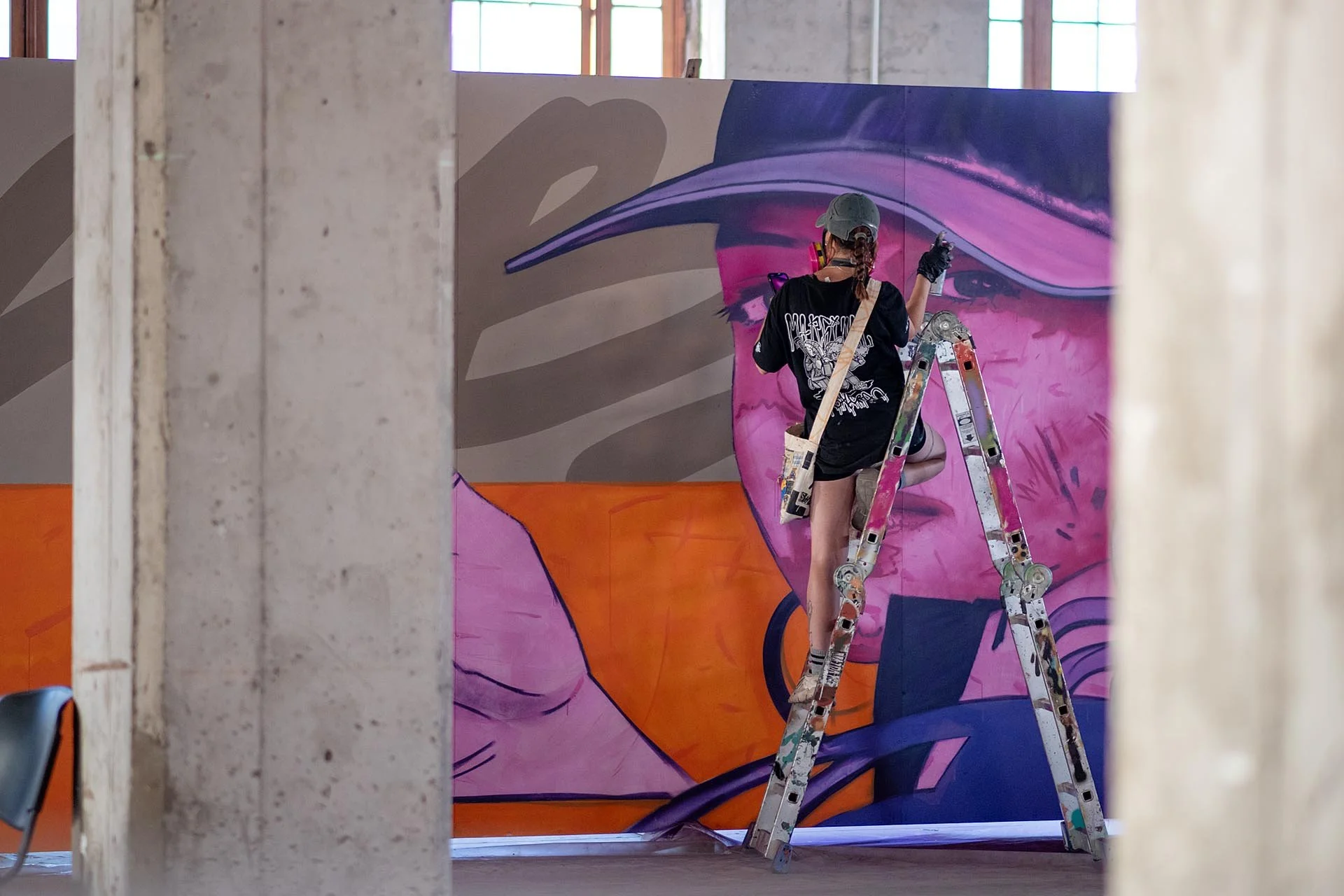
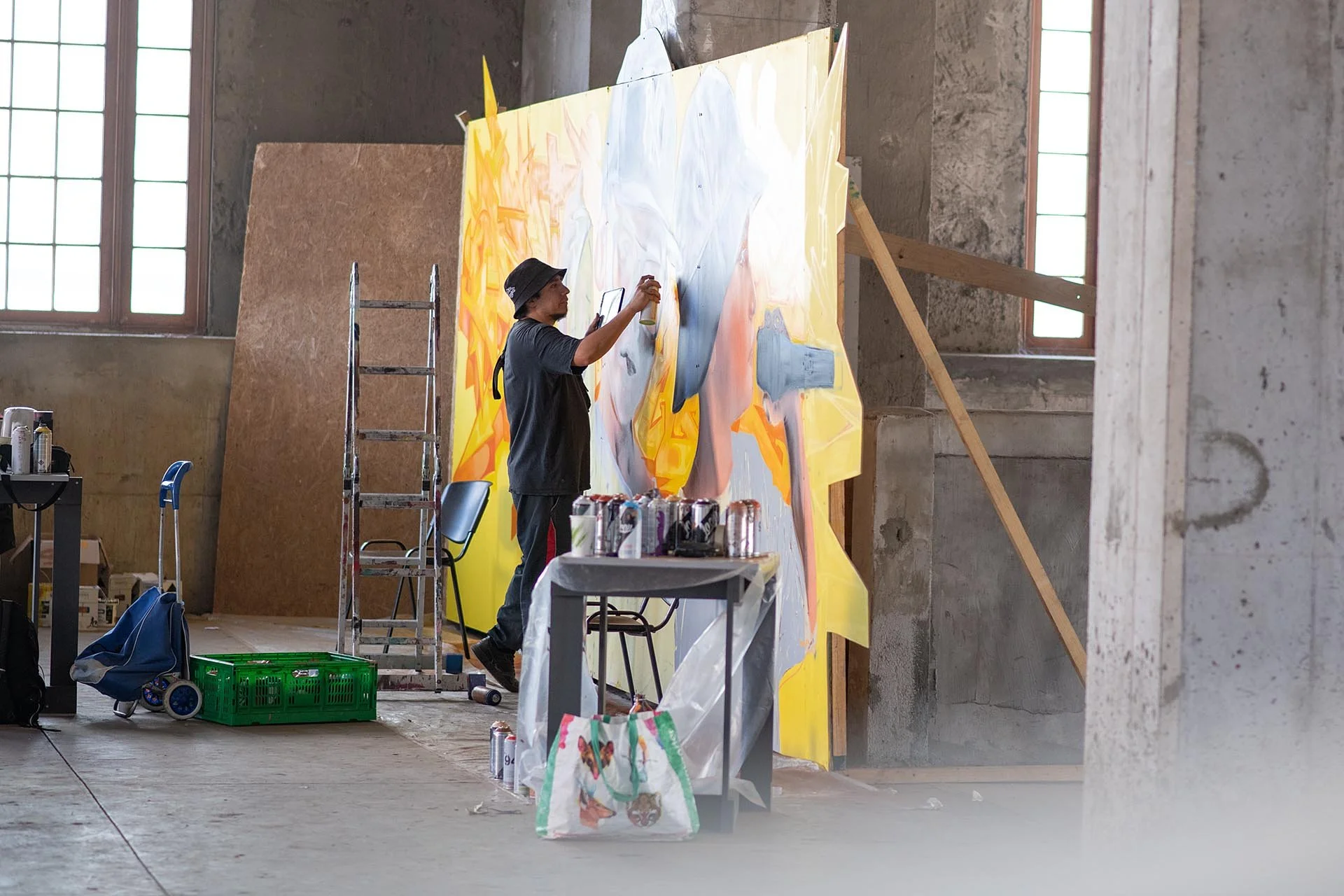
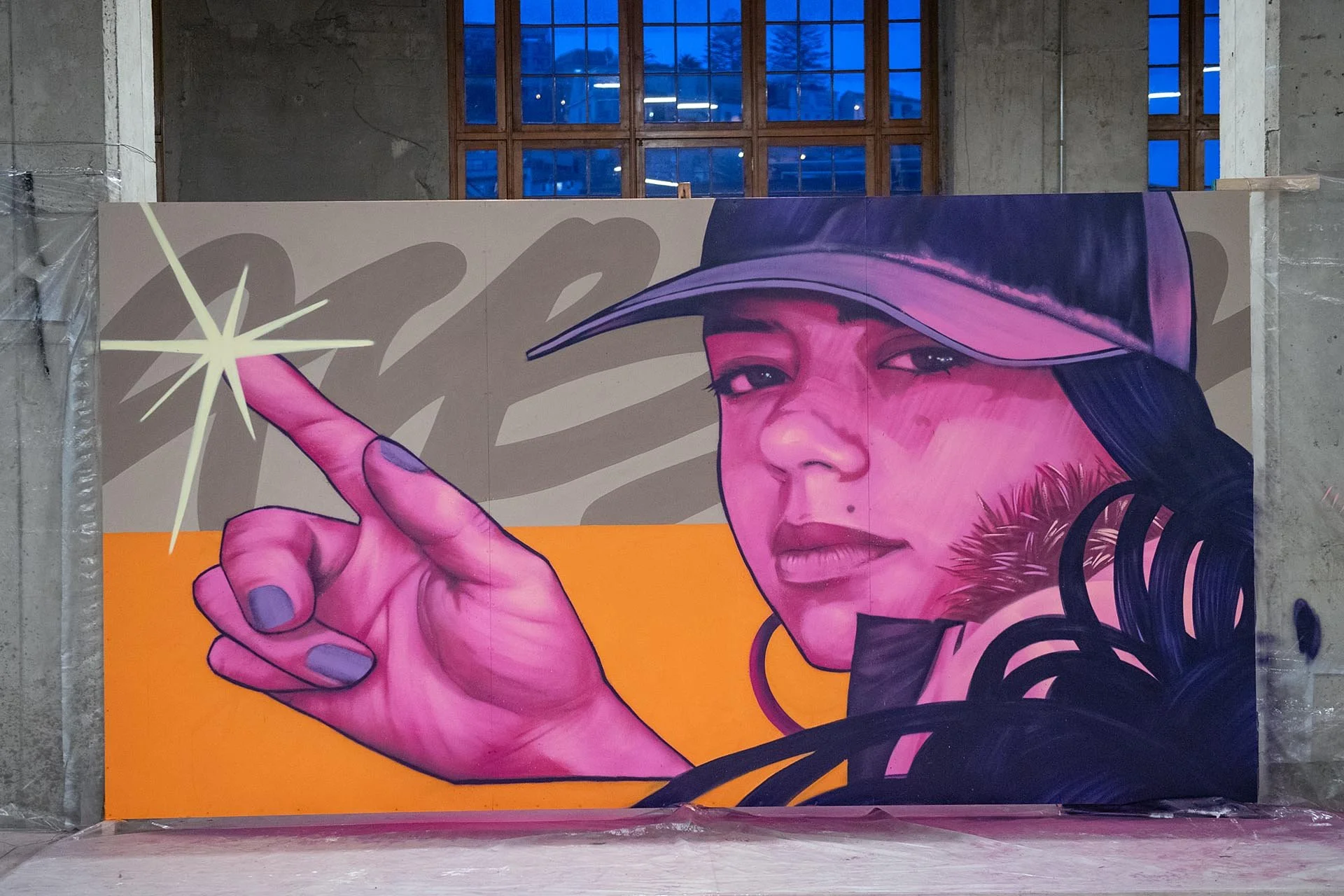
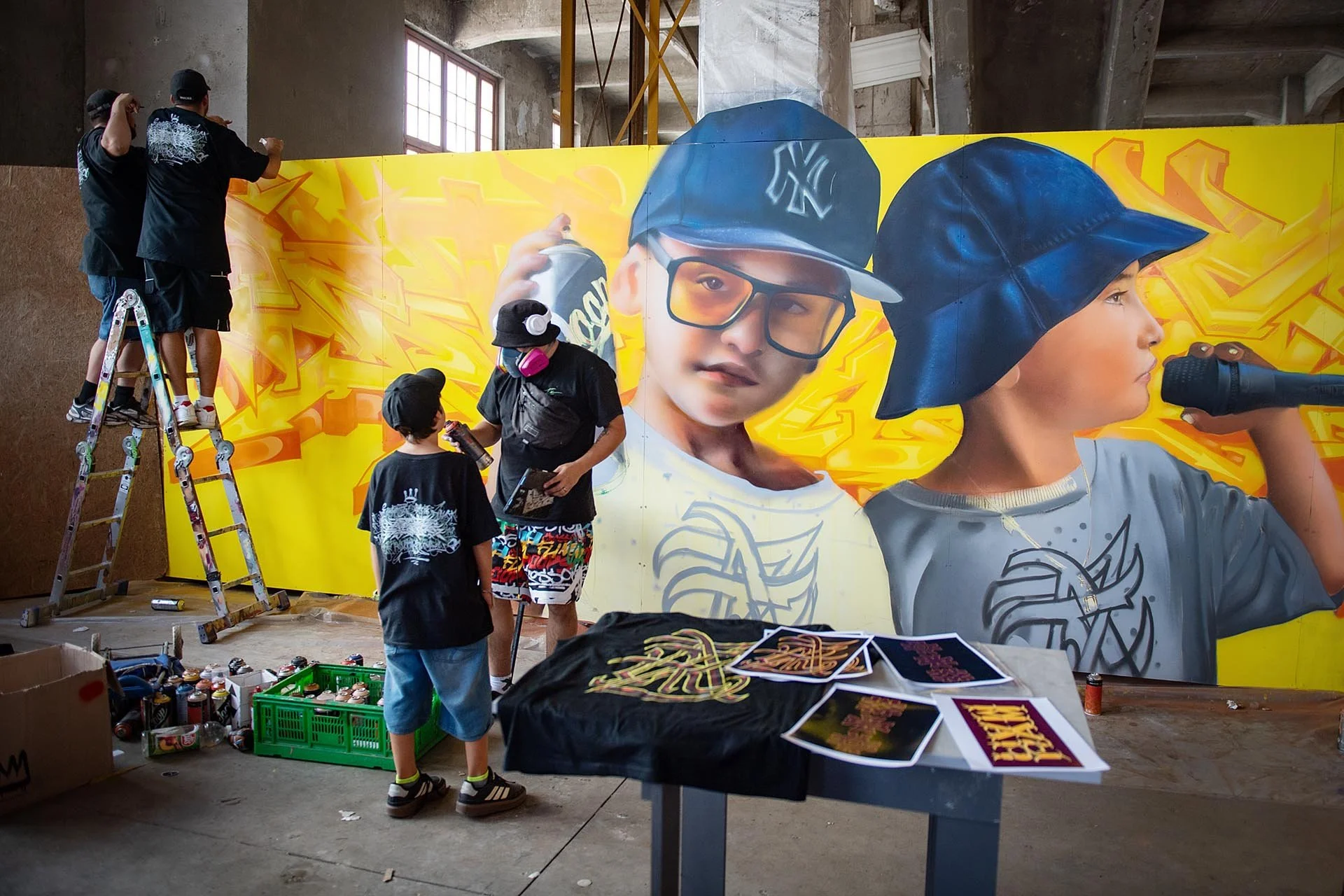
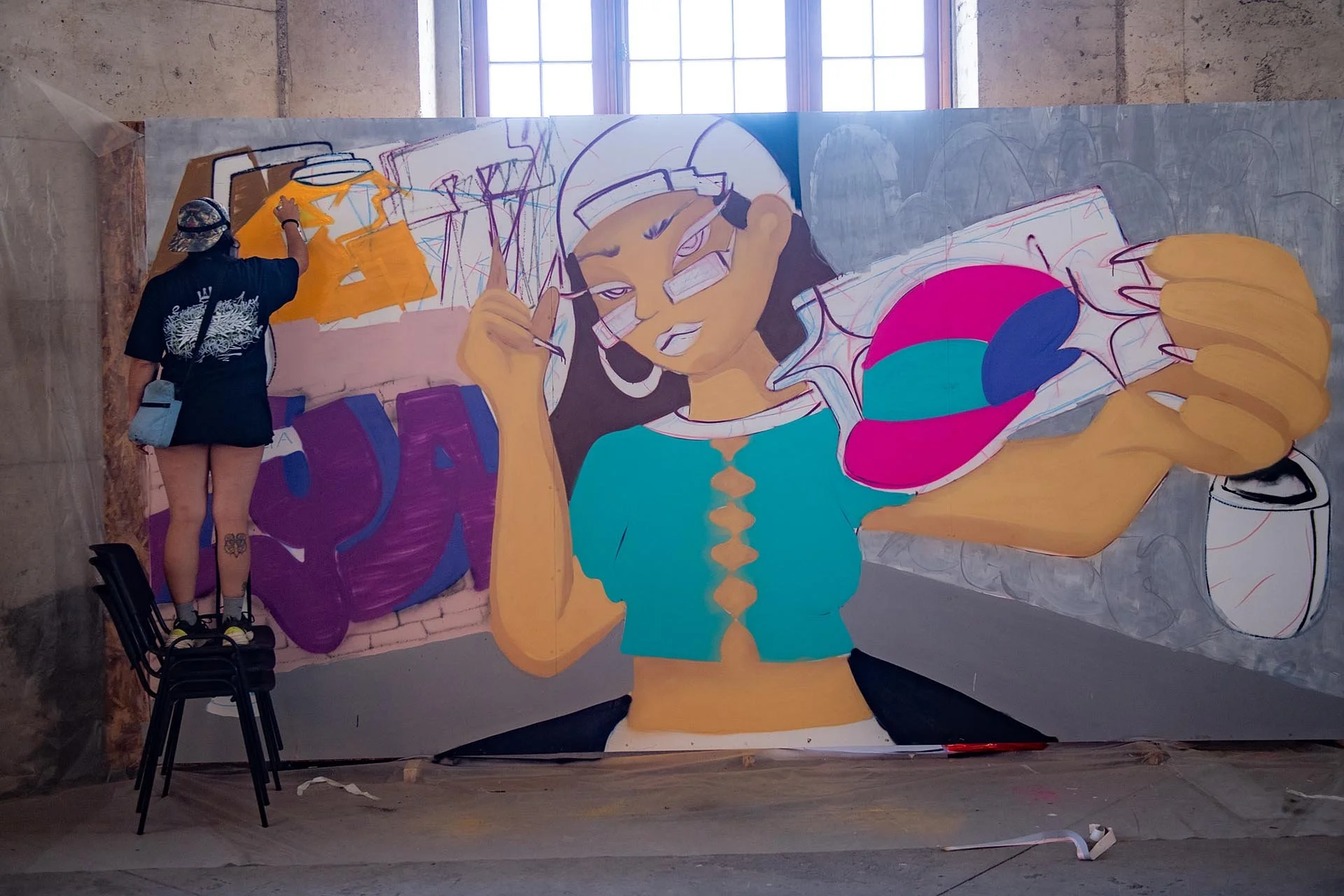
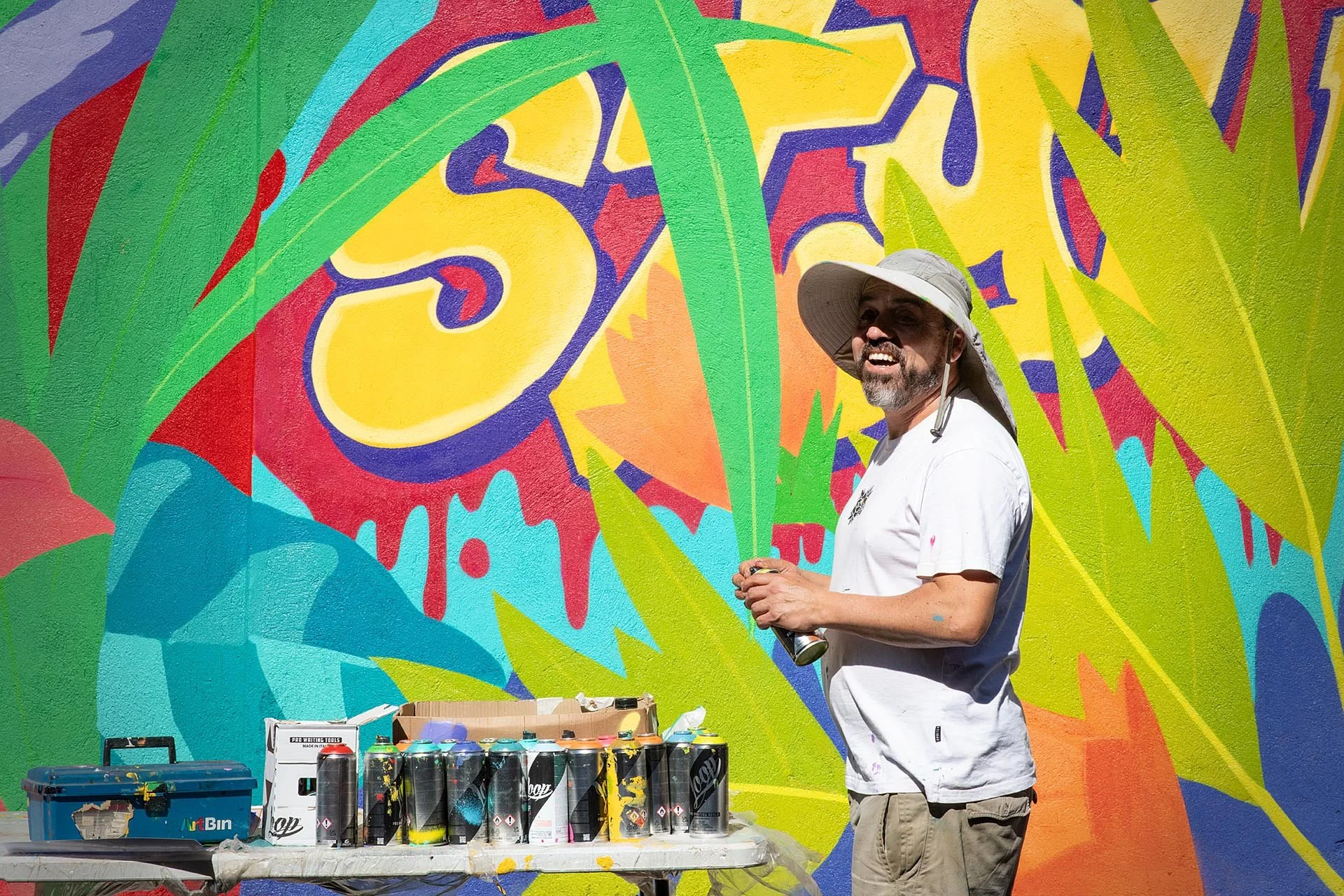
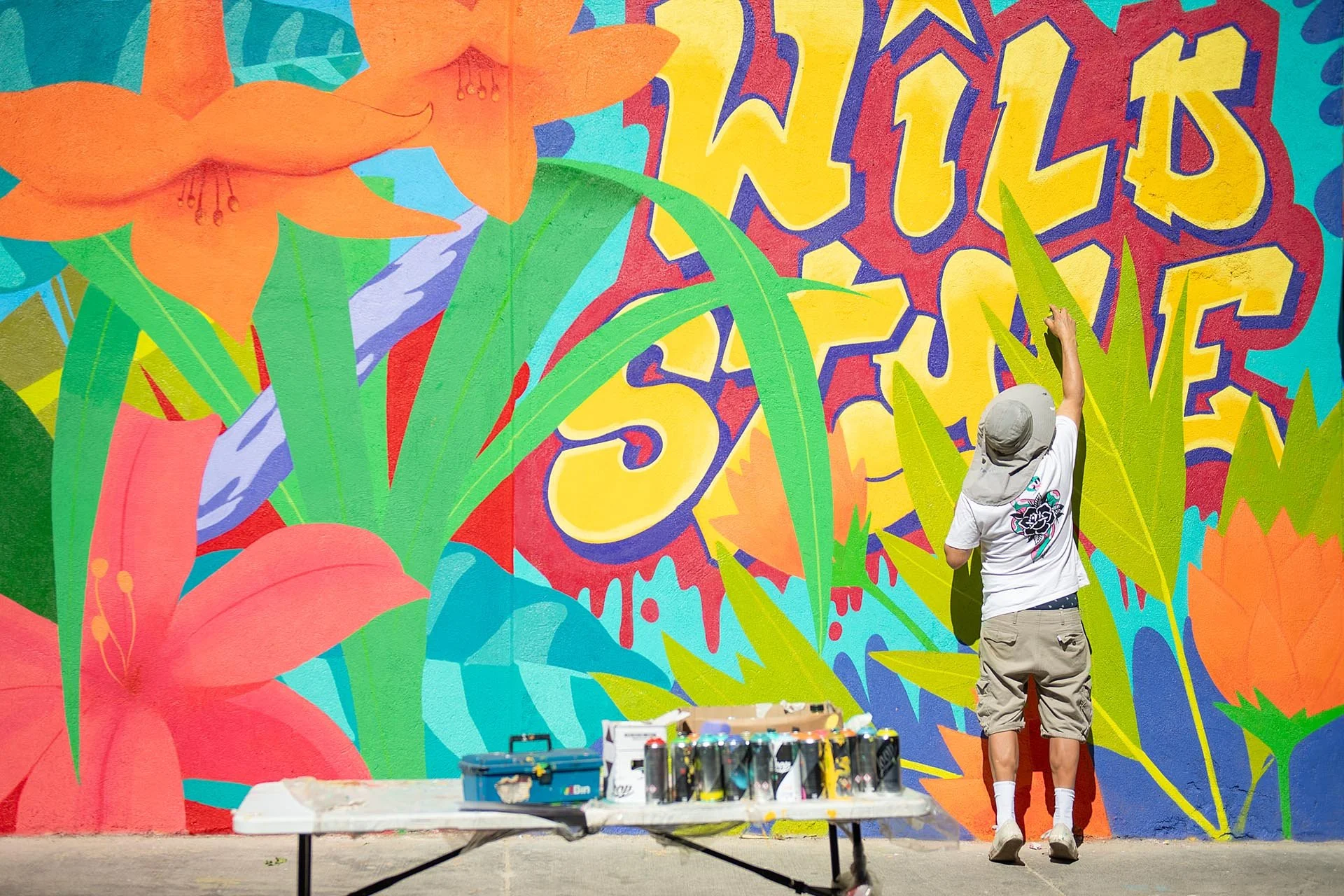
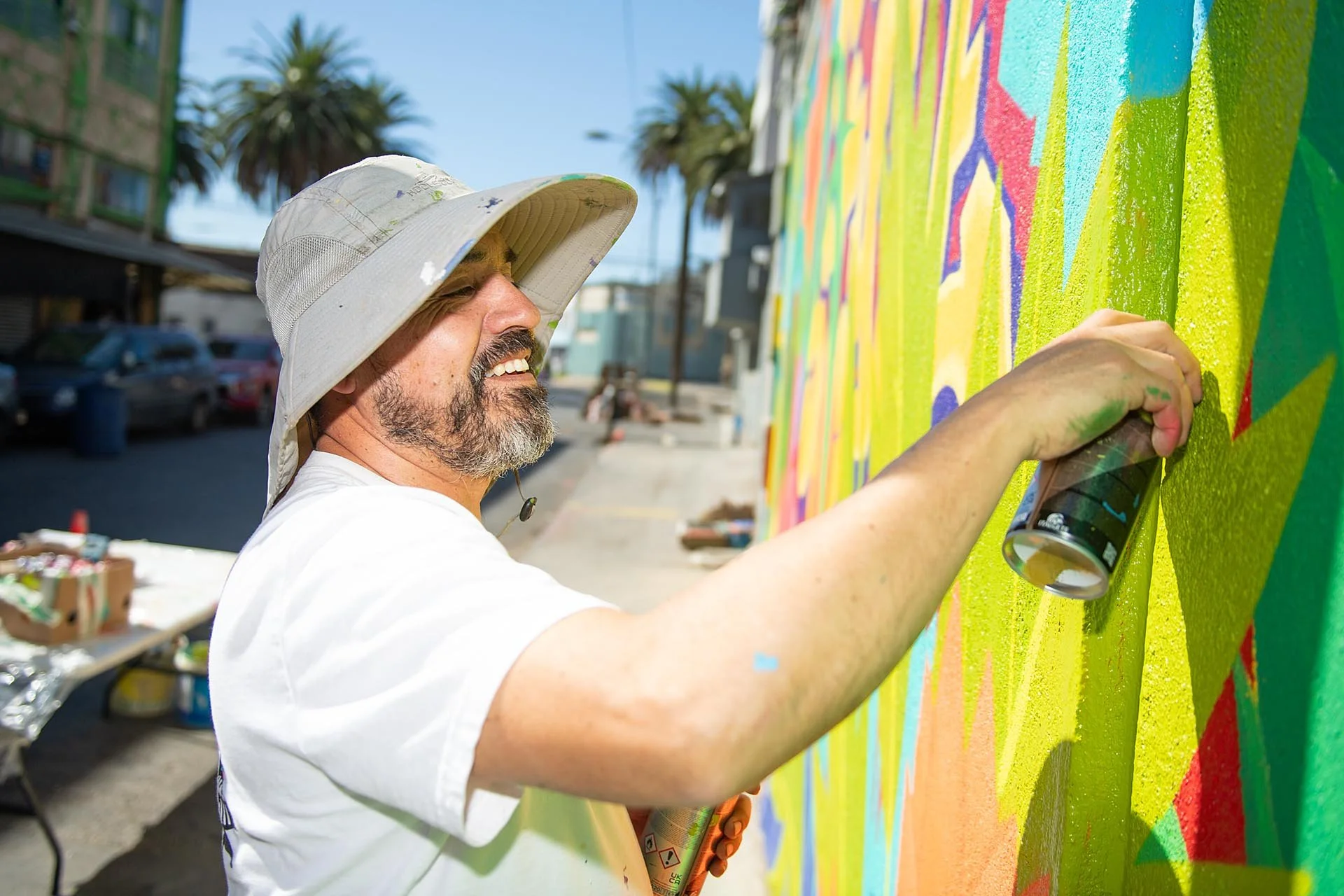
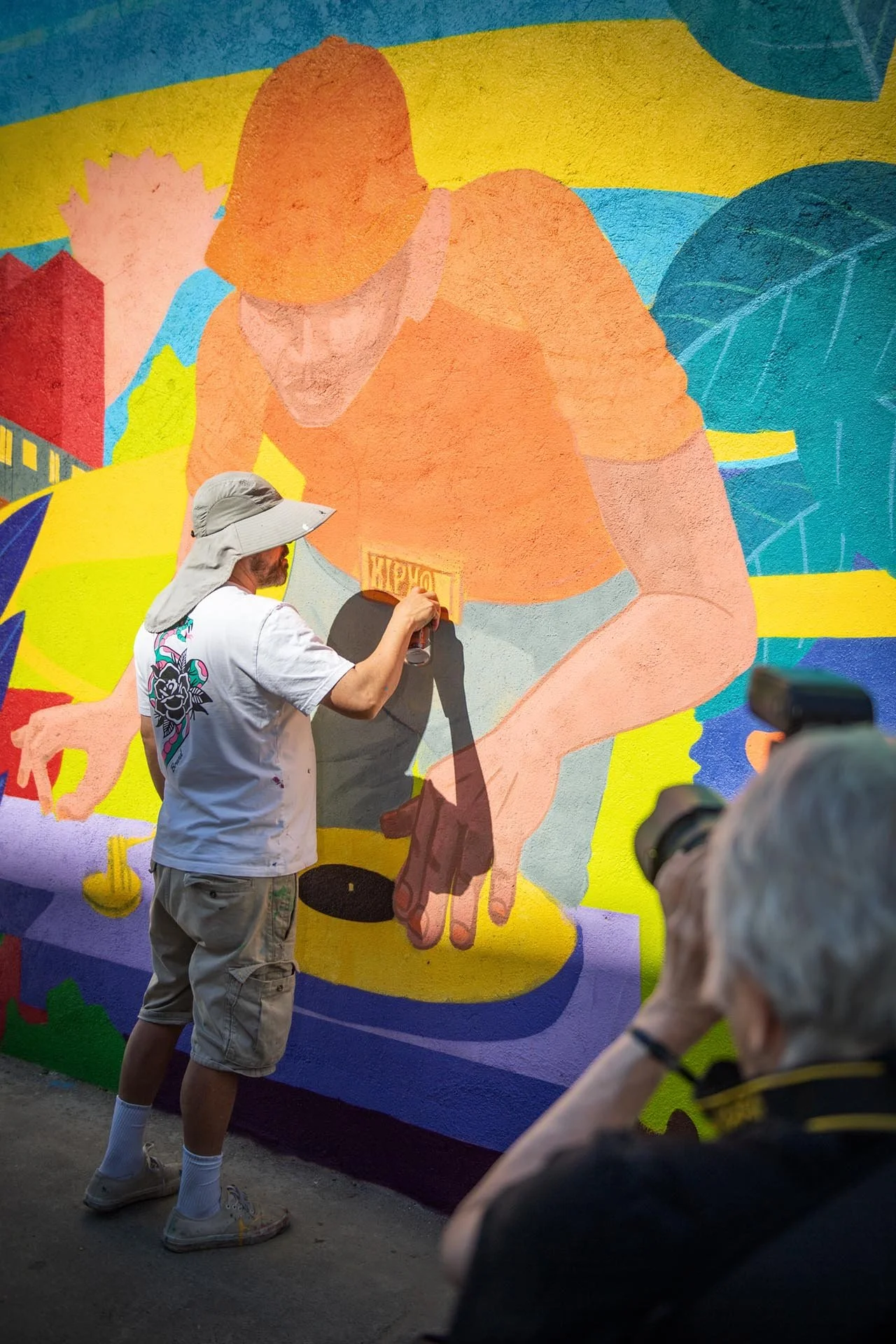
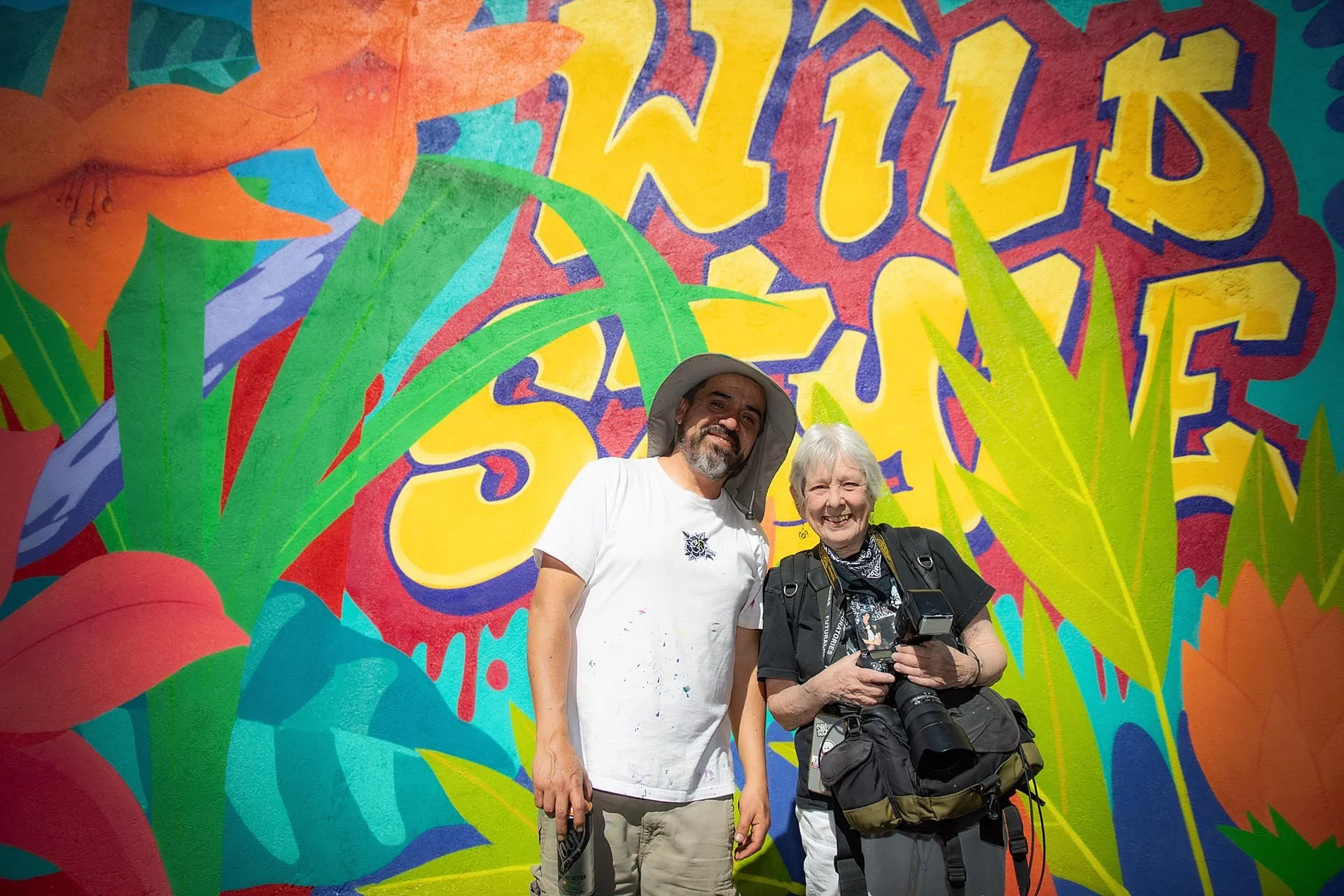
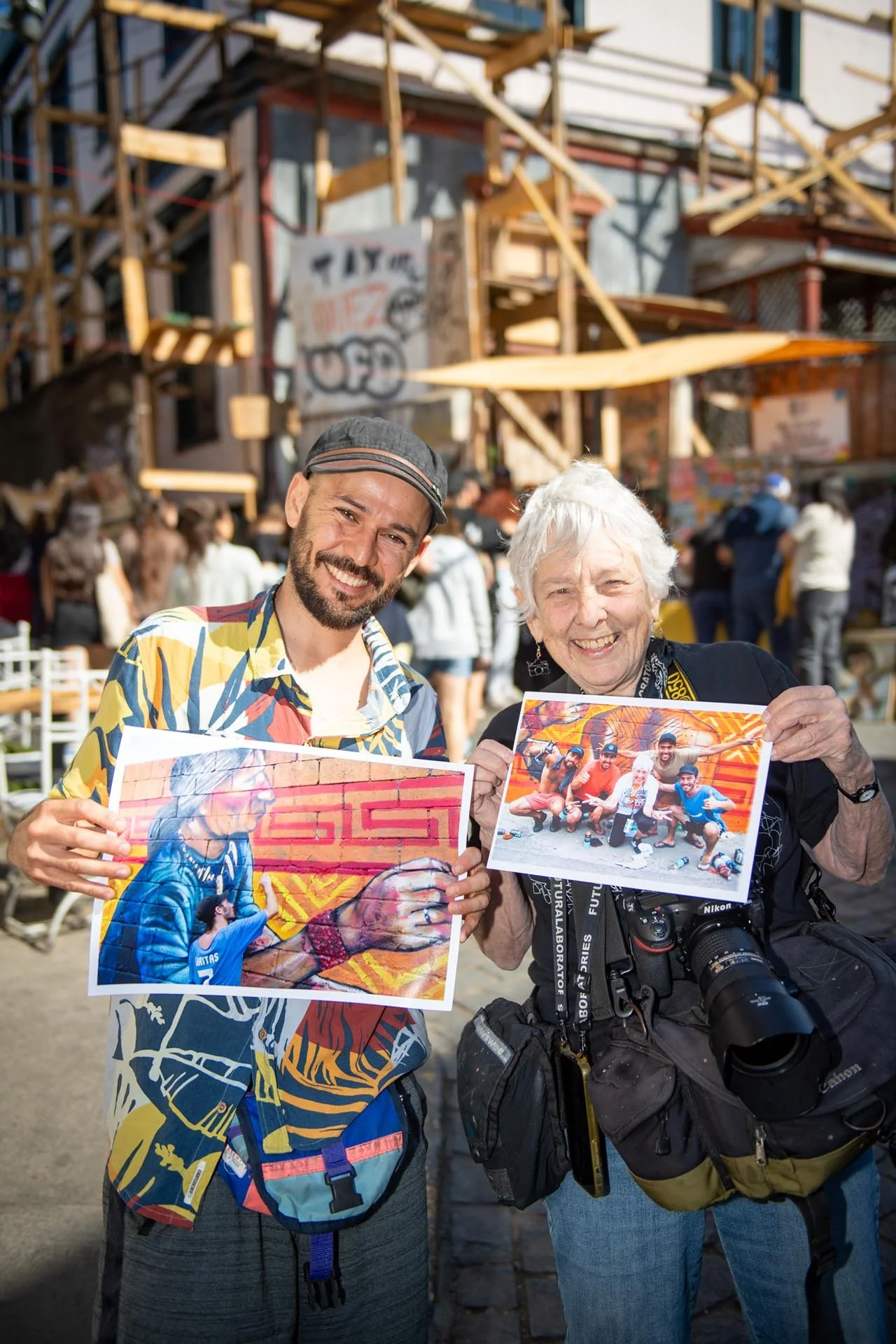
We spent hours walking up and down the hills, photographing murals, tags, political statements, layers of paint over decades. We visited a wall being painted by Chilean street artist Cekis. His piece was inspired by the movie Wild Style and by one of Marty’s iconic DJ photographs. Cekis now lives in New York, but he was back in Chile for the festival. Bysi, one of the organizers is his sister.
We even found a piece by French aritis Blek Le Rat and a stencil of Lady Pink after one of Marty’s photos.
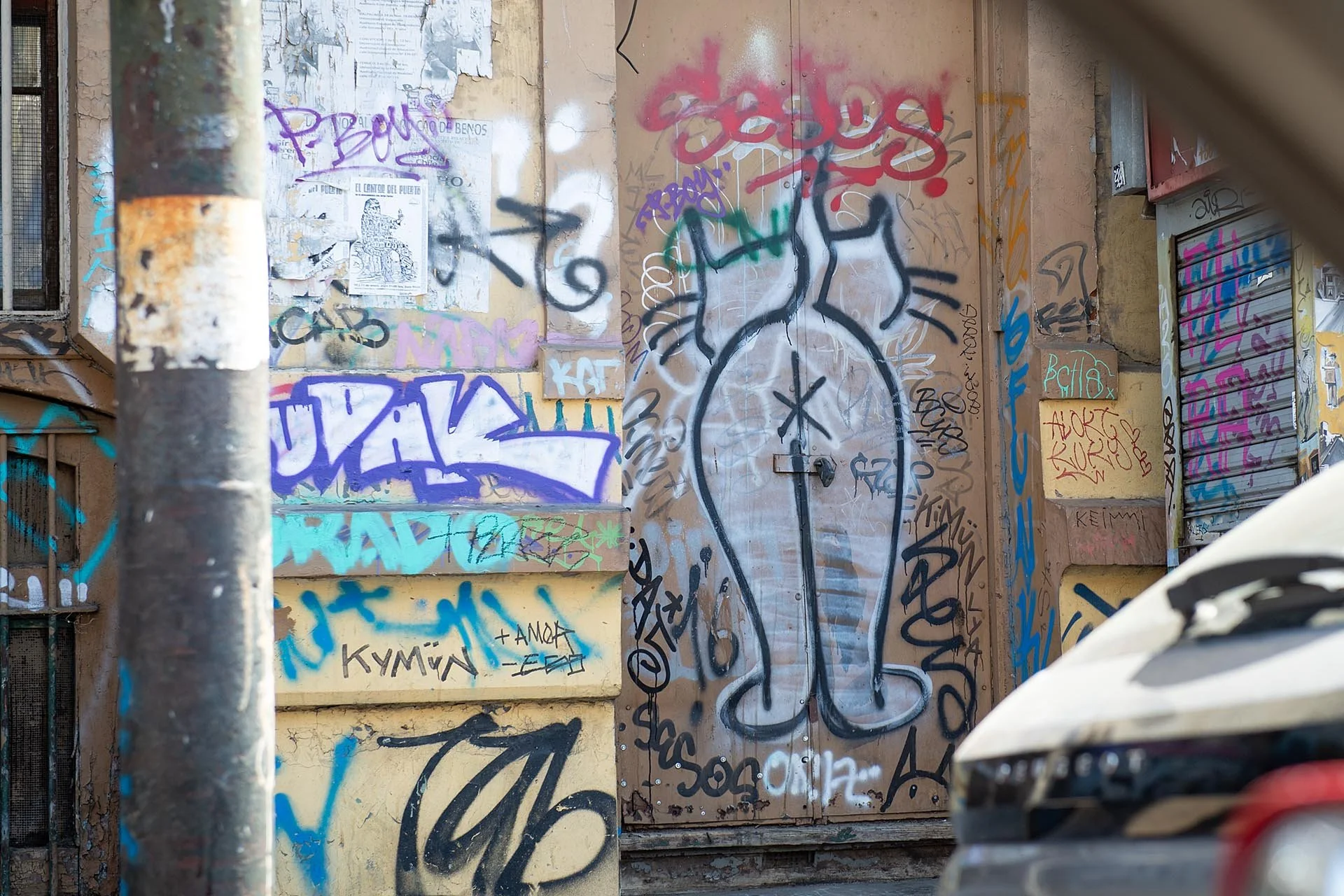
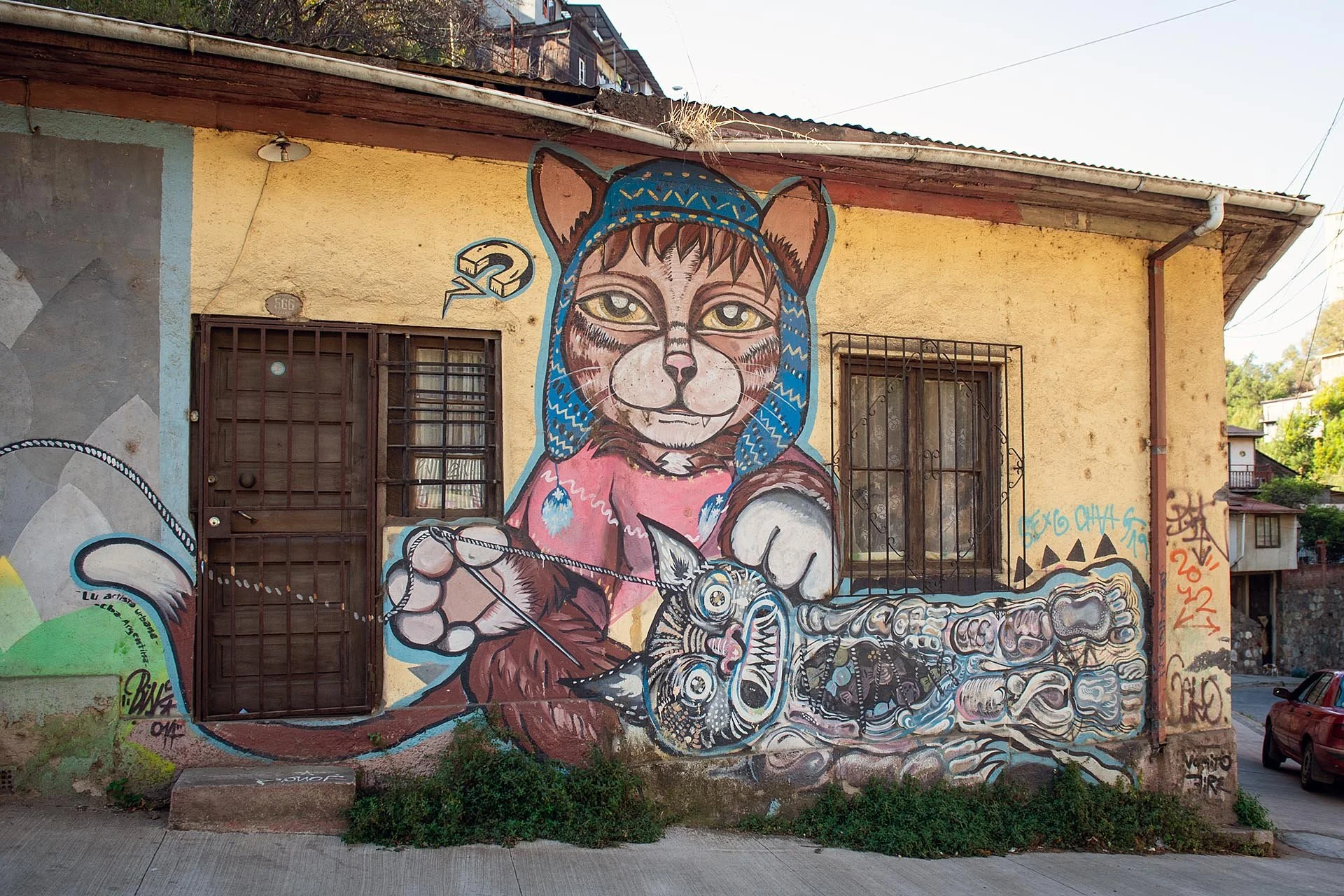
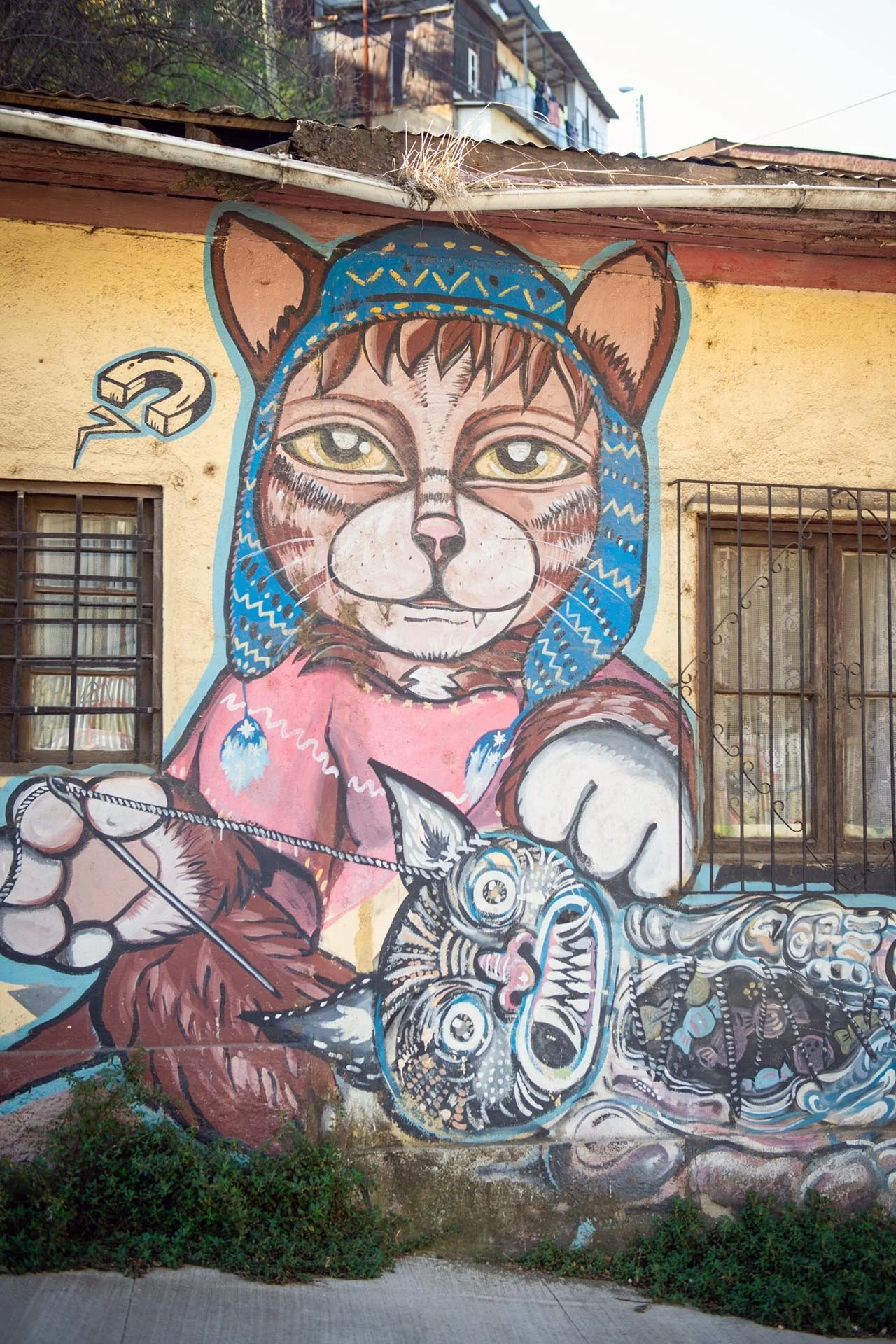
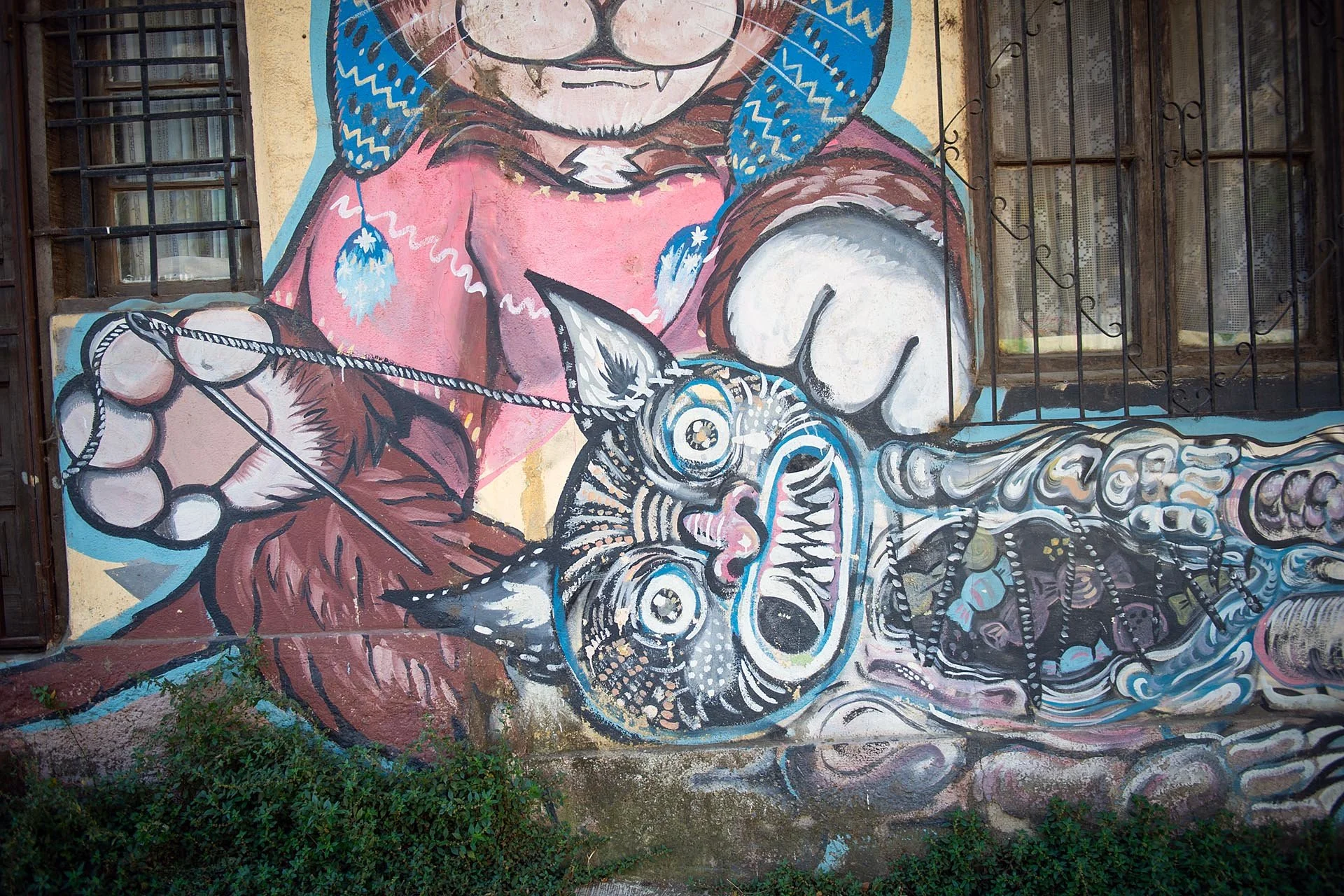
Somewhere in the city, we found a mural of a cat sewing another cat shut, stitching something inside. Candy? We have no idea who the artist is. We have no idea what the cat is sewing into its twin. If anyone knows the artist or the meaning — please tell us. We are still thinking about that wall.
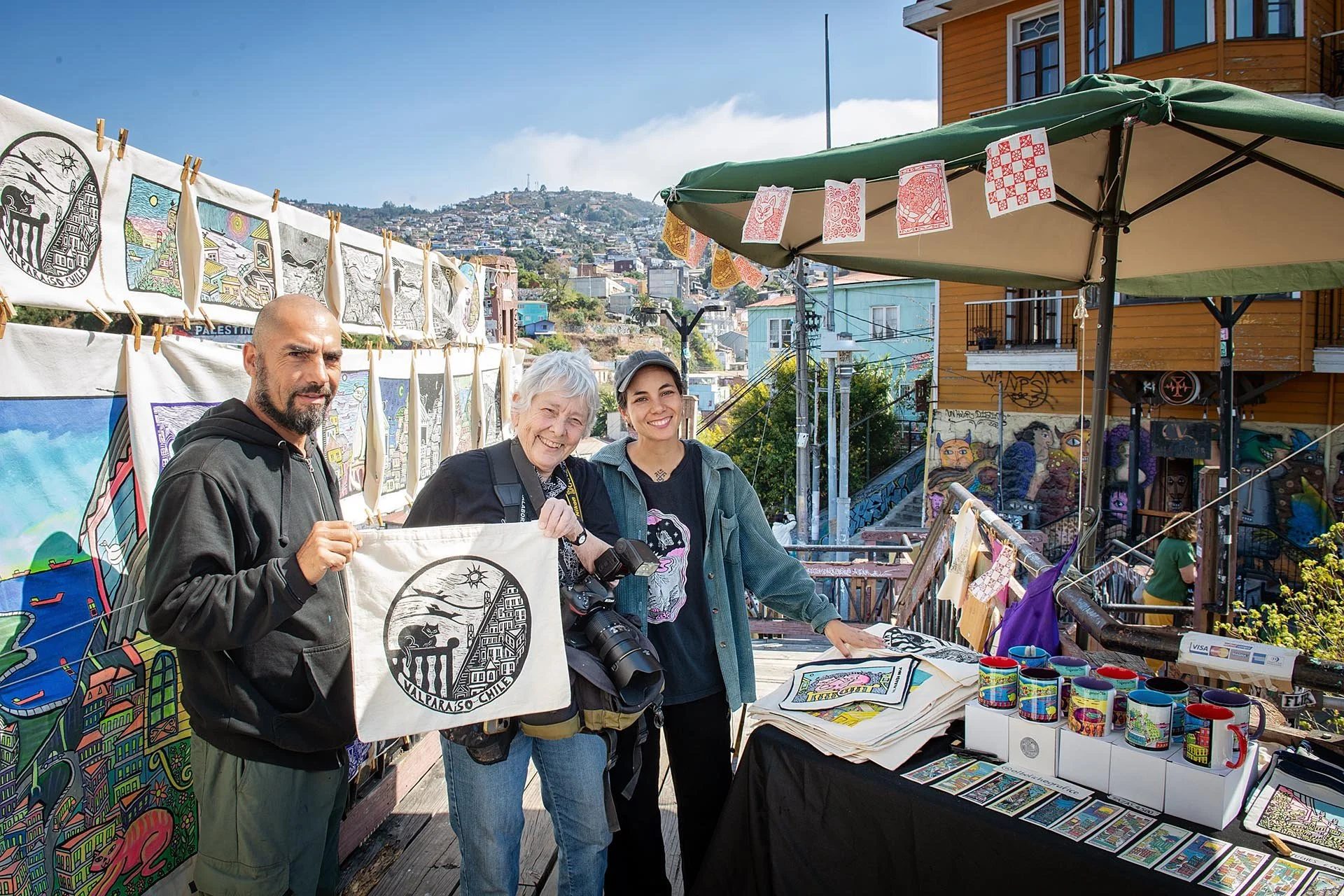
On that same day, we also bought an unreasonable number of cat-themed presents for our loved ones back home. Apparently, when you can’t take the real one home, you compensate.
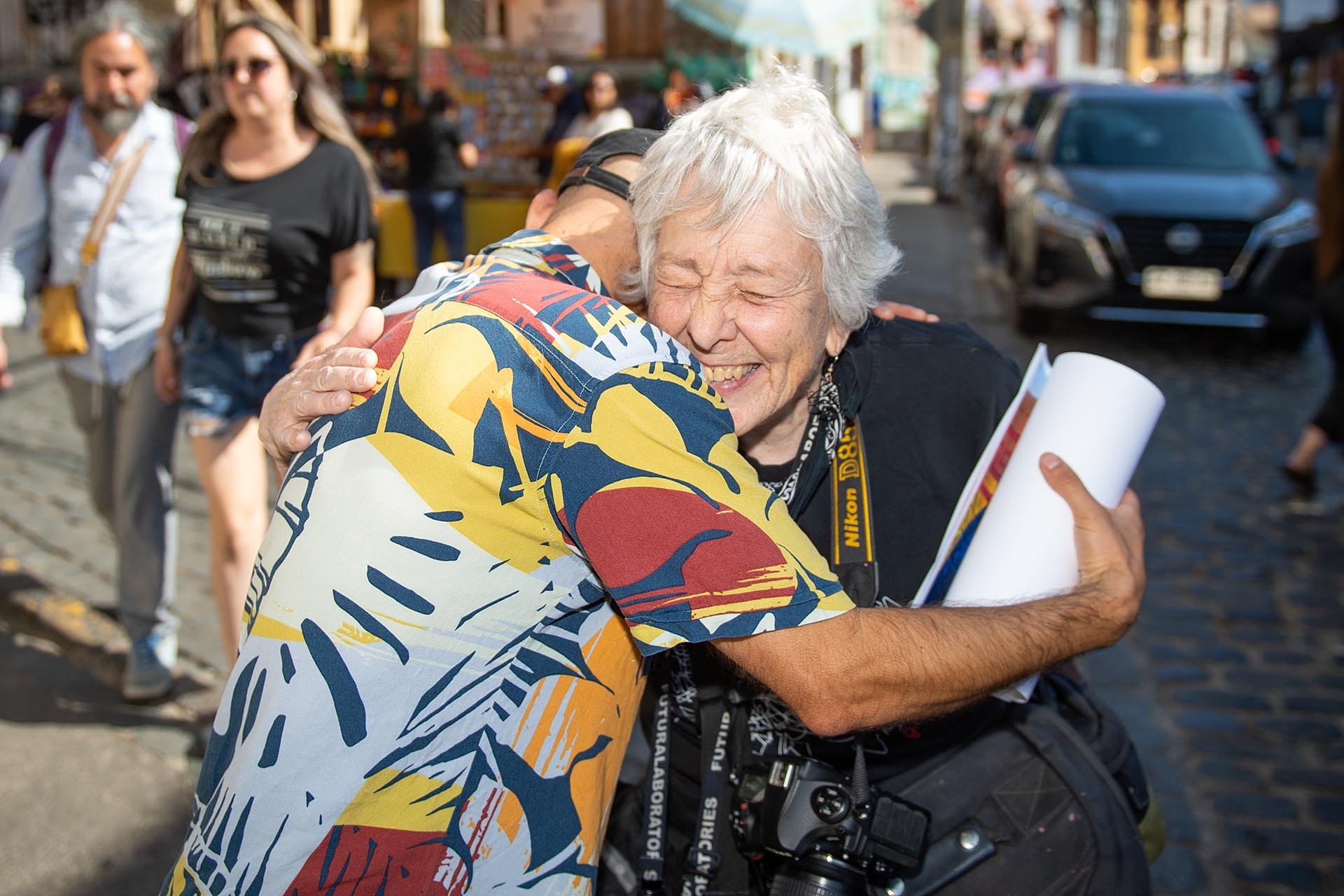
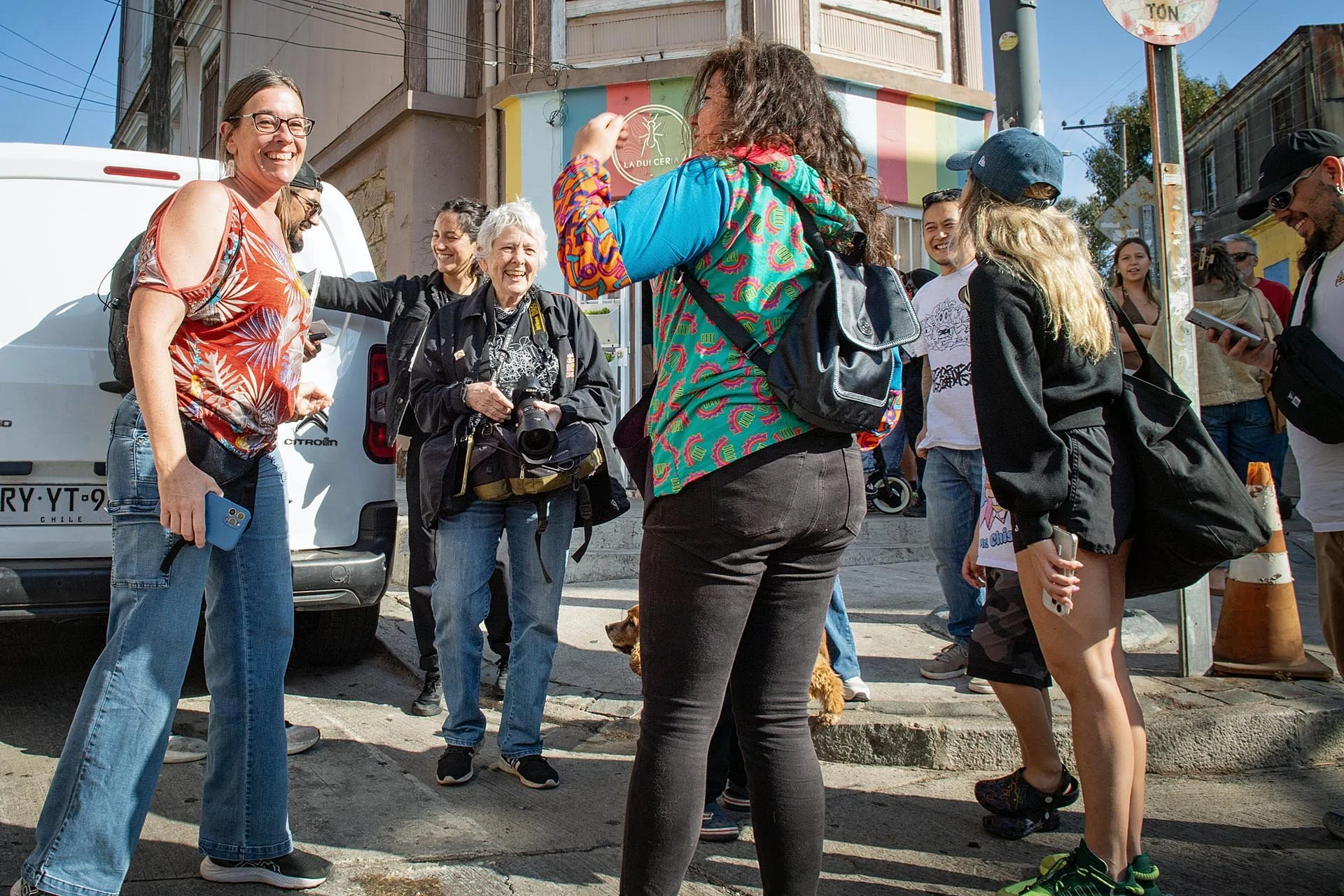
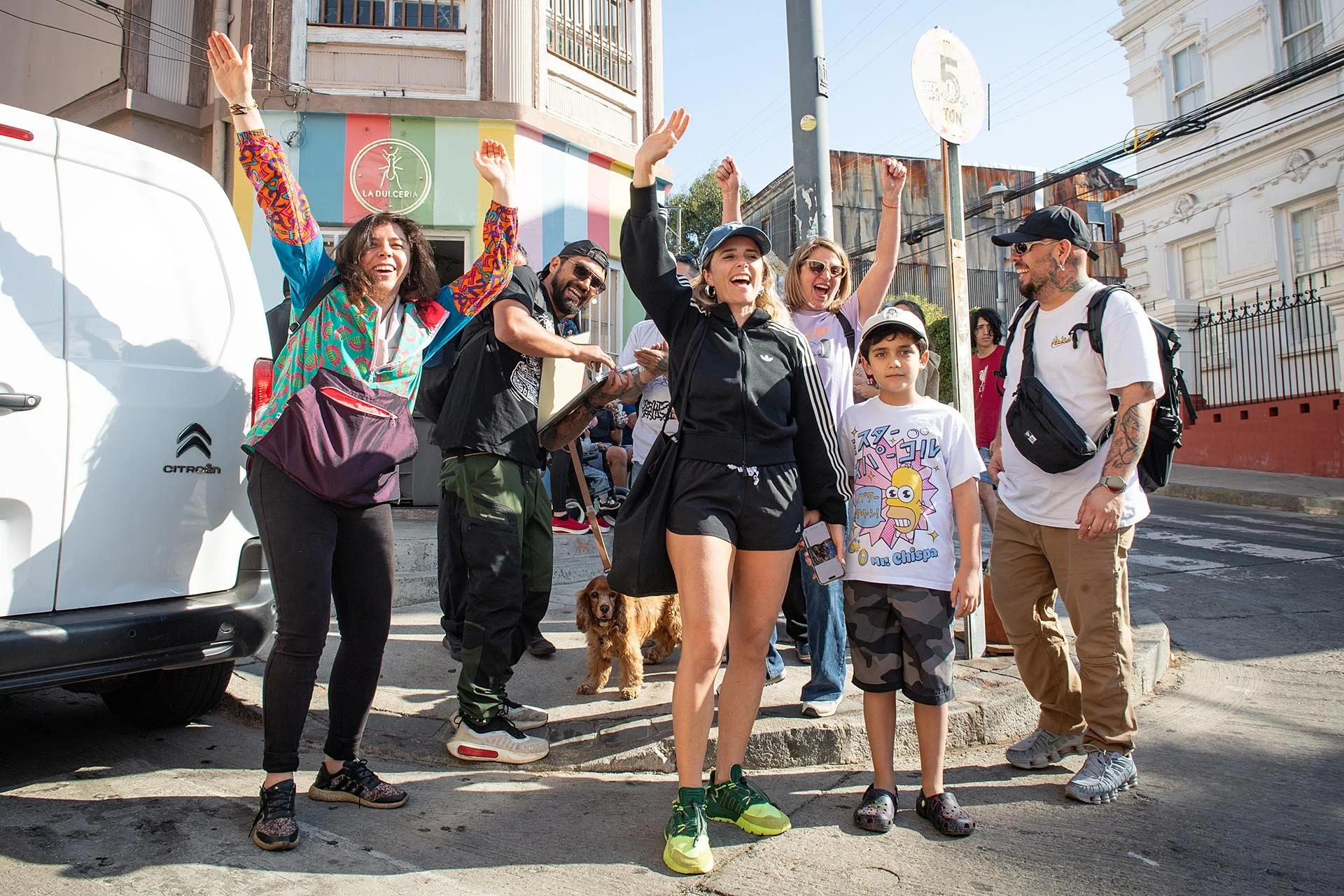
Of course, while wandering around the city, people recognized Marty and some more signing ensued…
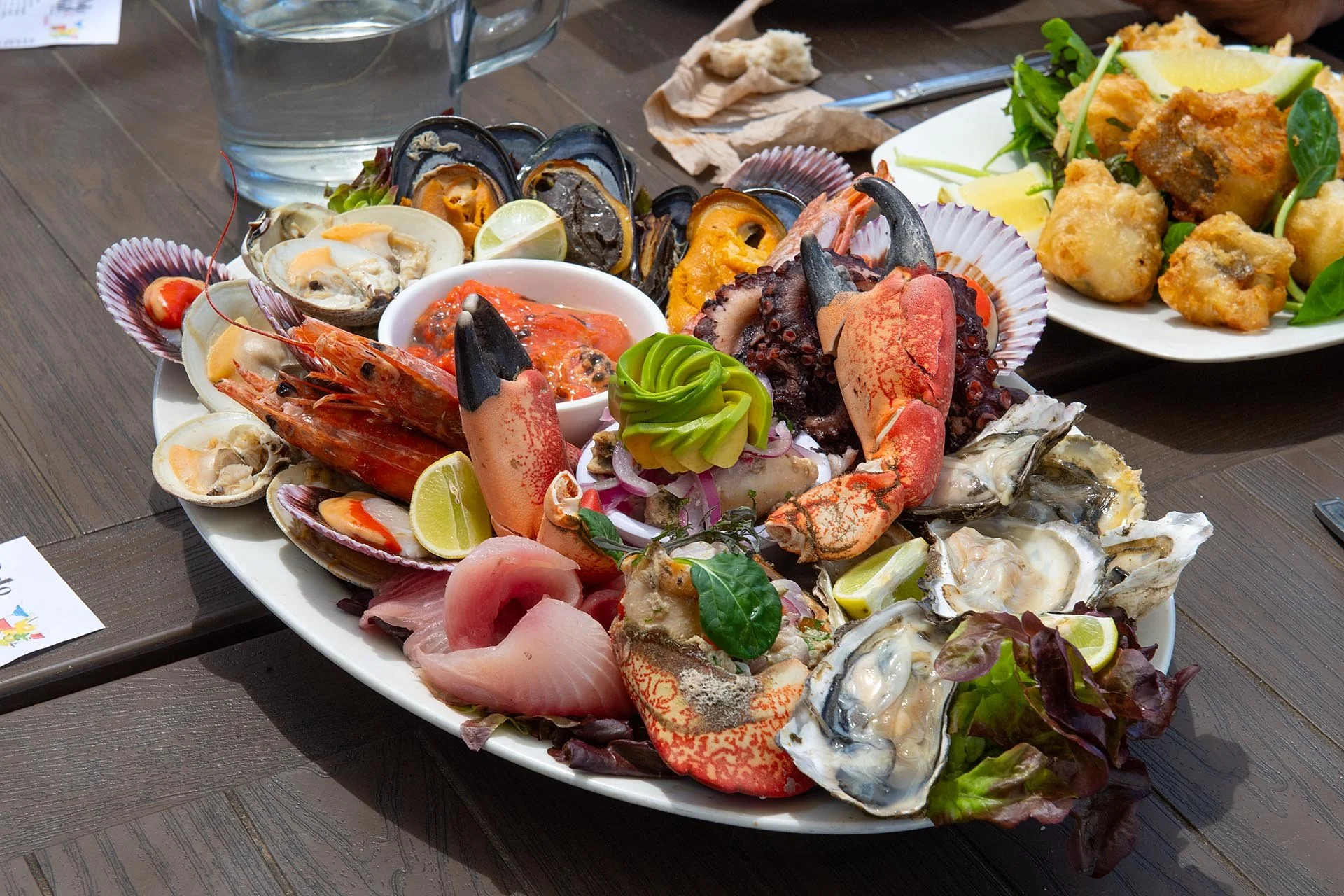
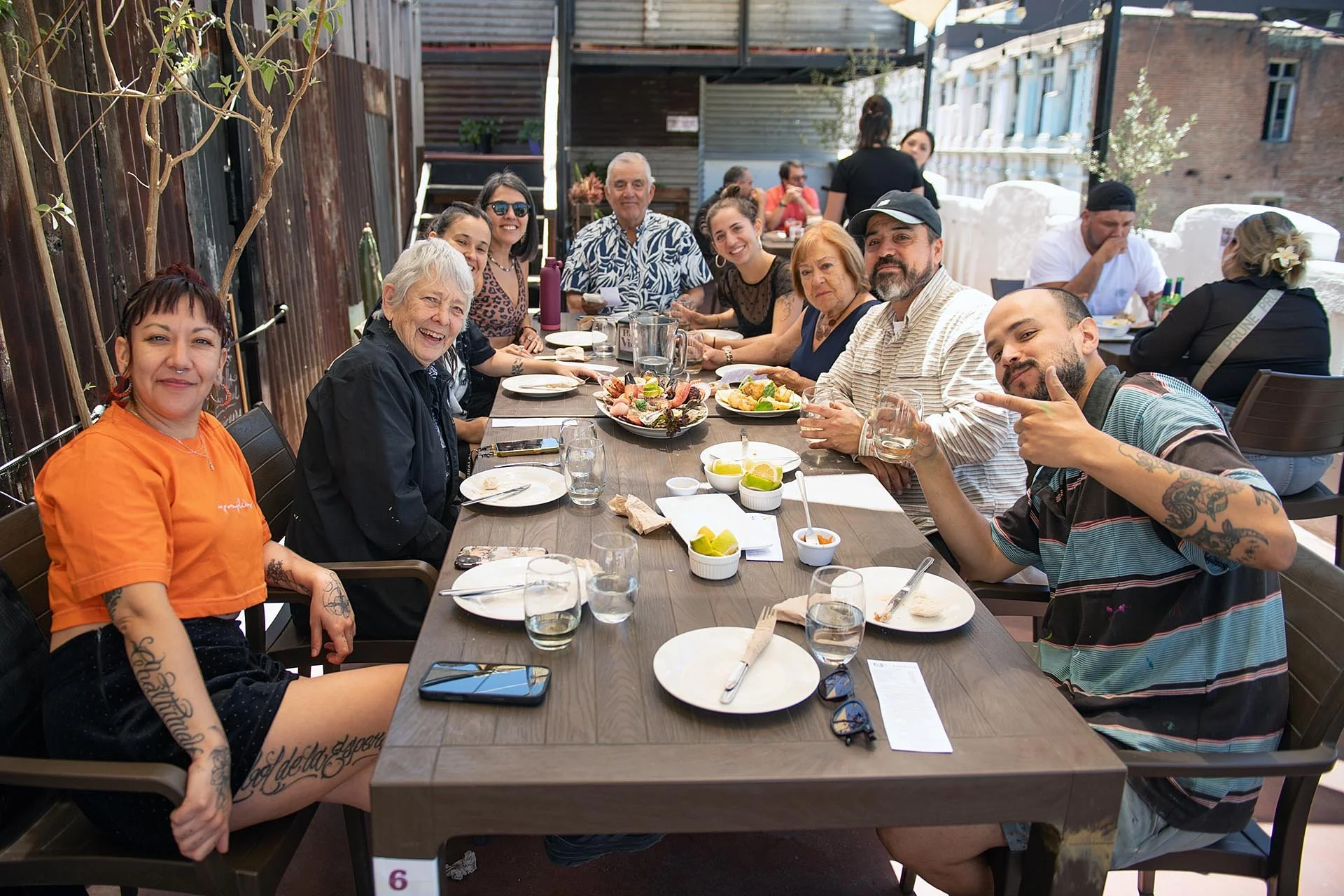
As for the food — we had a standing invitation at Porto di Vino, one of the city’s beloved restaurants, with a great view of some old protected parts of the city and were treated to generous plates of fresh fish and seafood throughout the week. Long lunches, late dinners, conversations stretching across the table. And, of course, many — perhaps too many — perfectly mixed pisco sours. Chileans will firmly tell you that pisco belongs to Chile, while Peru claims the same with equal conviction. We did not solve the debate. We simply drank the evidence and found it delicious.
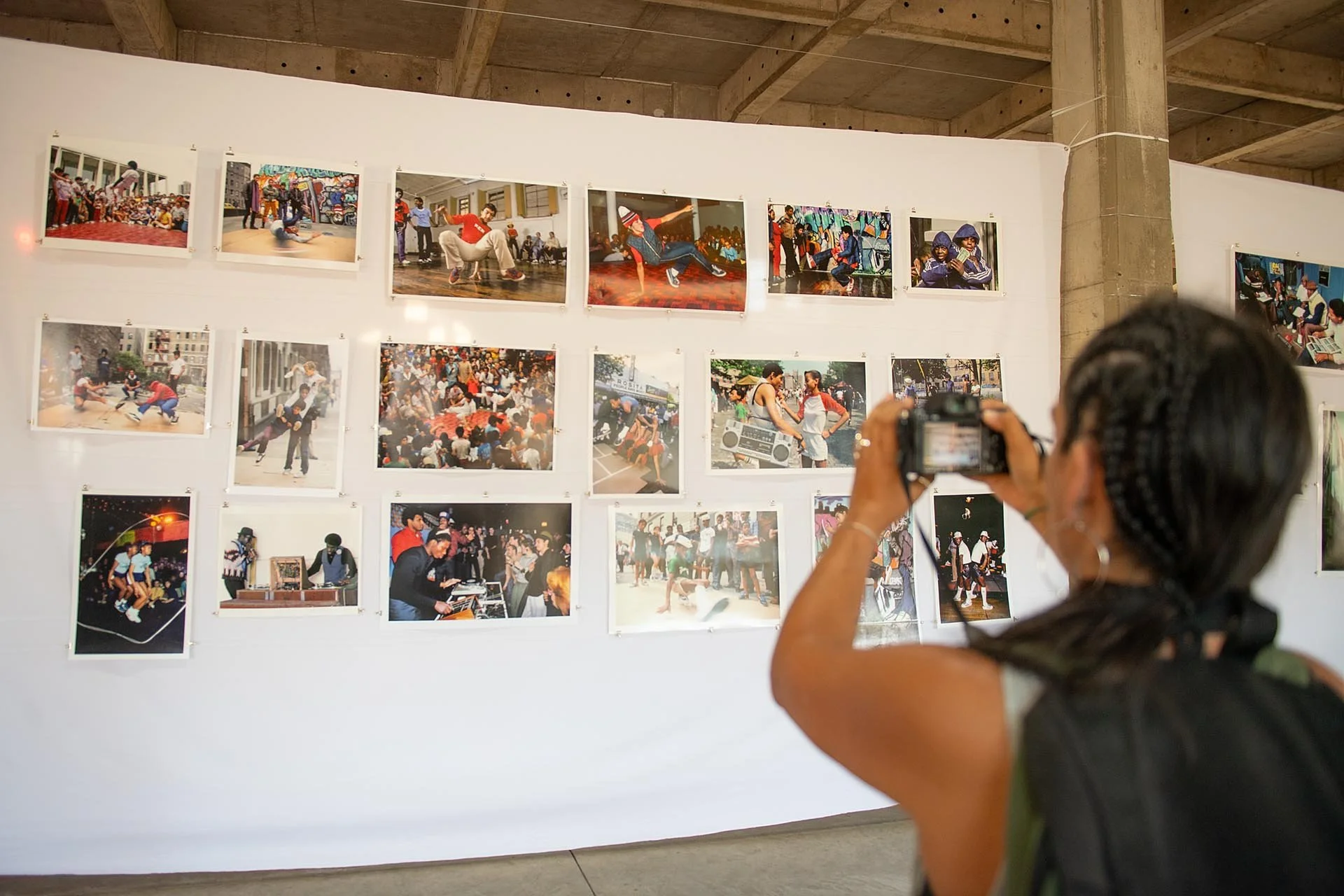
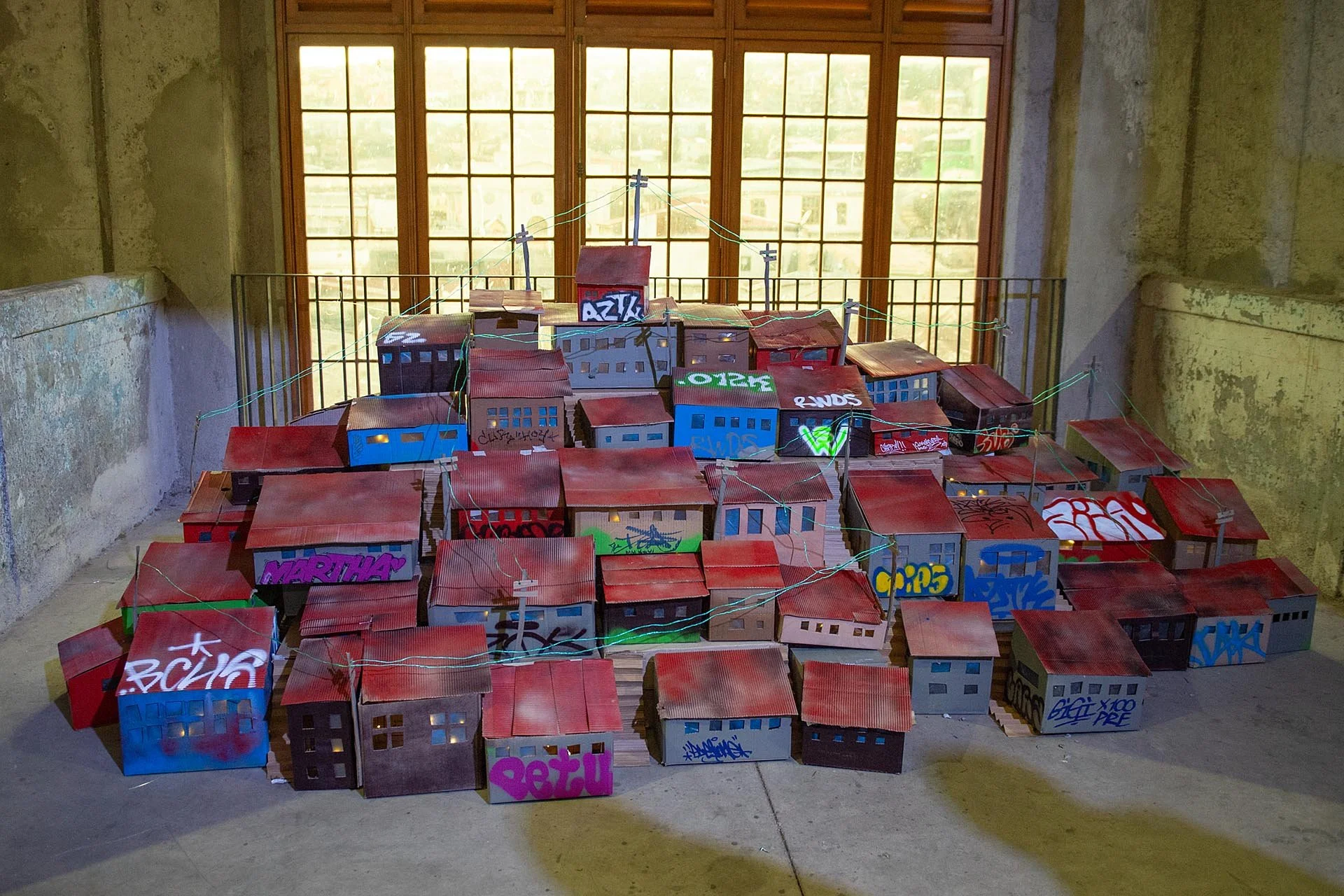
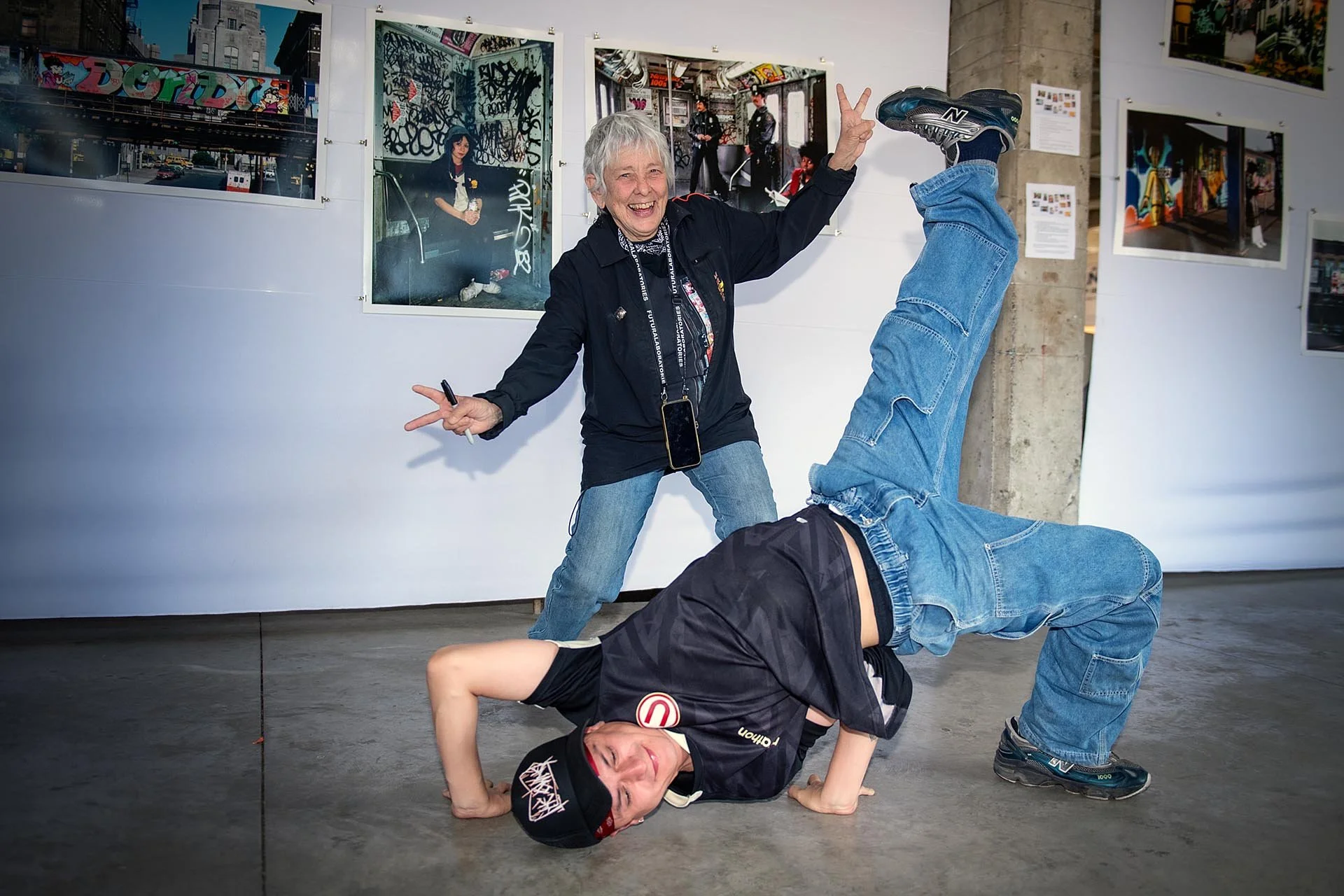
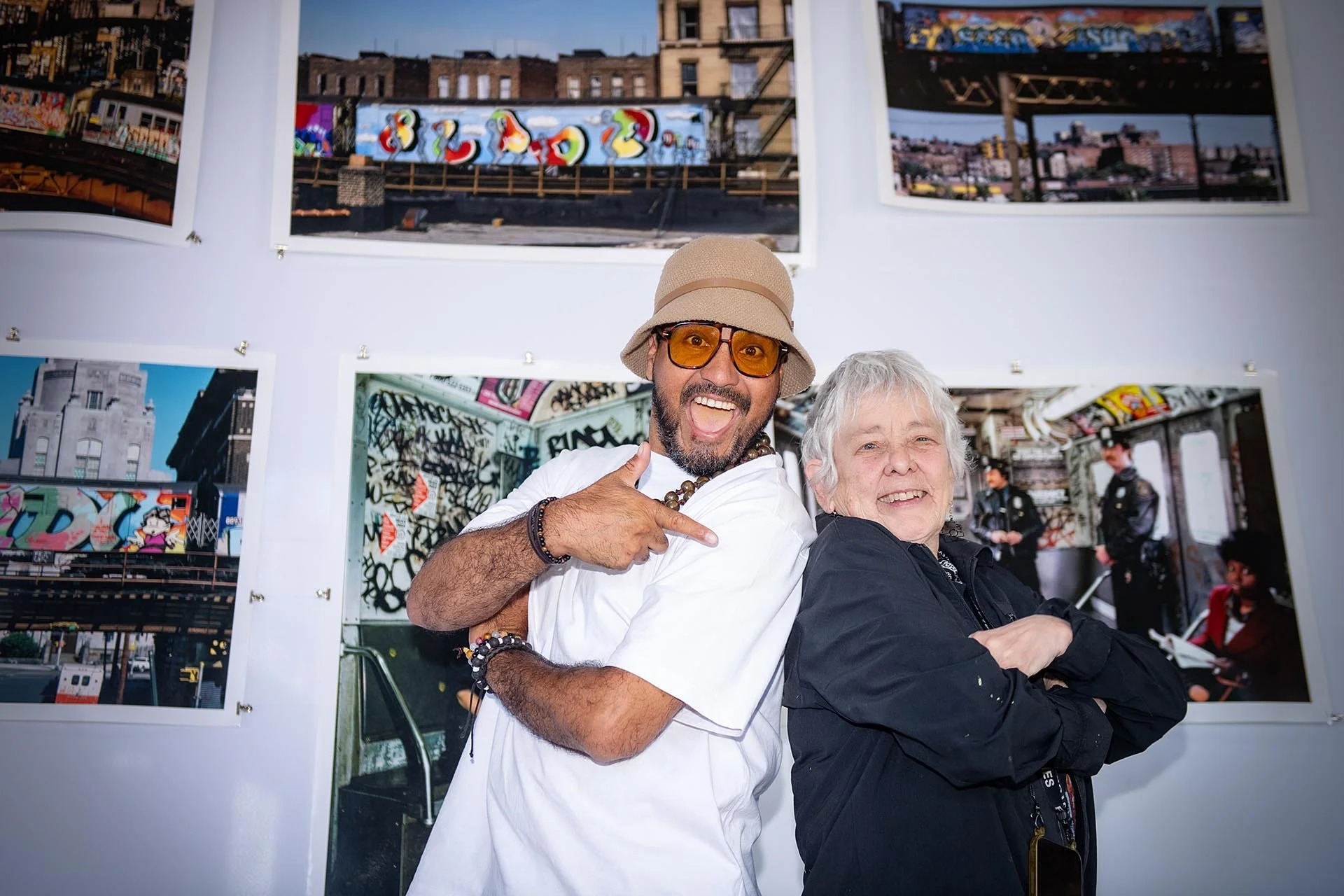
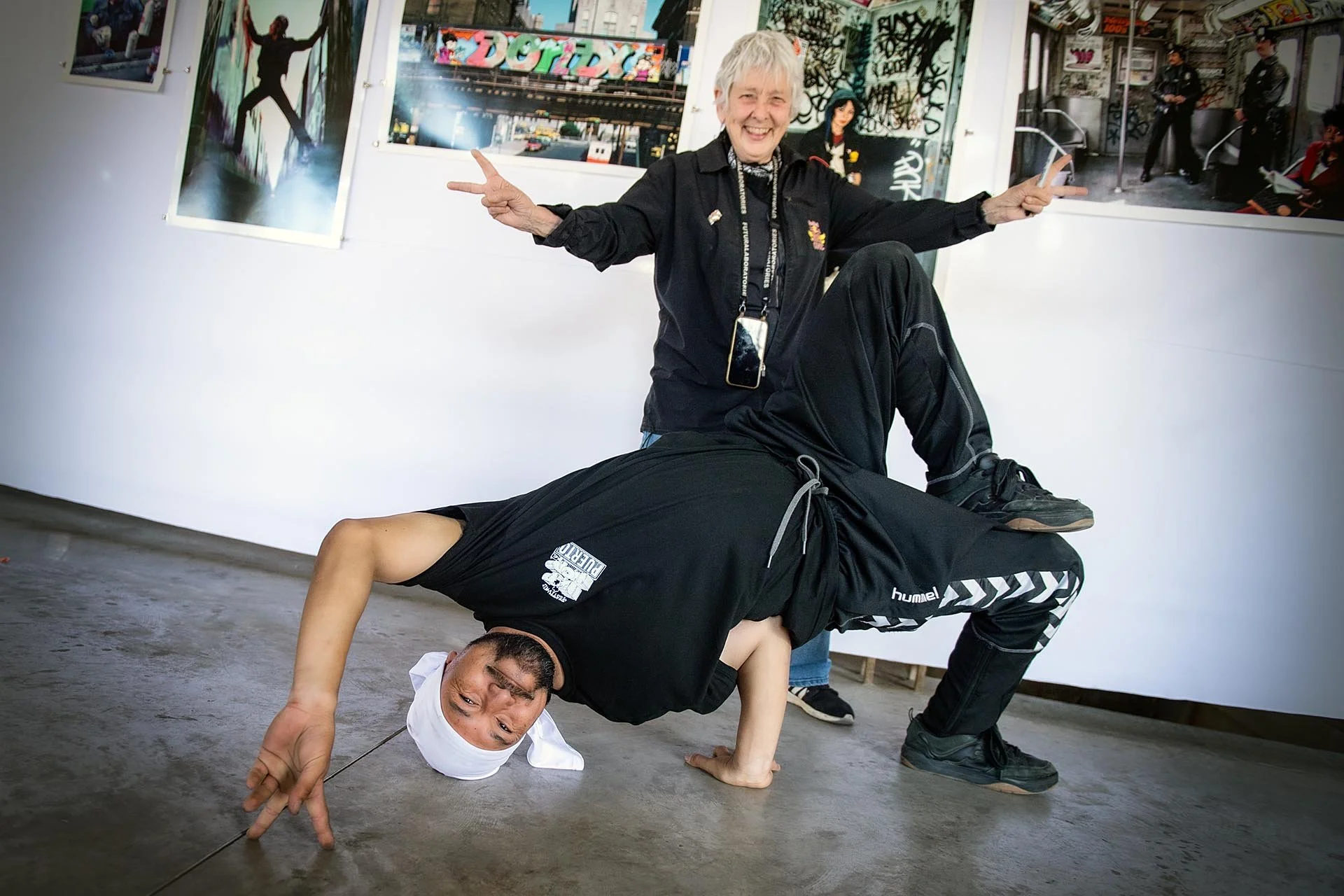
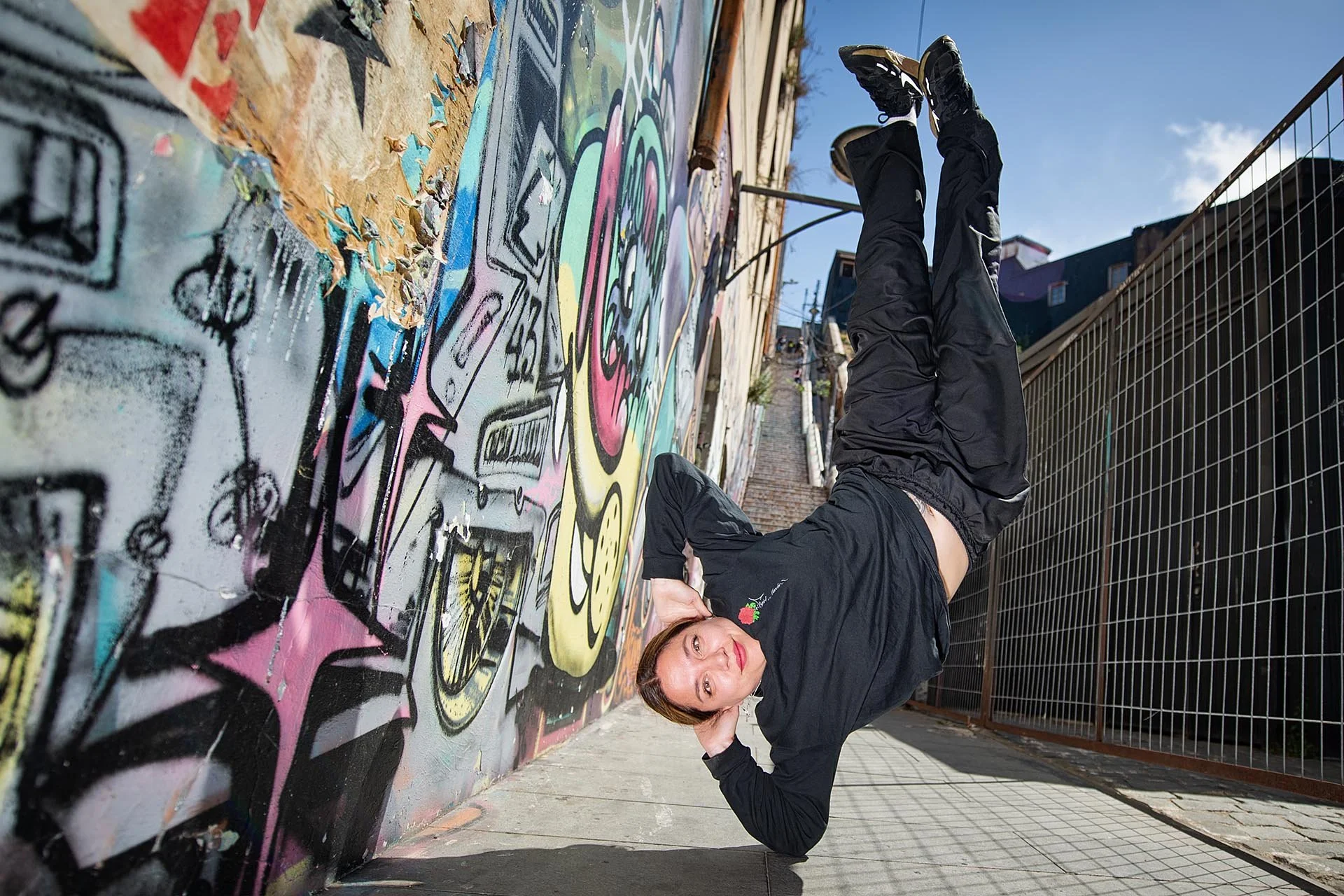
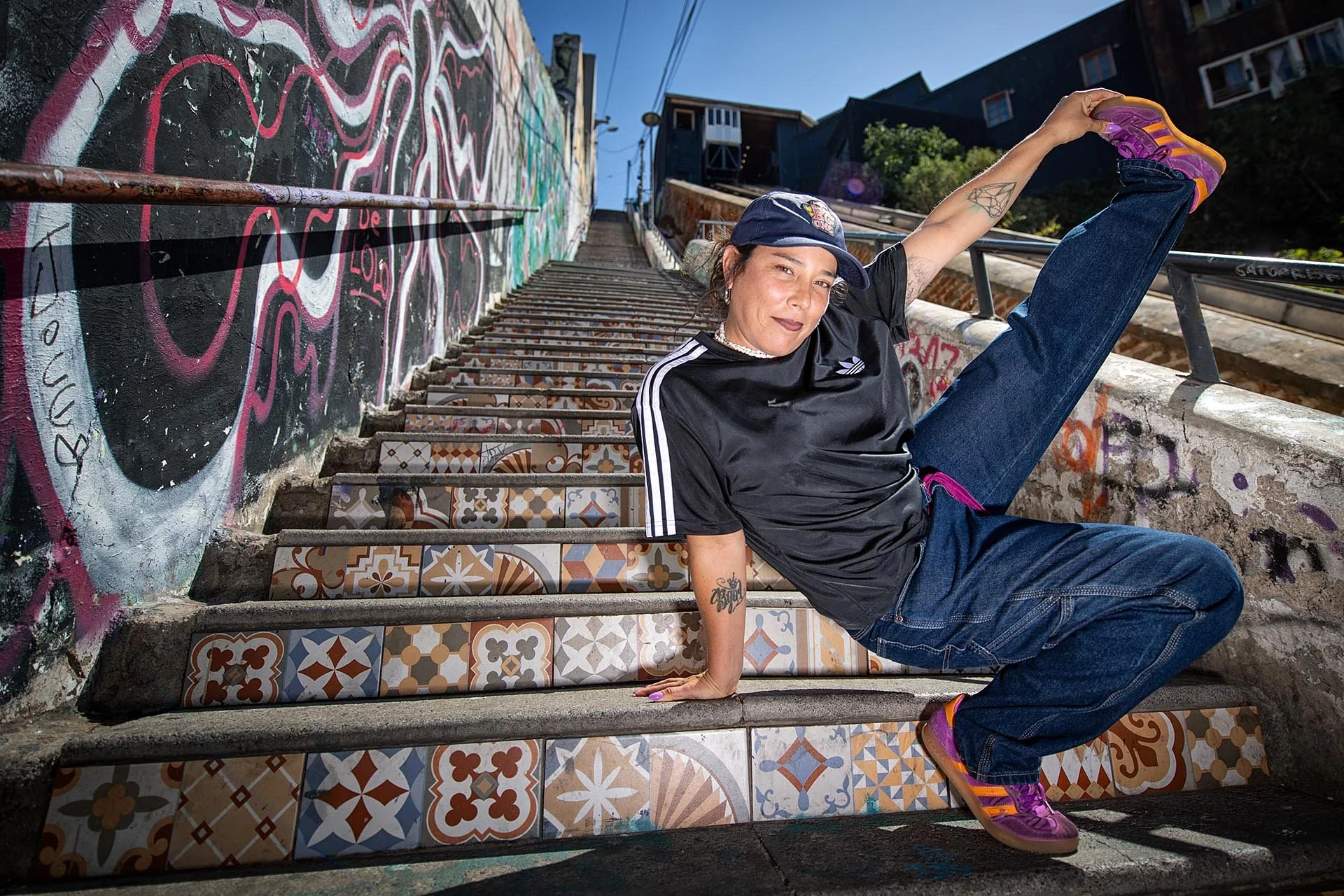
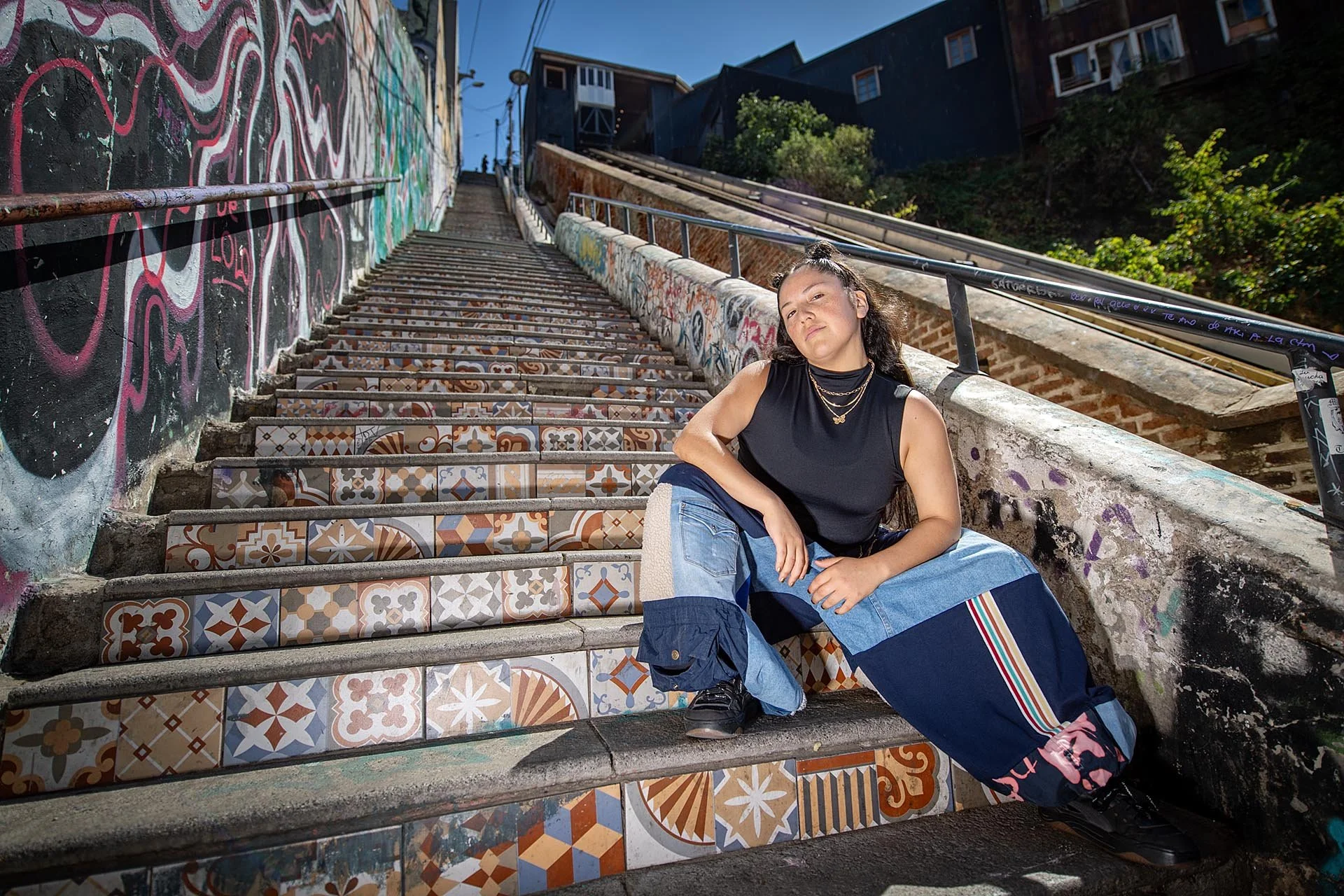
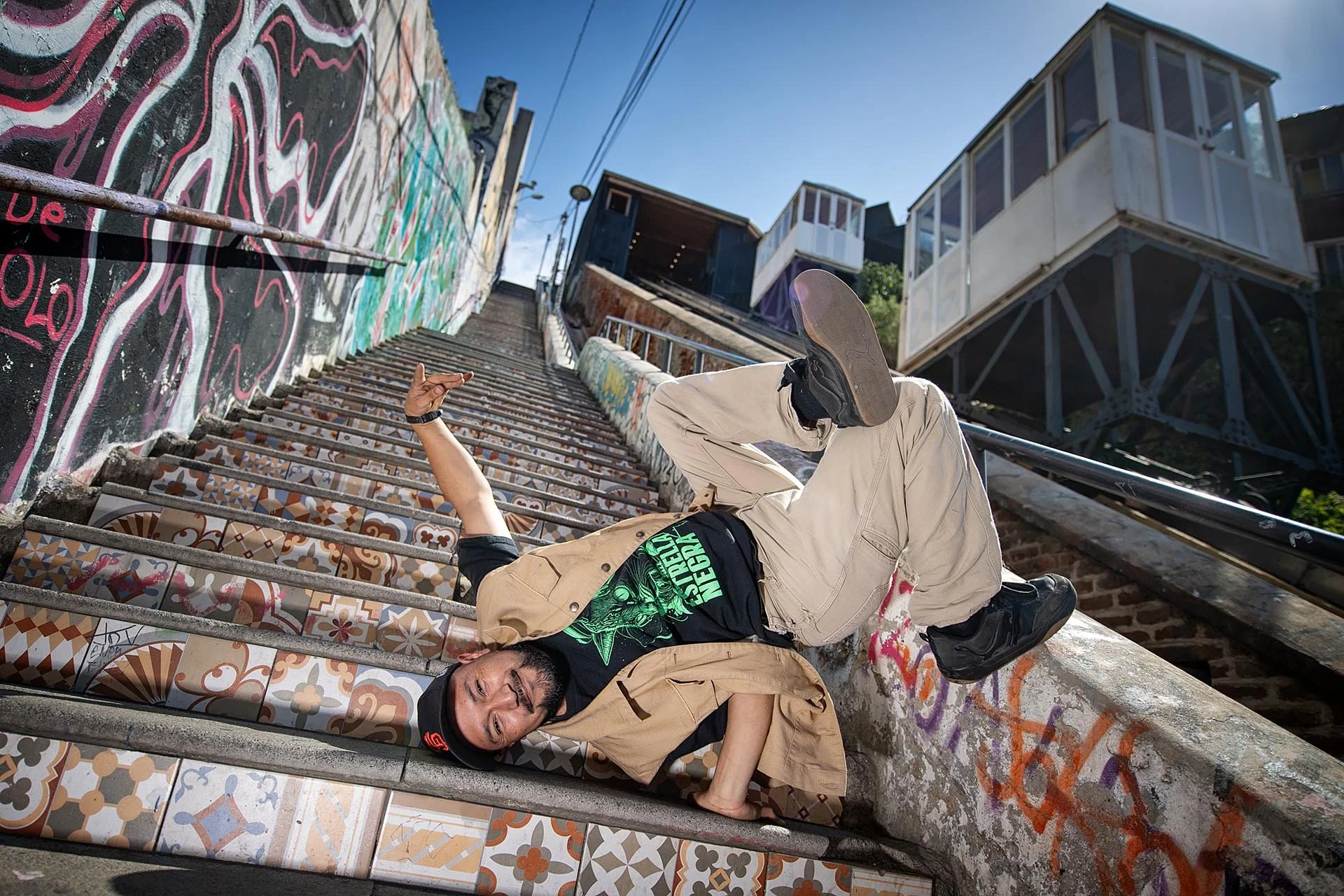
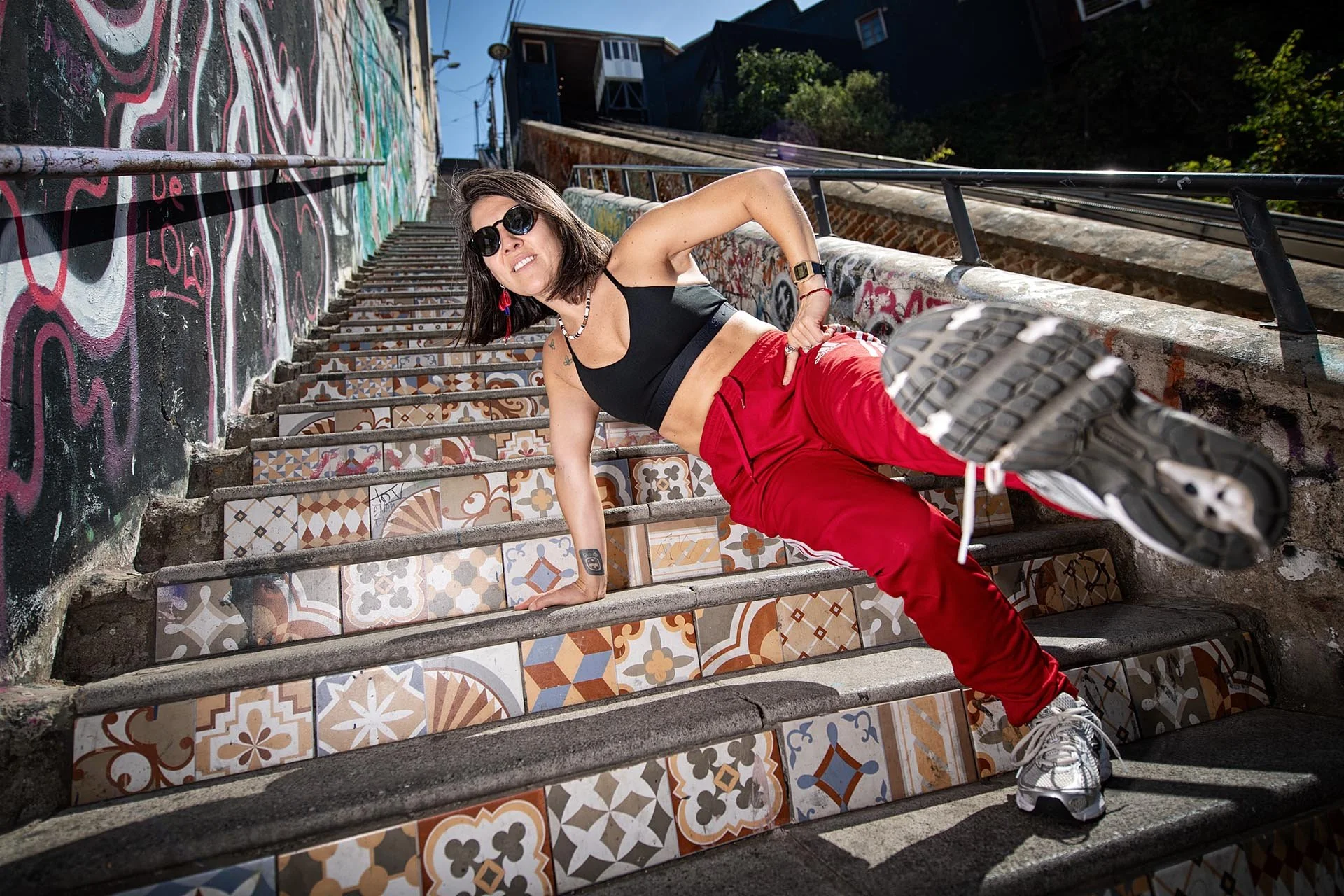
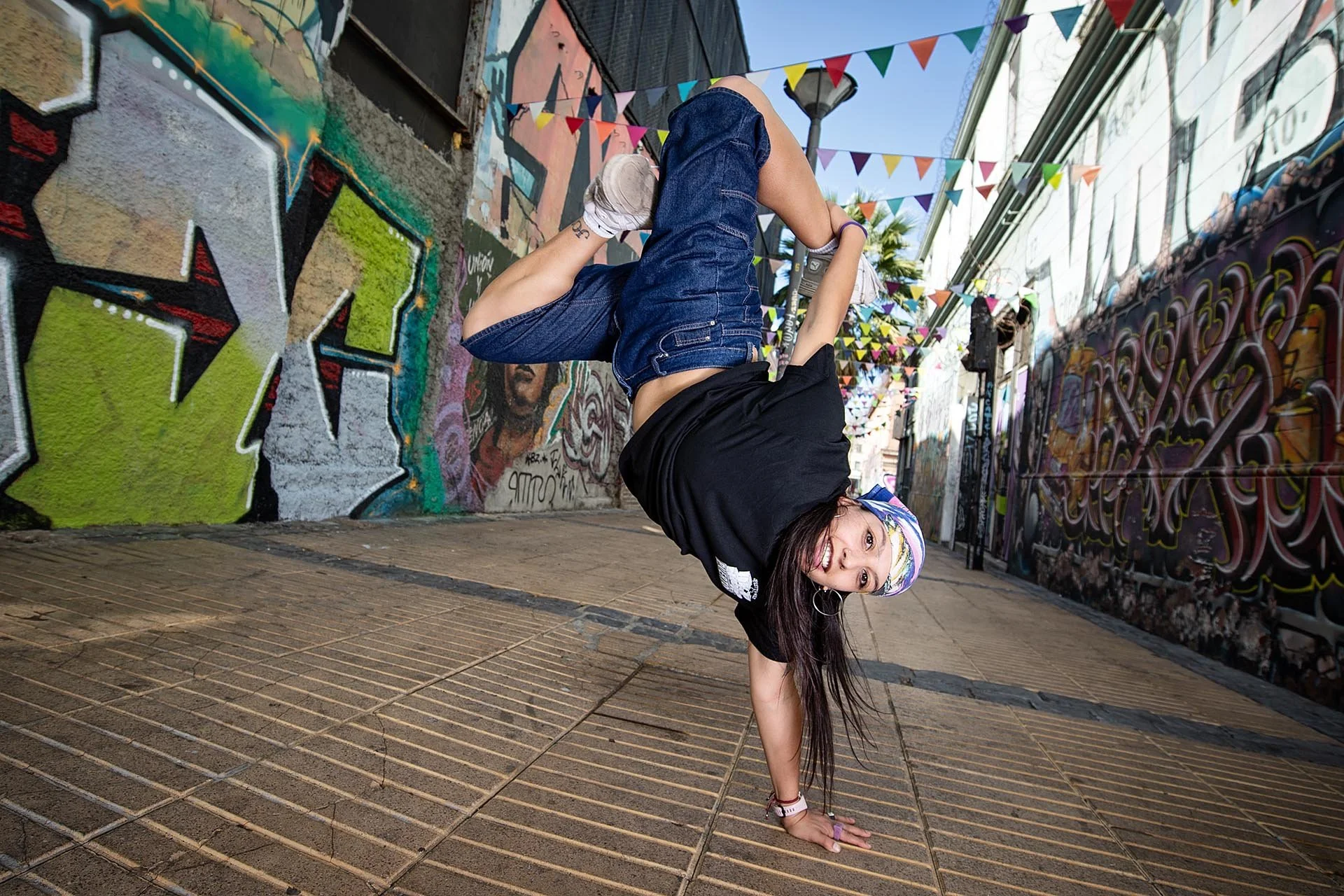
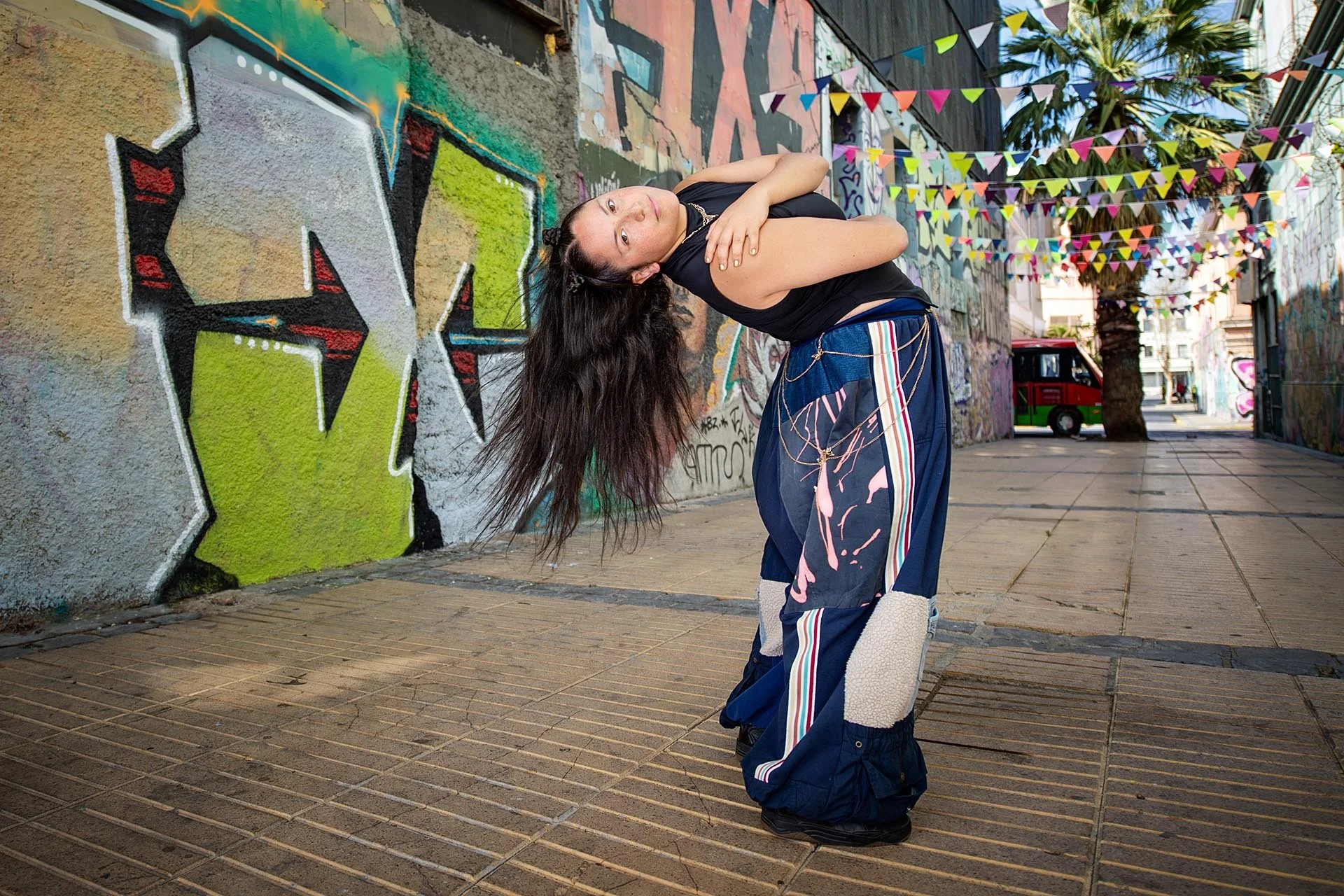
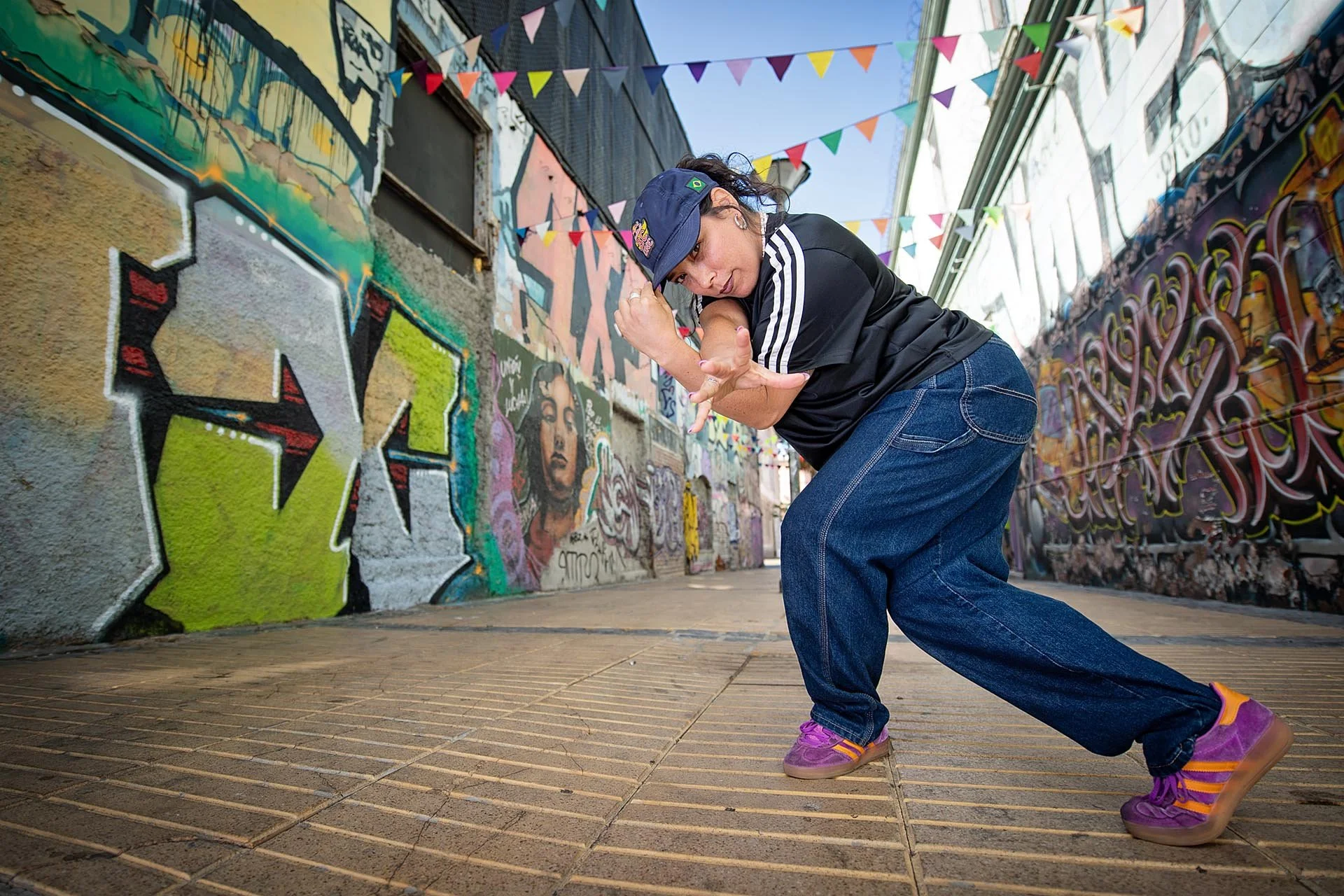
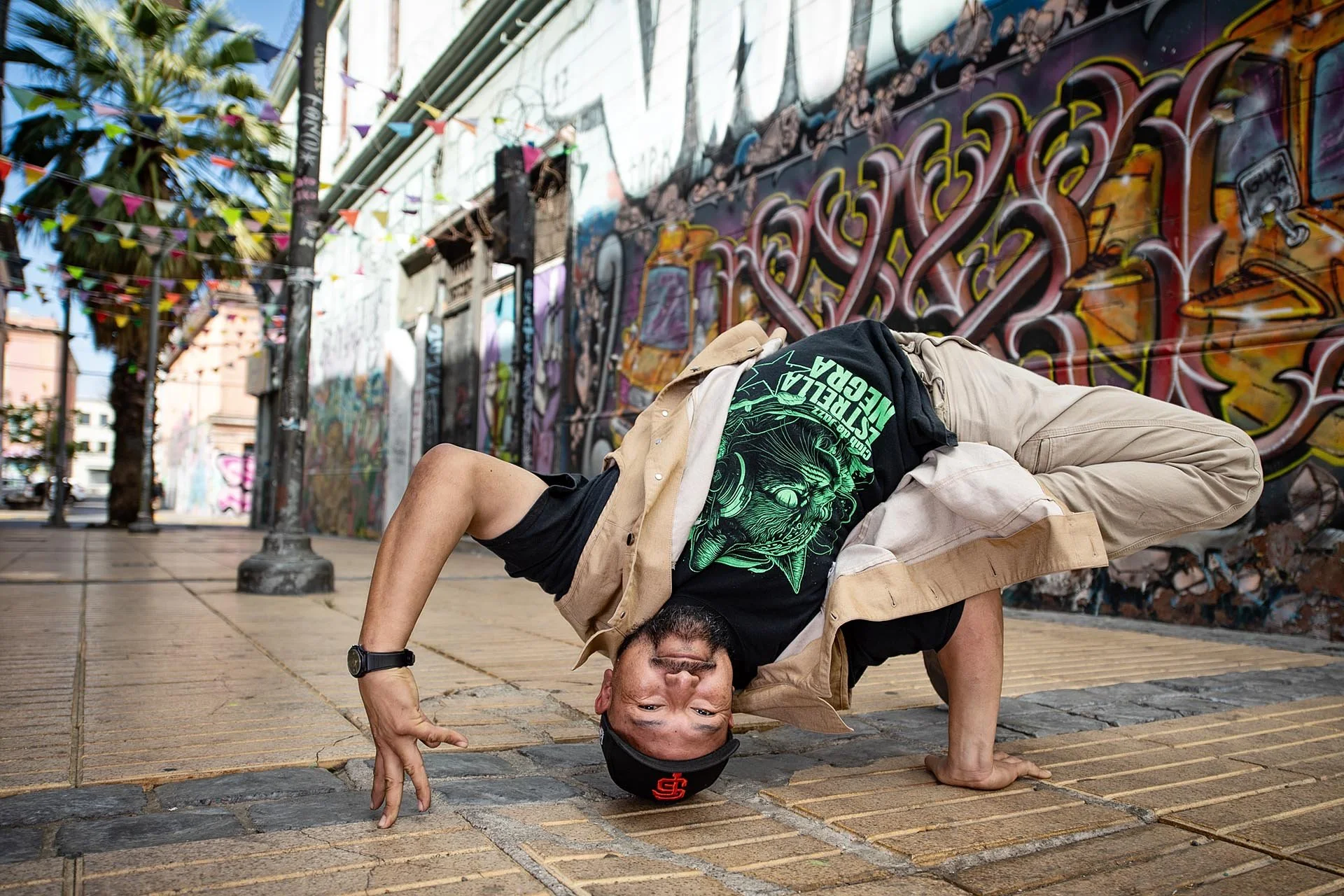
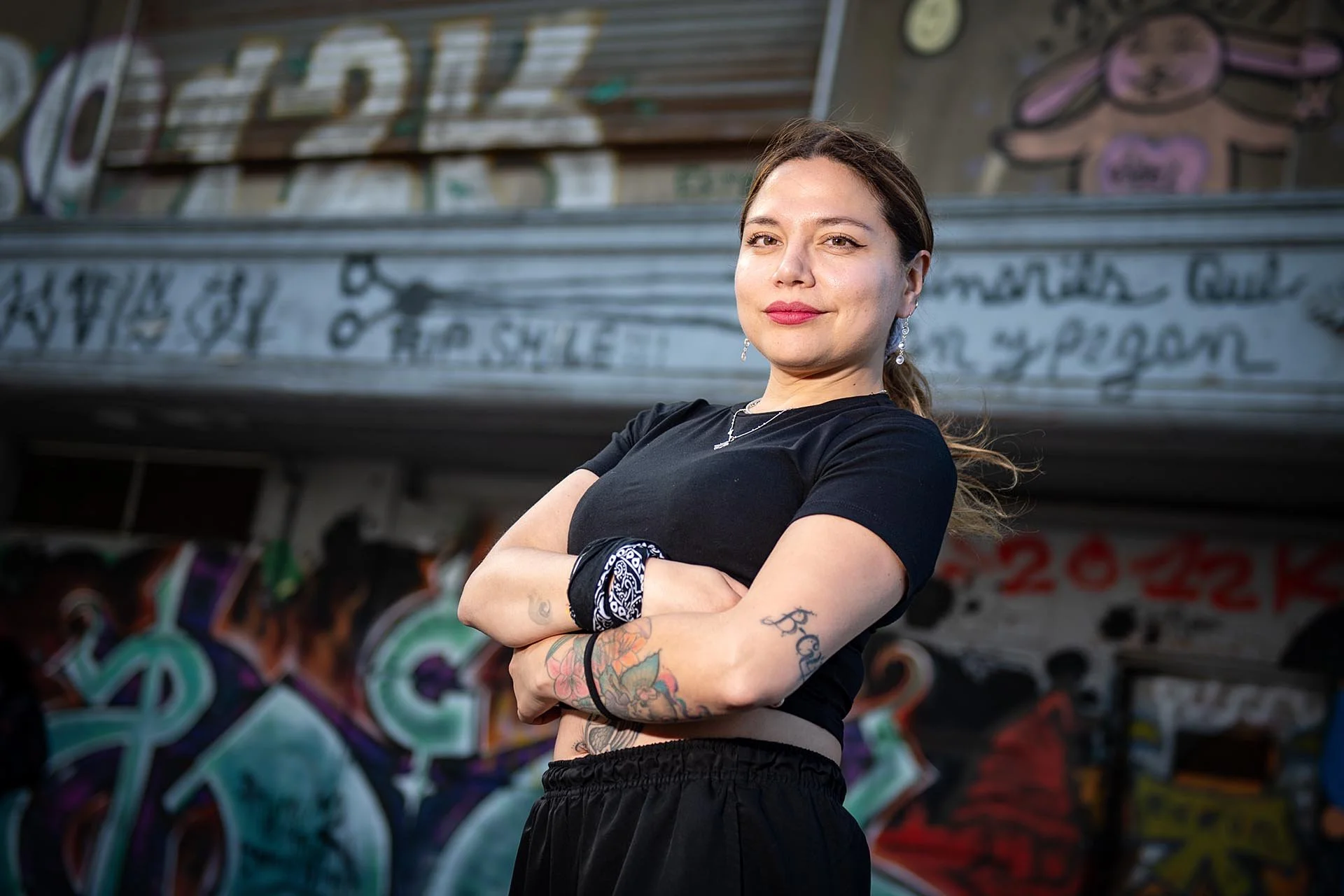
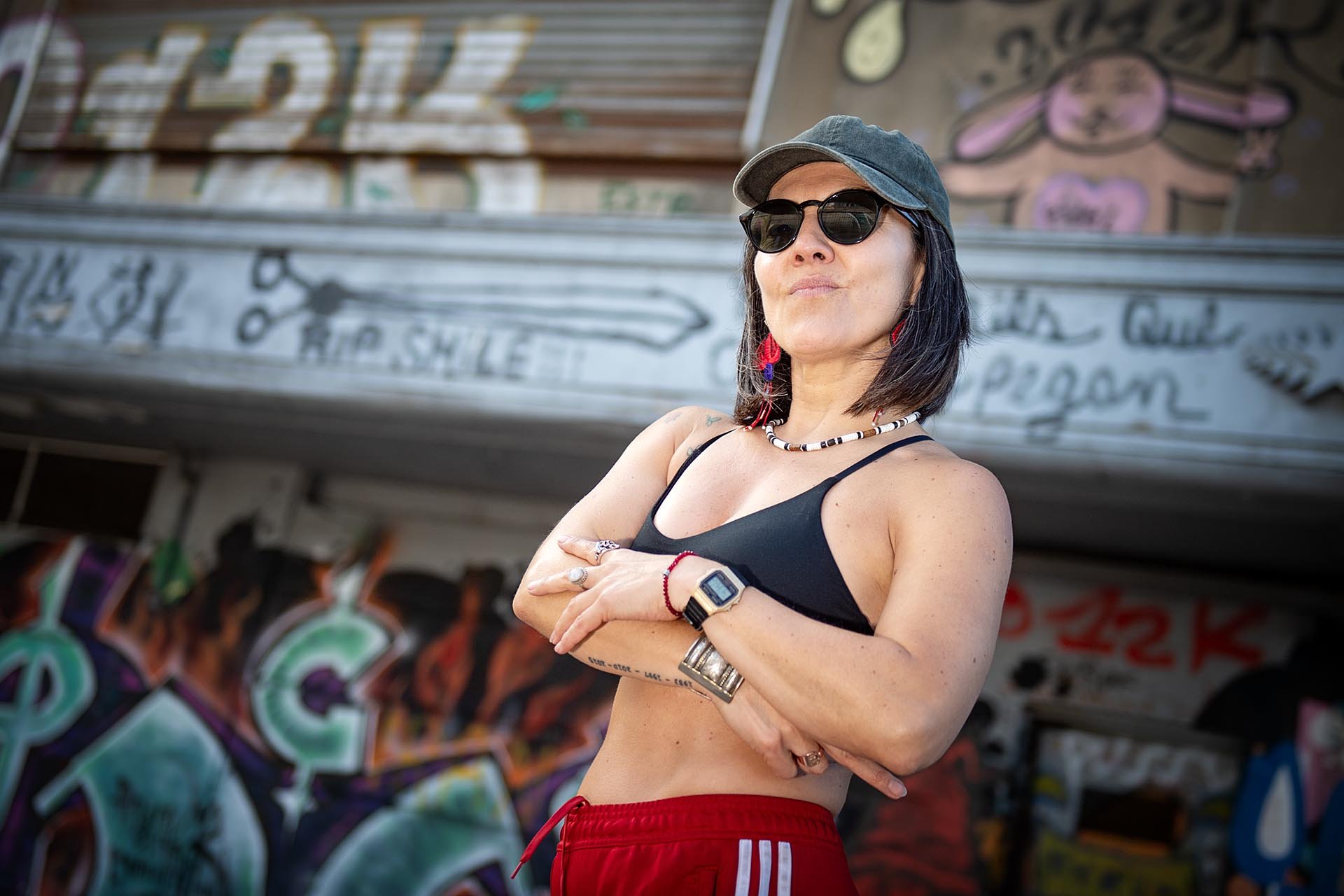
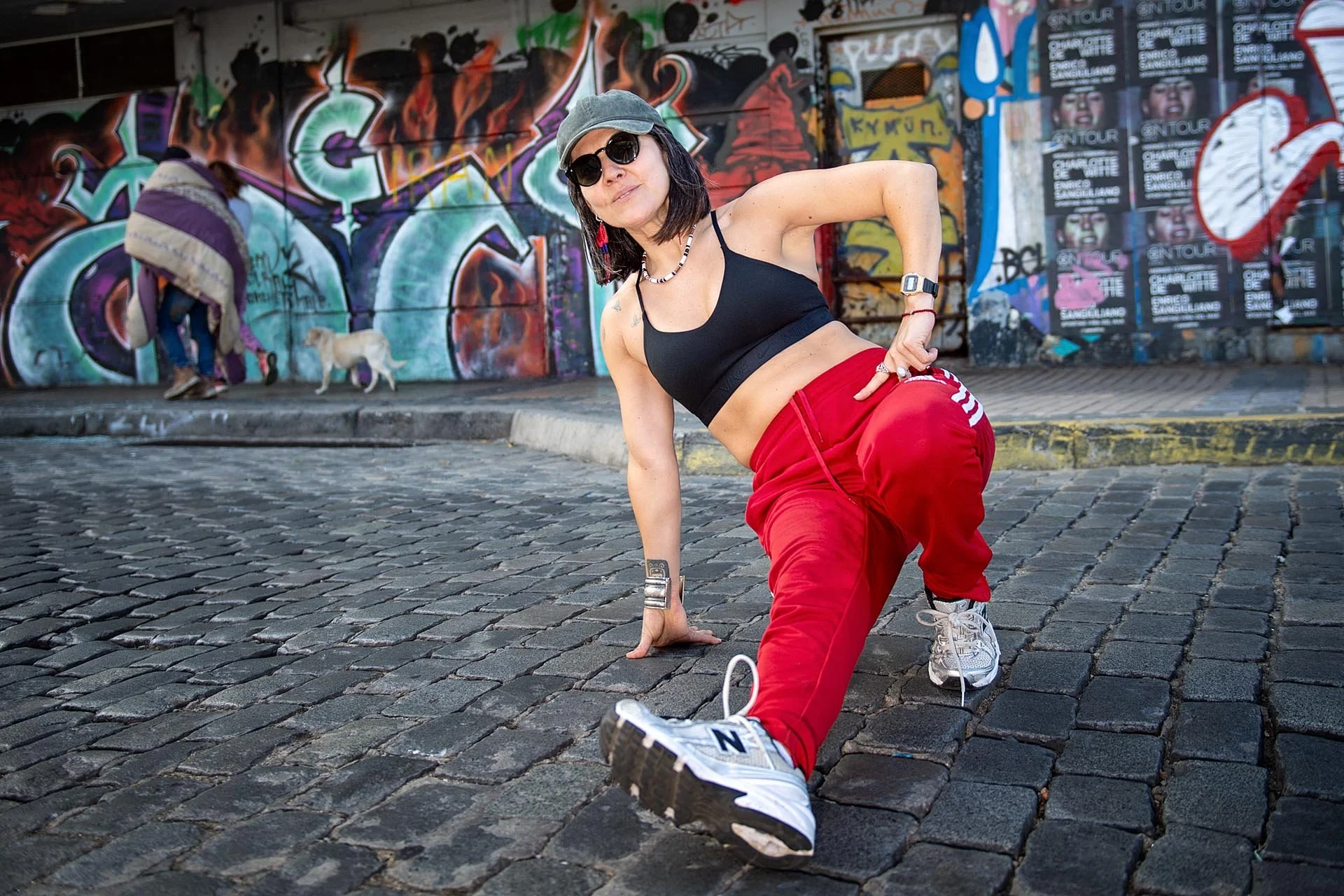
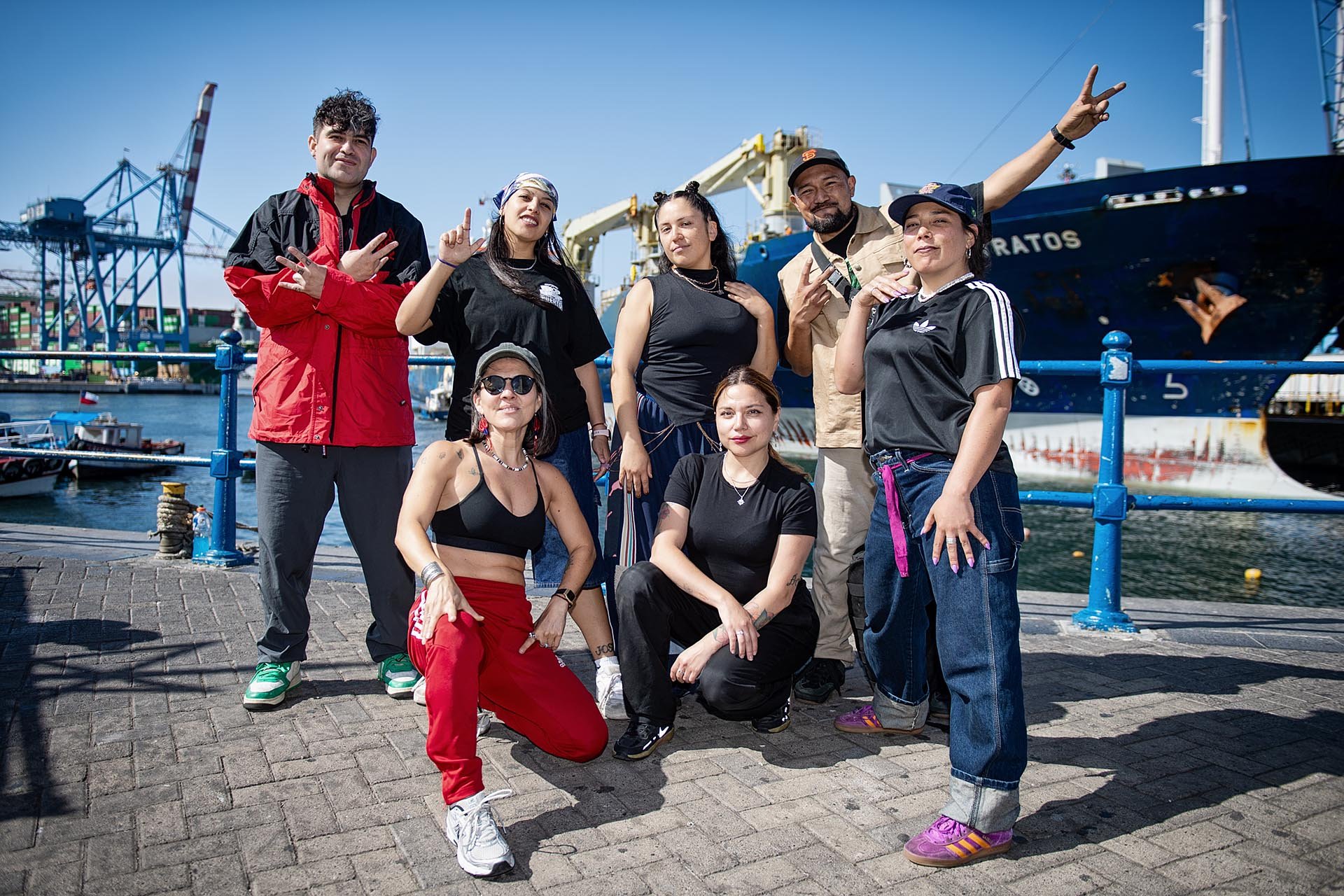
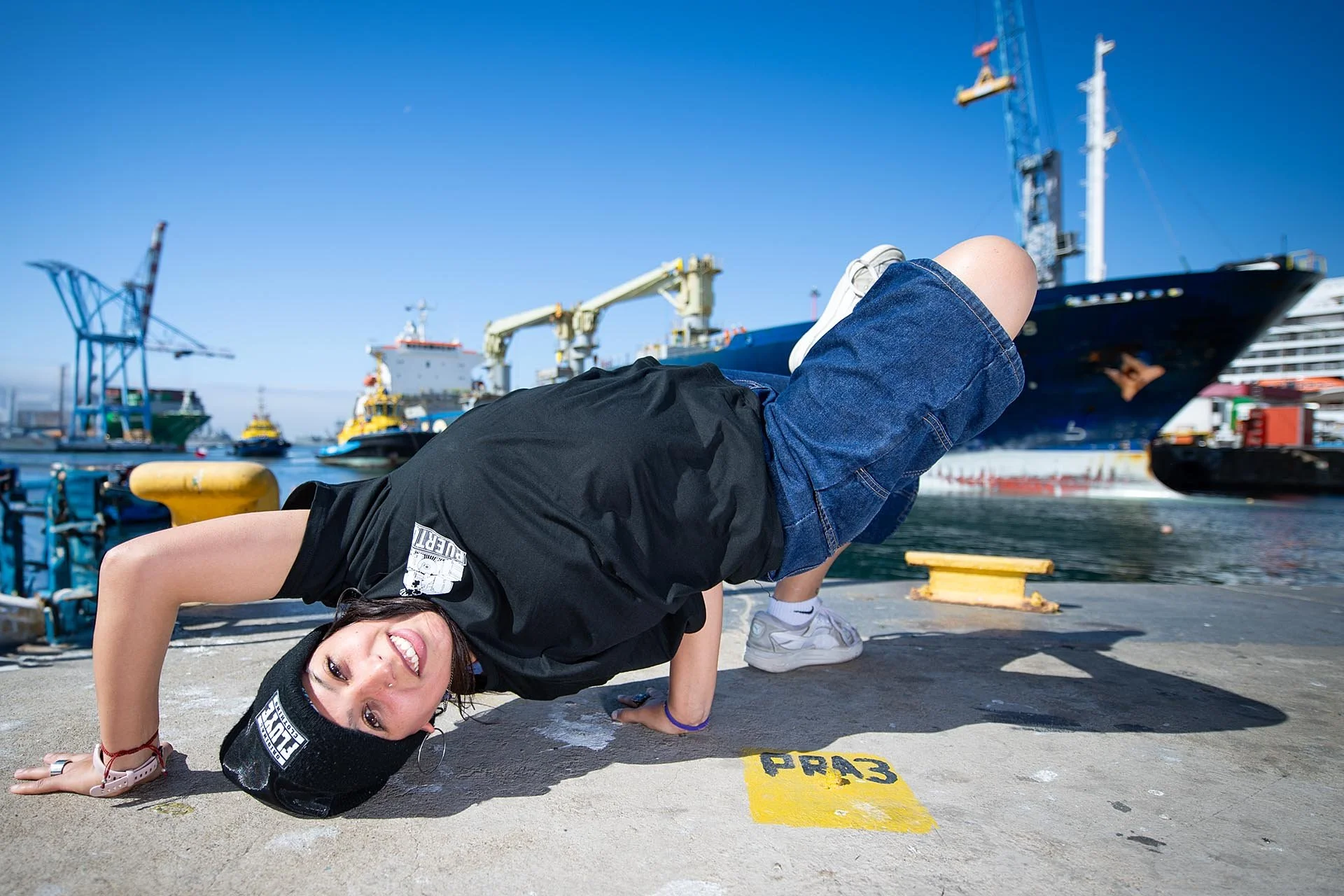
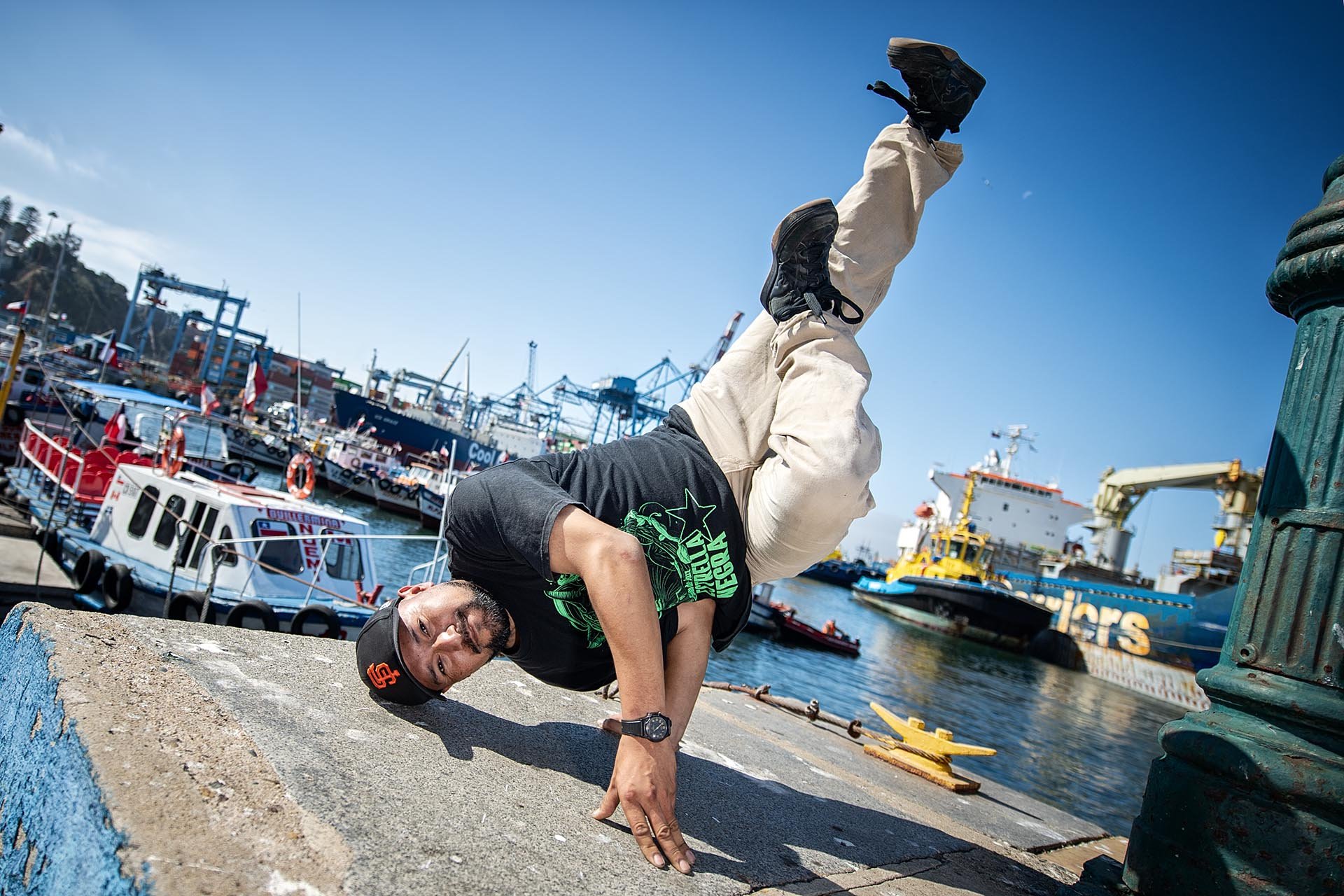
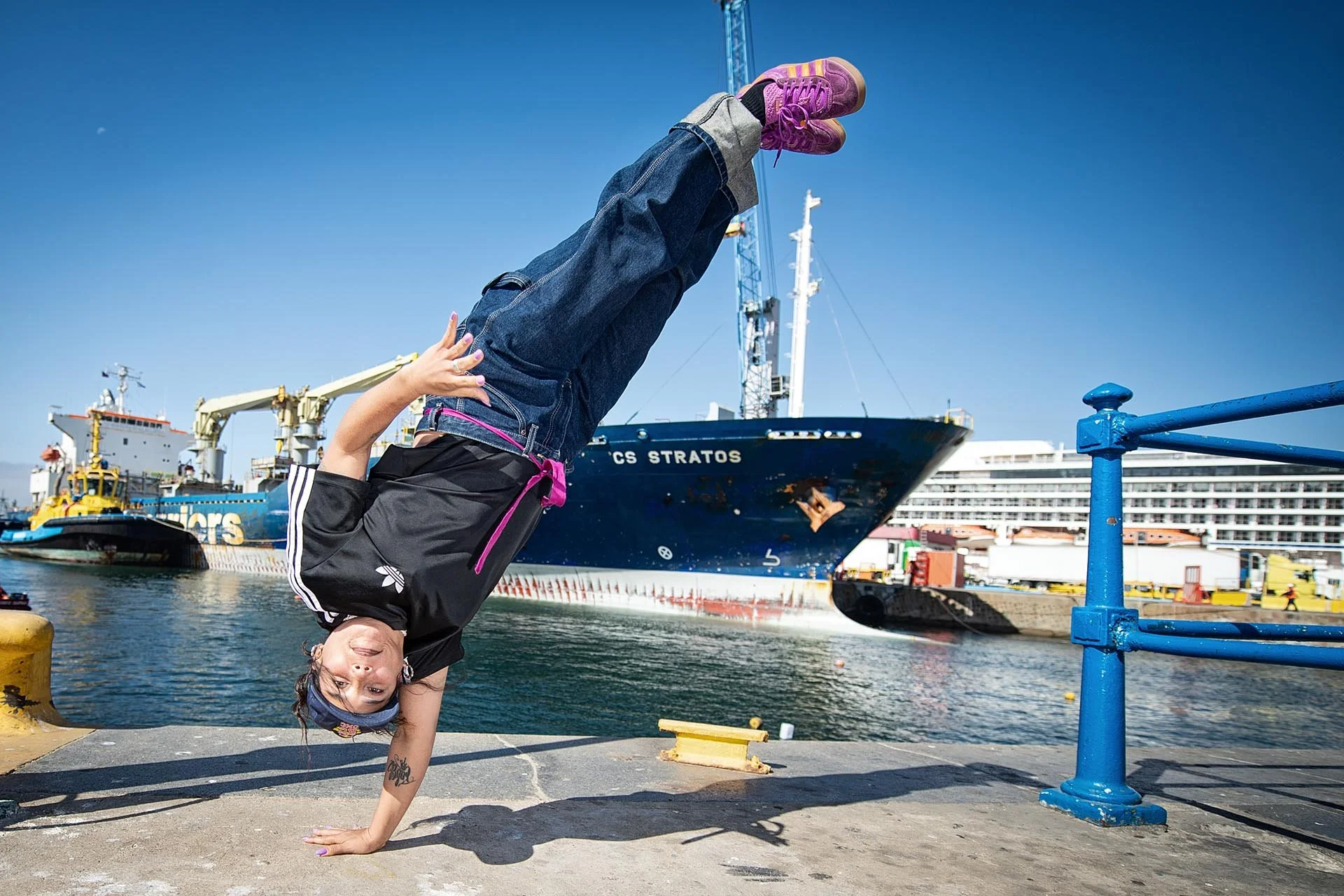
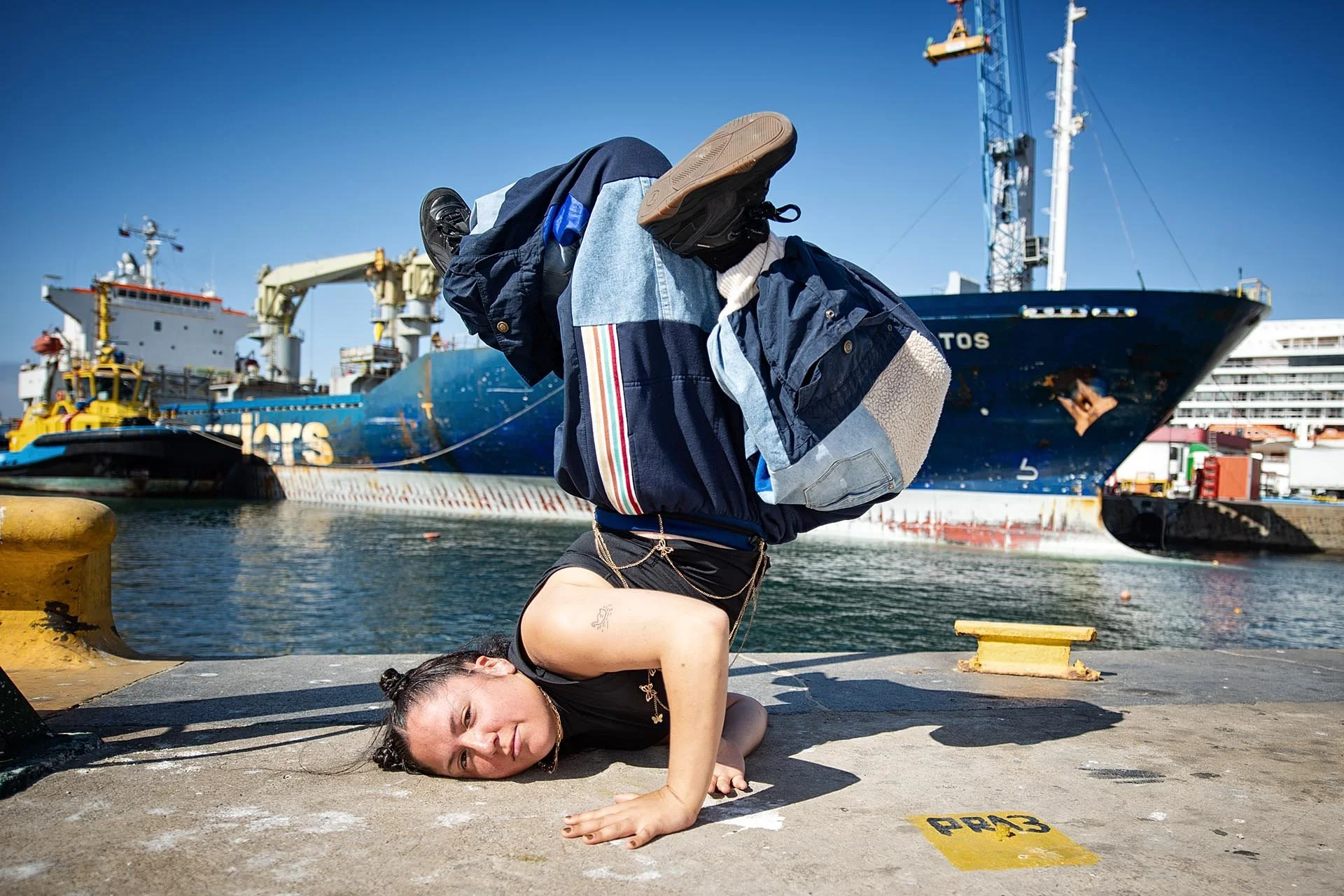
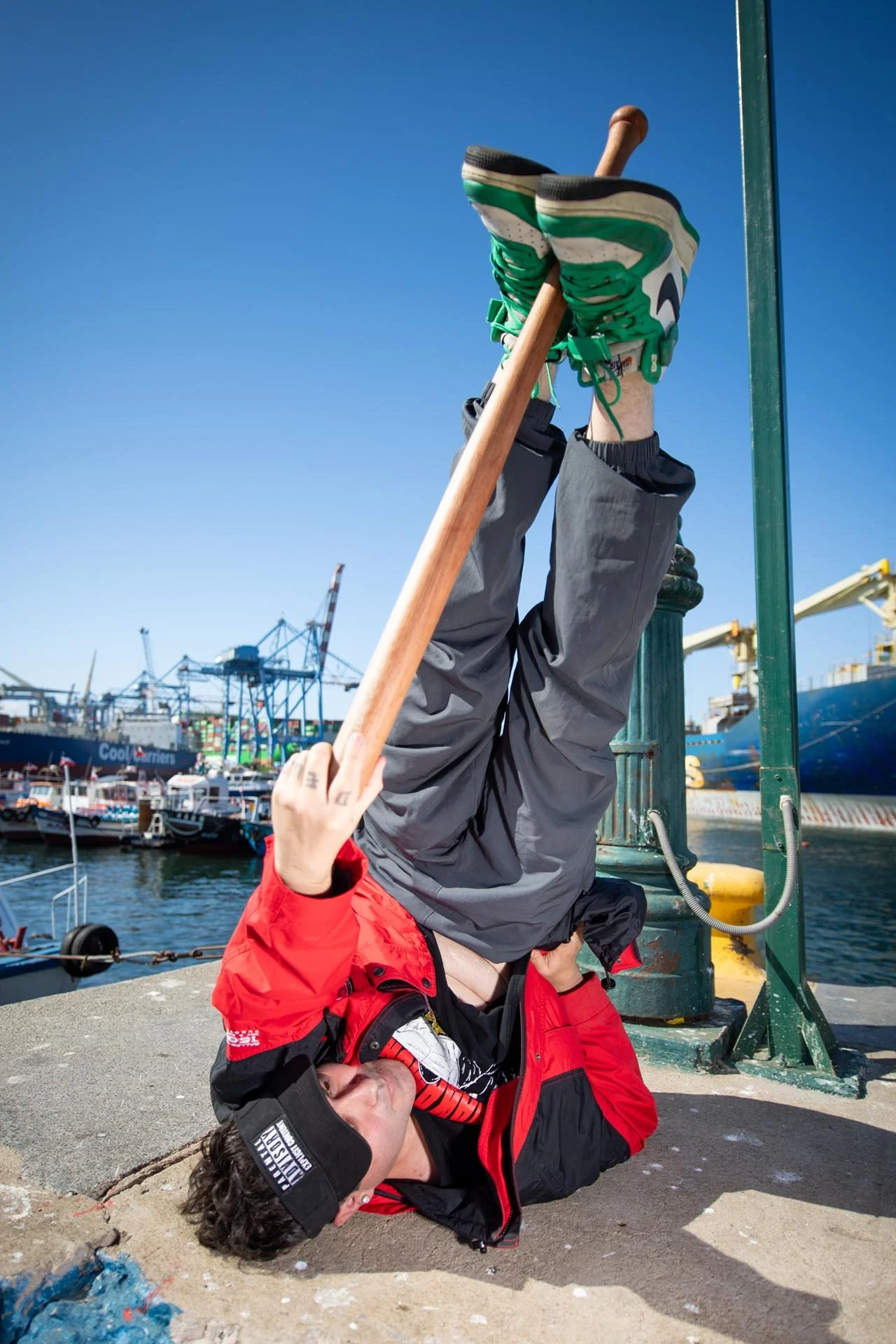
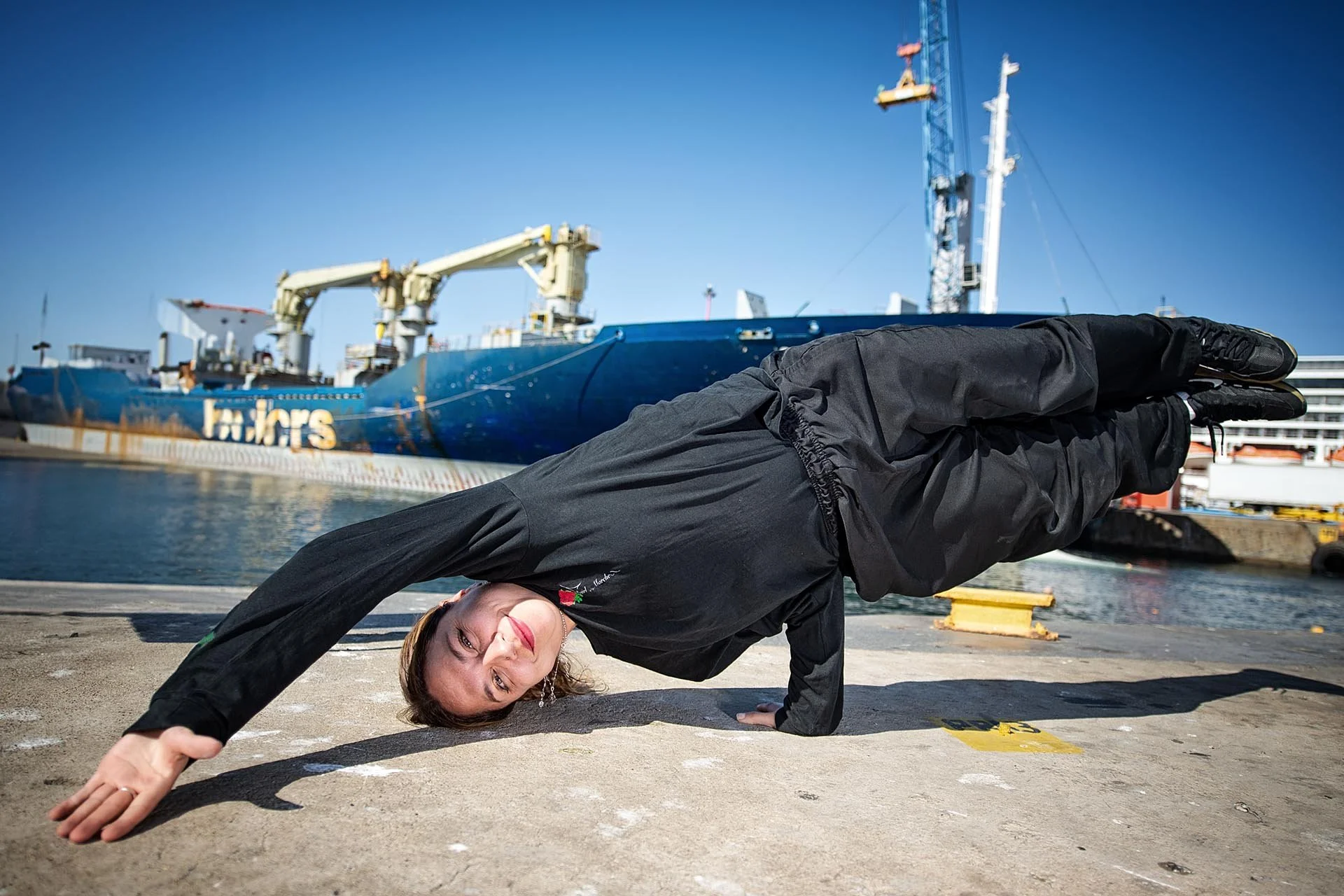
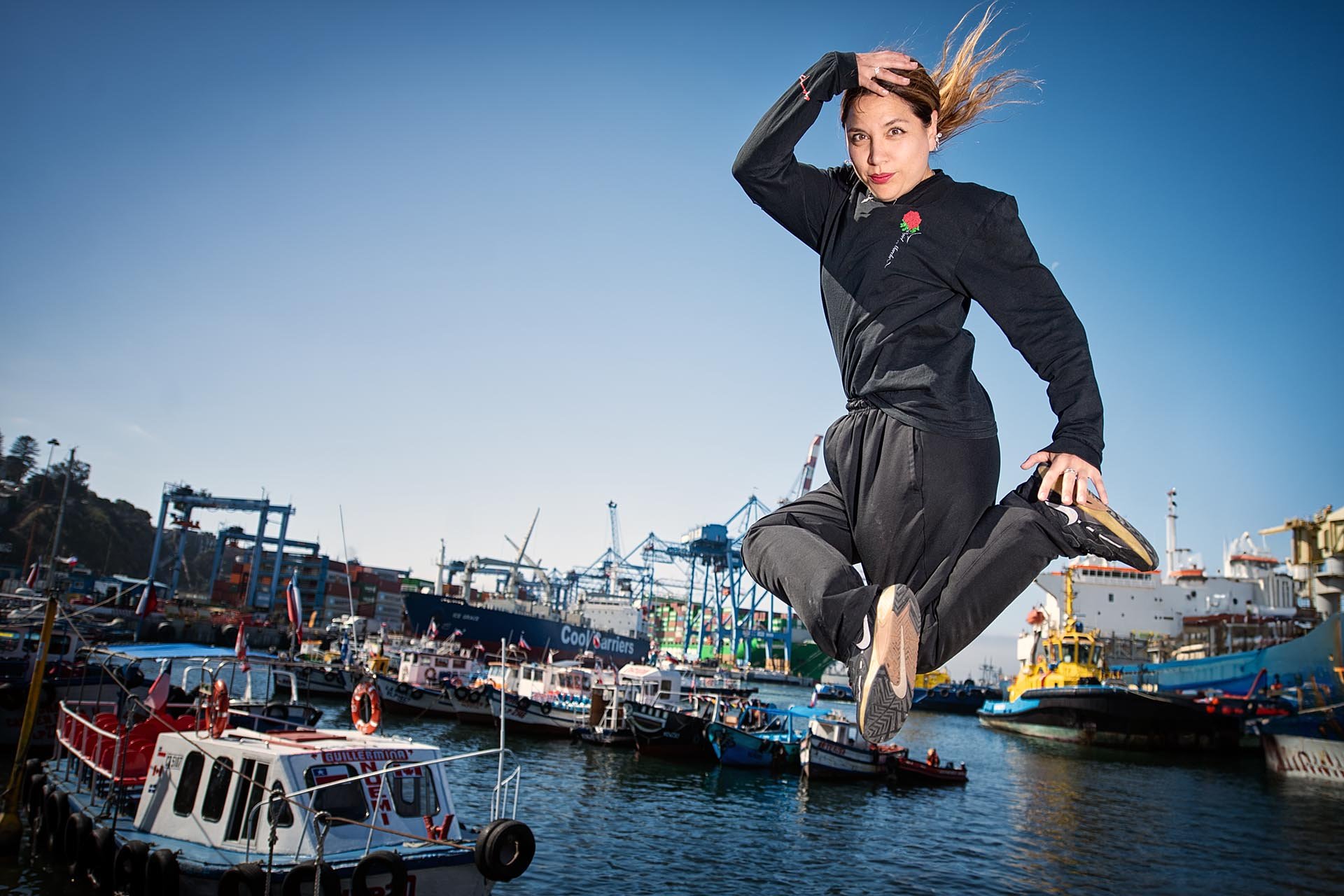
I actually managed to squeeze in a quick photoshoot with some of the B-Girls and B-Boy Zoonydo on the day they were taking down the exhibition. We walked through Barrio Puerto, near Mercado Puerto, close to the historic funiculars climbing up the hills, and down toward the harbor. We shot portraits between peeling walls, sea air, metal shutters, and the old ascensores that define the city’s skyline. It was one of those sessions that reminds me why I do this — movement, laughter, quick decisions, shared rhythm. I loved it.
When I returned, Marty was once again surrounded by people waiting patiently with books and posters in hand and we had to gently step in and bring the session to a close so she could get away. The love was endless. So is her generosity.
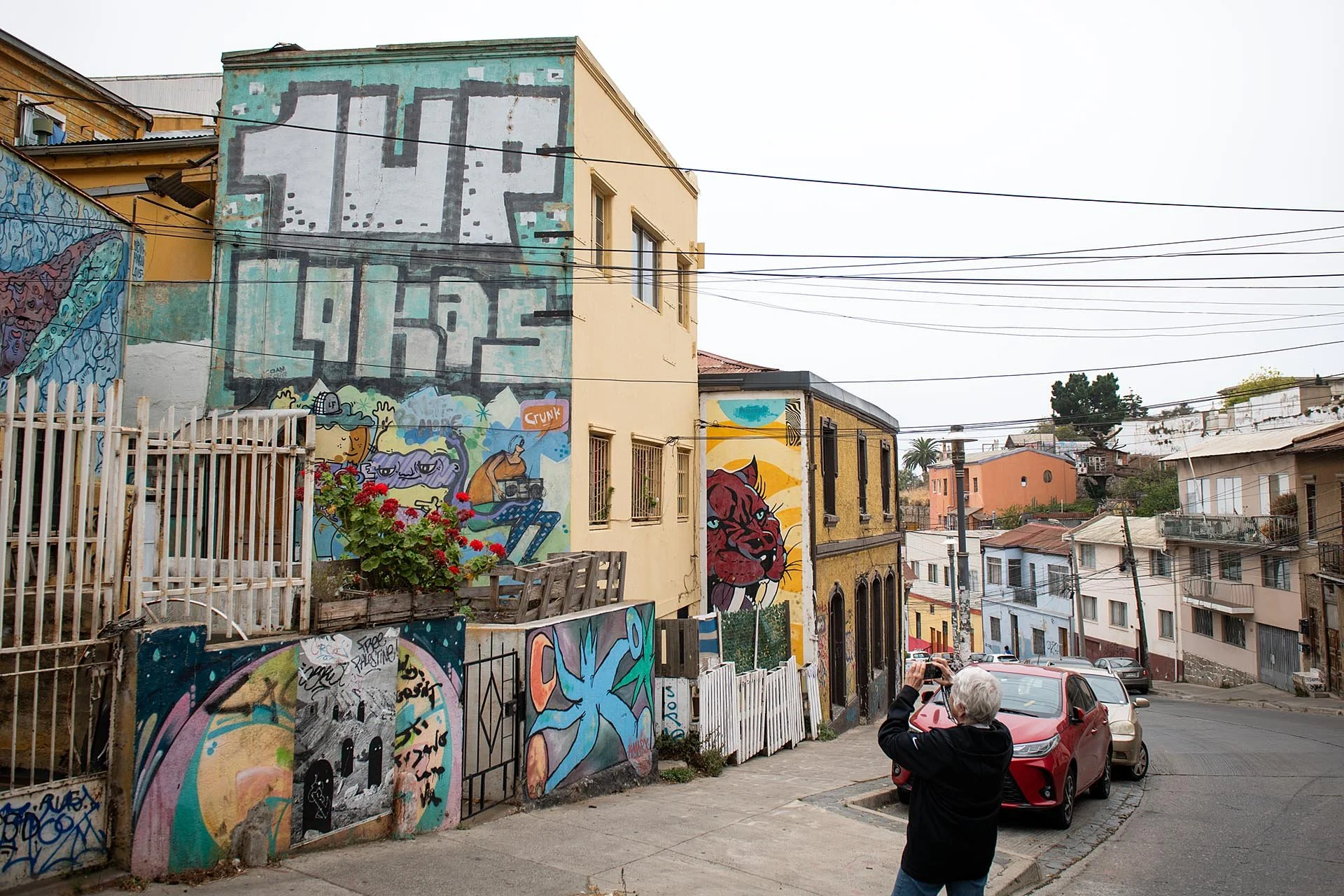
On our last day, as we were leaving the city, we made one final stop. We photographed a house that Bisy used to live it, painted by 1UP, Seth, and many other artists — a strong, colorful collaboration that felt like a perfect visual goodbye. A reminder that graffiti connects cities and continents in ways that are bigger than any single event.
We had a wonderful time in Valparaíso and are deeply grateful!
Hip Hop Al Puerto was organized with heart, dedication, and immense care. The team around the festival welcomed us warmly and looked after us constantly. Bisy, Paz, Kati, Cekis, Zoonido, Del-Phonk, and so many others whose names we cannot possibly list were present, supportive, kind, and incredibly professional. The work they are doing for women in Hip Hop in Chile is powerful and necessary.
We had a great time. We felt the love. We saw the impact.
Valparaíso gave us color, cats, walls, pisco sours, and moments we will never forget.